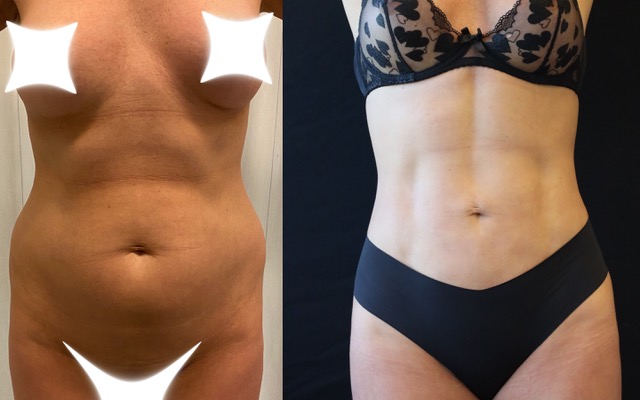
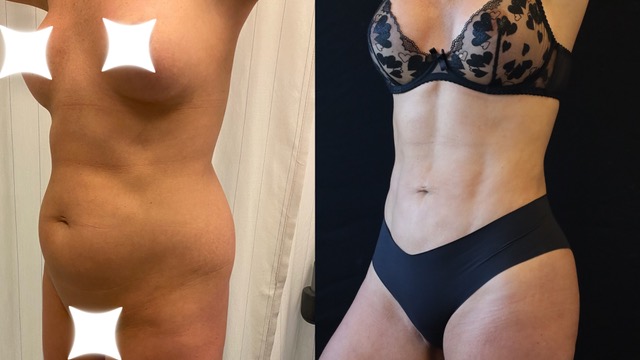
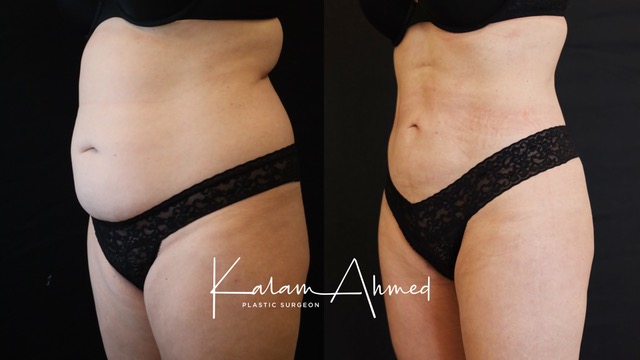
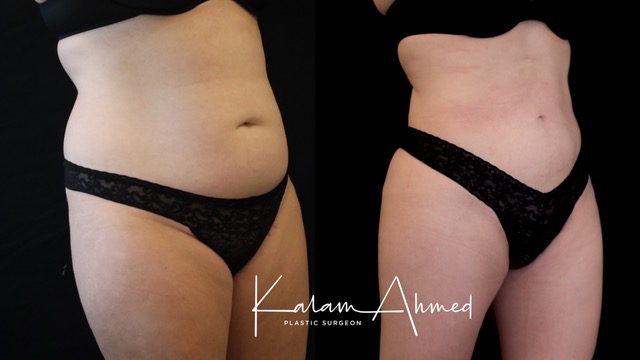
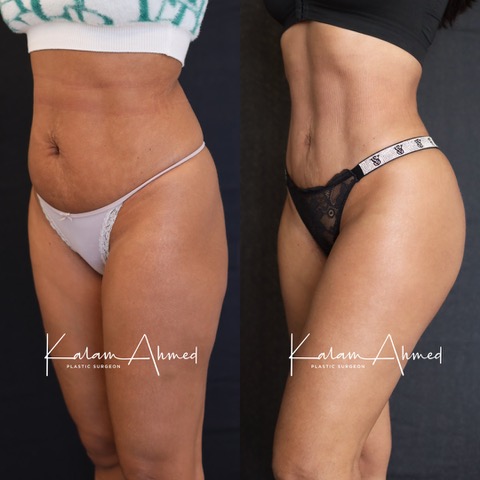
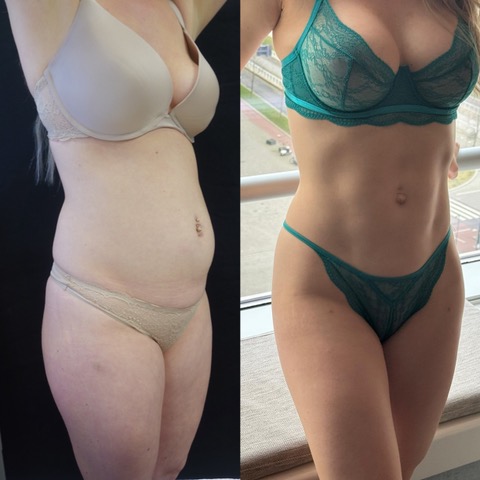
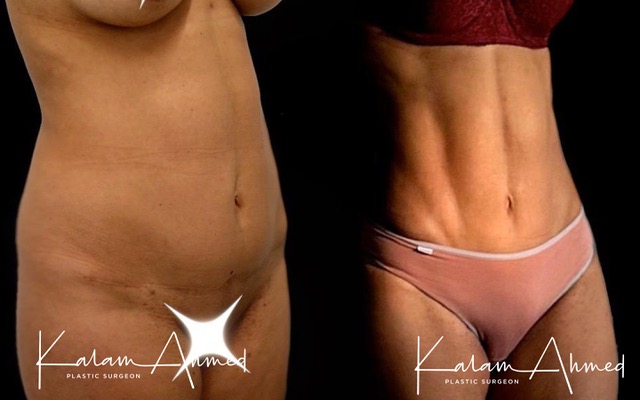
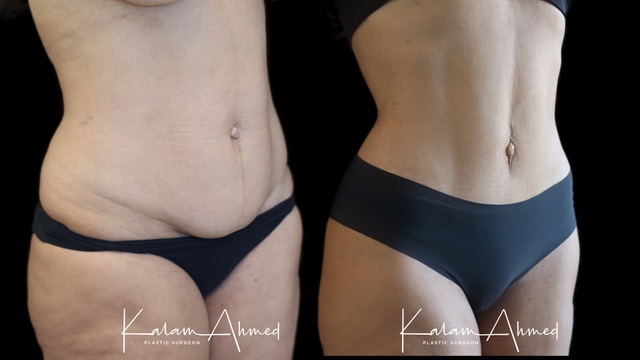
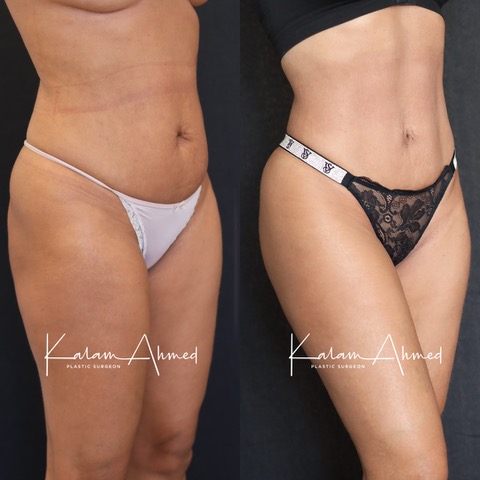
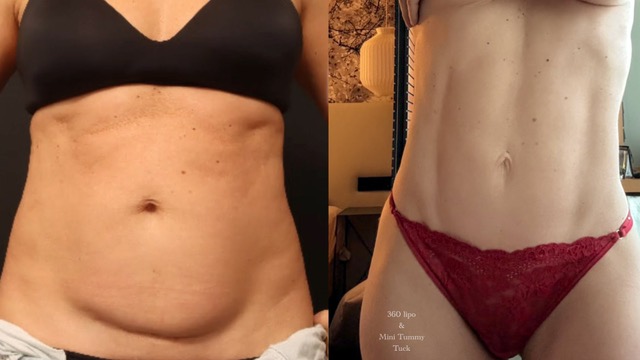
A tummy tuck can offer a solution for people who suffer from a sagging, loose or protruding abdomen. This can be caused by pregnancy, significant weight loss, ageing or reduced skin elasticity. At Gooimeer Clinics, we strive for a natural result in which form, function and aesthetics are restored to balance. Our team will guide you throughout the entire process, from the initial consultation to the aftercare.
The aim of the treatment is to achieve a flatter, firmer and more proportionate abdomen that suits your body.
An abdominoplasty can be an appropriate option when:
there is excess skin that does not improve with diet or exercise
the abdominal muscles have become lax or have separated (rectus diastasis)
clothing feels uncomfortable due to excess skin
skin irritation or chafing occurs in skin folds
the body contour has become unbalanced after pregnancy or weight loss
The procedure is intended to improve the shape and firmness of the abdomen and is not a method for weight loss.
Click on a topic for more information
Suitable for limited excess skin below the belly button.
A smaller incision is made and the belly button remains in the same position.
Recovery time is usually shorter than with a full abdominoplasty.
This technique is only suitable for a select group of patients.
The most commonly performed procedure.
Excess skin and fat above and below the belly button are removed.
The abdominal muscles are tightened if necessary.
The belly button is repositioned for a natural appearance.
Used when there is excess skin in both the horizontal and vertical directions.
This results in a horizontal and a vertical scar.
This technique is often used after major weight loss.
The incision runs all the way around the waist.
This corrects the abdomen, flanks, and lower back at the same time.
Suitable for significant skin laxity after major weight loss.
Liposuction is often added to further refine the contours—for example of the waist, flanks, upper or lower abdomen, or around the torso.
During the consultation, you will discuss your wishes and expectations with the doctor. The skin quality, fat distribution and tension of the abdominal muscles will be assessed. Based on this, the technique that best suits your body will be determined. You will receive an explanation of the surgical procedure, the scars, the recovery and the possible risks.
The operation is performed under general anaesthesia and takes two to four hours on average, depending on the technique chosen and any combinations. A low horizontal incision is made within the underwear line. The skin and fatty tissue are loosened and excess tissue is removed. If necessary, the abdominal muscles are corrected. In a full tummy tuck, the navel is repositioned. Sometimes temporary drains are placed to remove wound fluid.
After the operation, you will wear compression garments for approximately six weeks to support the abdominal wall and reduce swelling. Light exercise is permitted after a few days, but heavy lifting and intensive sports are not recommended for the first six weeks.
Swelling, a tight or pulling sensation and sensitivity are normal in the first few weeks. Scars gradually fade and continue to improve for approximately 12 to 18 months. Smoking and alcohol consumption can adversely affect recovery and are therefore strongly discouraged.
You will return regularly for check-ups. You will receive advice on scar care, such as the use of silicone gel and protection from sunlight. We will also guide you in safely building up your daily activities.
As with any surgery, complications can occur, although they are uncommon. Possible risks include:
bleeding or infection
delayed wound healing
fluid accumulation (seroma)
temporarily or permanently altered skin sensation
asymmetry or contour irregularities
scars that remain red or thickened for longer
During the consultation, your personal risk profile will be discussed.
Suitable for limited excess skin below the belly button.
A smaller incision is made and the belly button remains in the same position.
Recovery time is usually shorter than with a full abdominoplasty.
This technique is only suitable for a select group of patients.
The most commonly performed procedure.
Excess skin and fat above and below the belly button are removed.
The abdominal muscles are tightened if necessary.
The belly button is repositioned for a natural appearance.
Used when there is excess skin in both the horizontal and vertical directions.
This results in a horizontal and a vertical scar.
This technique is often used after major weight loss.
The incision runs all the way around the waist.
This corrects the abdomen, flanks, and lower back at the same time.
Suitable for significant skin laxity after major weight loss.
Liposuction is often added to further refine the contours—for example of the waist, flanks, upper or lower abdomen, or around the torso.
During the consultation, you will discuss your wishes and expectations with the doctor. The skin quality, fat distribution and tension of the abdominal muscles will be assessed. Based on this, the technique that best suits your body will be determined. You will receive an explanation of the surgical procedure, the scars, the recovery and the possible risks.
The operation is performed under general anaesthesia and takes two to four hours on average, depending on the technique chosen and any combinations. A low horizontal incision is made within the underwear line. The skin and fatty tissue are loosened and excess tissue is removed. If necessary, the abdominal muscles are corrected. In a full tummy tuck, the navel is repositioned. Sometimes temporary drains are placed to remove wound fluid.
After the operation, you will wear compression garments for approximately six weeks to support the abdominal wall and reduce swelling. Light exercise is permitted after a few days, but heavy lifting and intensive sports are not recommended for the first six weeks.
Swelling, a tight or pulling sensation and sensitivity are normal in the first few weeks. Scars gradually fade and continue to improve for approximately 12 to 18 months. Smoking and alcohol consumption can adversely affect recovery and are therefore strongly discouraged.
You will return regularly for check-ups. You will receive advice on scar care, such as the use of silicone gel and protection from sunlight. We will also guide you in safely building up your daily activities.
As with any surgery, complications can occur, although they are uncommon. Possible risks include:
bleeding or infection
delayed wound healing
fluid accumulation (seroma)
temporarily or permanently altered skin sensation
asymmetry or contour irregularities
scars that remain red or thickened for longer
During the consultation, your personal risk profile will be discussed.
Click on an questions to see the answer
What does recovery after an abdominoplasty look like?
Most recovery takes place within the first 6 to 8 weeks. The final result develops over 3 to 6 months. Scars continue to mature for up to about 18 months.
When can I return to work after an abdominoplasty?
For sedentary or light work, usually after 1 to 2 weeks. For physically demanding work, often after 4 to 6 weeks.
When can I exercise again after an abdominoplasty, including core workouts?
Light movement is usually possible after about two weeks. Intense exercise and core workouts are typically resumed after 8 to 12 weeks.
When is it safe to fly after an abdominoplasty?
Short flights are usually possible after 3 to 4 weeks. Long-haul flights after about 6 weeks, depending on your recovery.
How long-lasting are the results of an abdominoplasty?
Yes, provided your weight remains stable and you do not become pregnant again. Ageing will still affect the skin over time.
Where is the abdominoplasty scar placed, and how visible will it be over time?
The scar is positioned low on the abdomen and is usually hidden by underwear or swimwear. Over the months it typically becomes lighter and flatter.
Can abdominoplasty be combined with liposuction for additional contouring?
Yes. This is often done to further refine the waistline and abdominal contour.
Is abdominoplasty ever (partly) covered by health insurance?
Only in exceptional medical cases. Coverage is assessed based on your insurer’s criteria.
Should I postpone abdominoplasty if I plan to become pregnant in the future?
A future pregnancy can affect the result. It is generally advised to wait until your family is complete.
A tummy tuck (abdominoplasty) is more than “removing skin”. It is a procedure where shape, support and function come together: excess skin, fat distribution and, when present, abdominal muscle laxity (rectus diastasis) determine which technique is most appropriate. During a personal consultation, we take the time to assess your abdomen and torso and create a tailored plan — with honest advice about what is and is not worthwhile.
During the consultation, you will receive:
an assessment of excess skin, fat distribution and contour (upper and lower abdomen)
evaluation of the abdominal wall and possible rectus diastasis: whether muscle repair is indicated
recommendation of the most suitable approach: mini tummy tuck, full abdominoplasty, Fleur-de-Lis, or (in extensive laxity) a lower body lift
discussion of whether liposuction is beneficial for the waist/flanks to achieve a more natural silhouette
a clear explanation of scarring: placement, length and realistic expectations for scar maturation
recovery planning: compression, mobilisation, return to work/sport, follow-ups and aftercare
a review of risks: wound issues, seroma, bleeding, infection, sensory changes and asymmetry
example results and a personalised treatment plan with transparent pricing
Then we warmly invite you for a personal consultation at Gooimeer Clinics.
Click on an article to see more information
Sign up for our newsletter to stay up to date with the latest news.
Follow us on social media to stay up to date with our practice and see the latest stories.