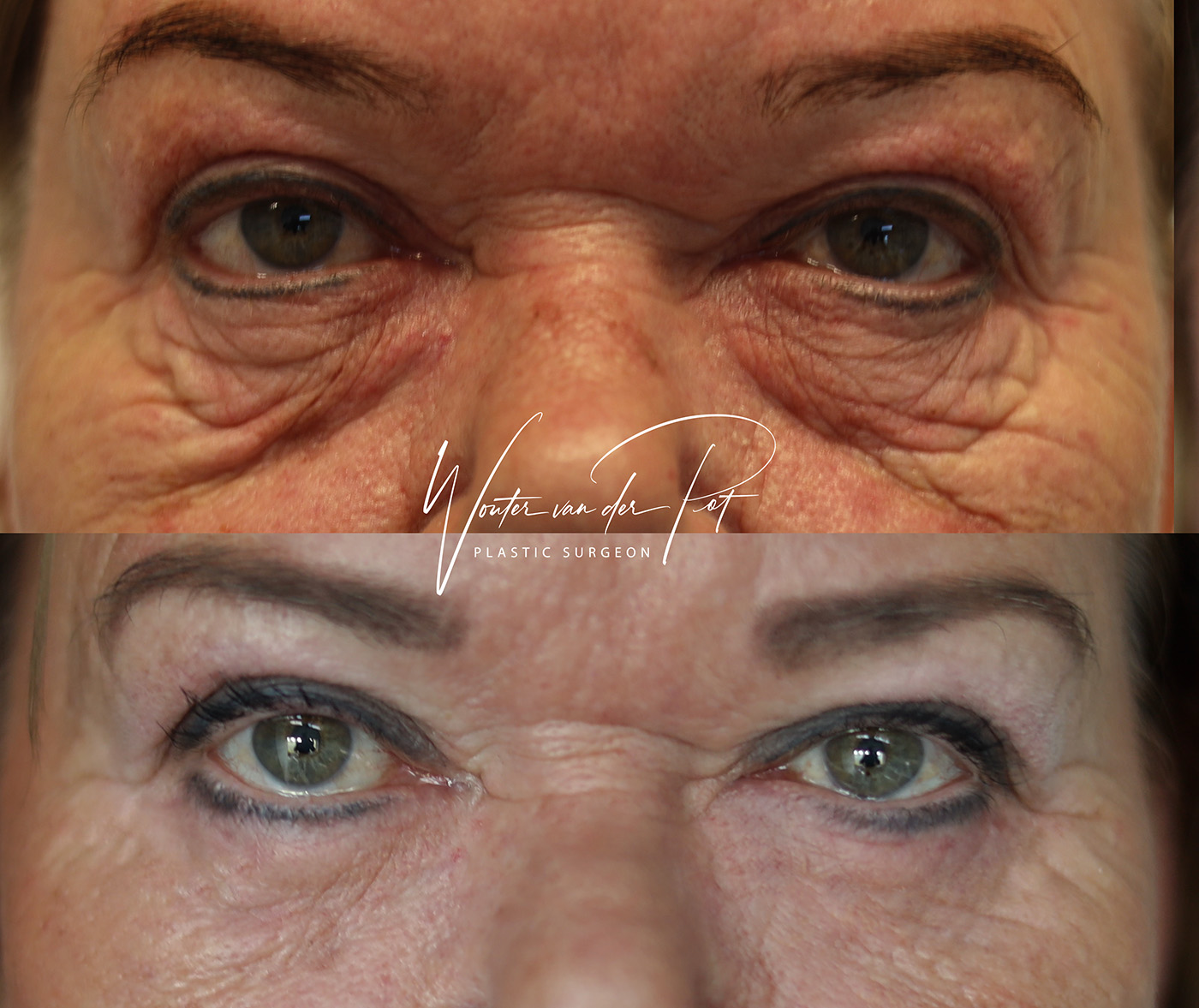
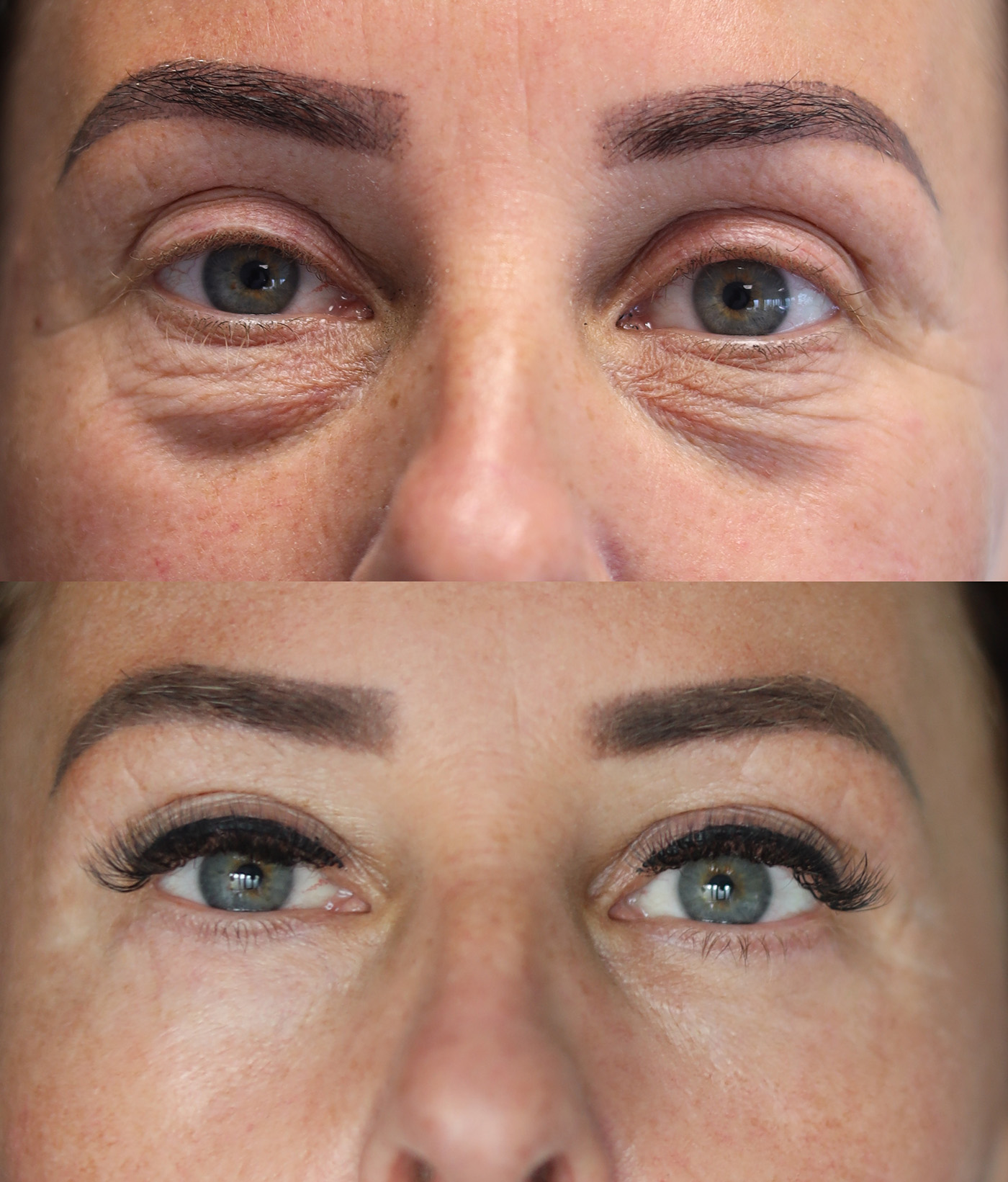
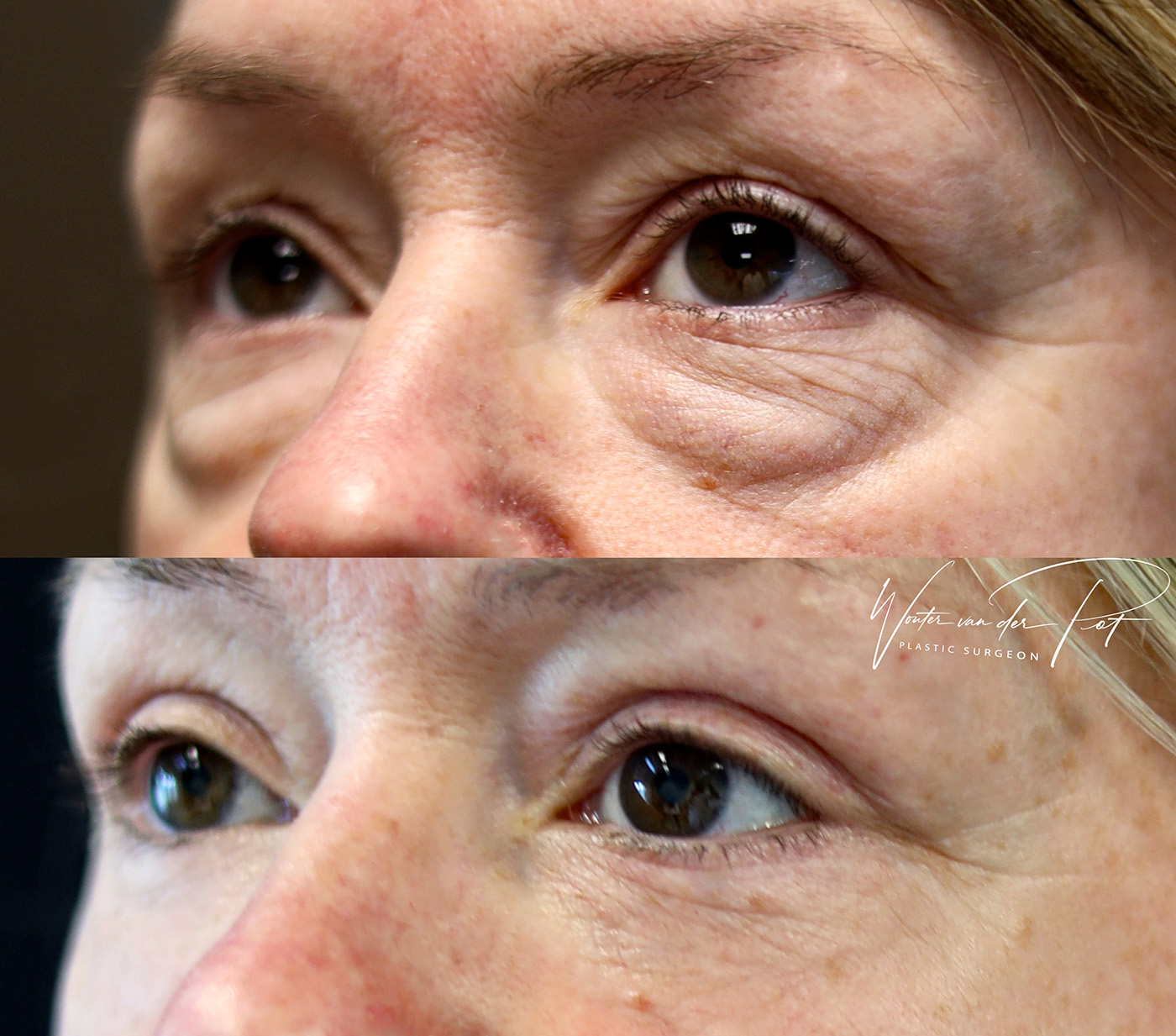
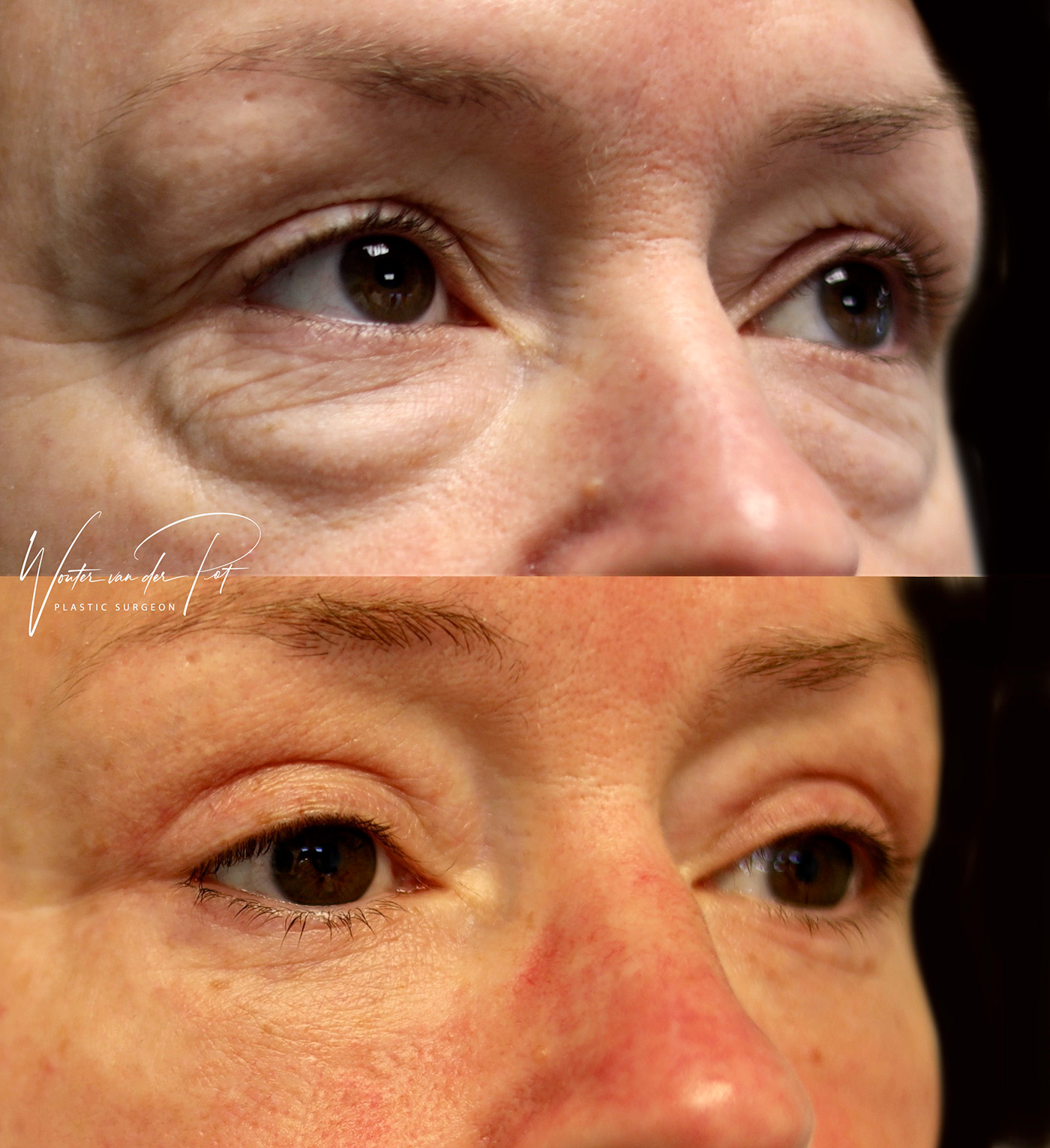
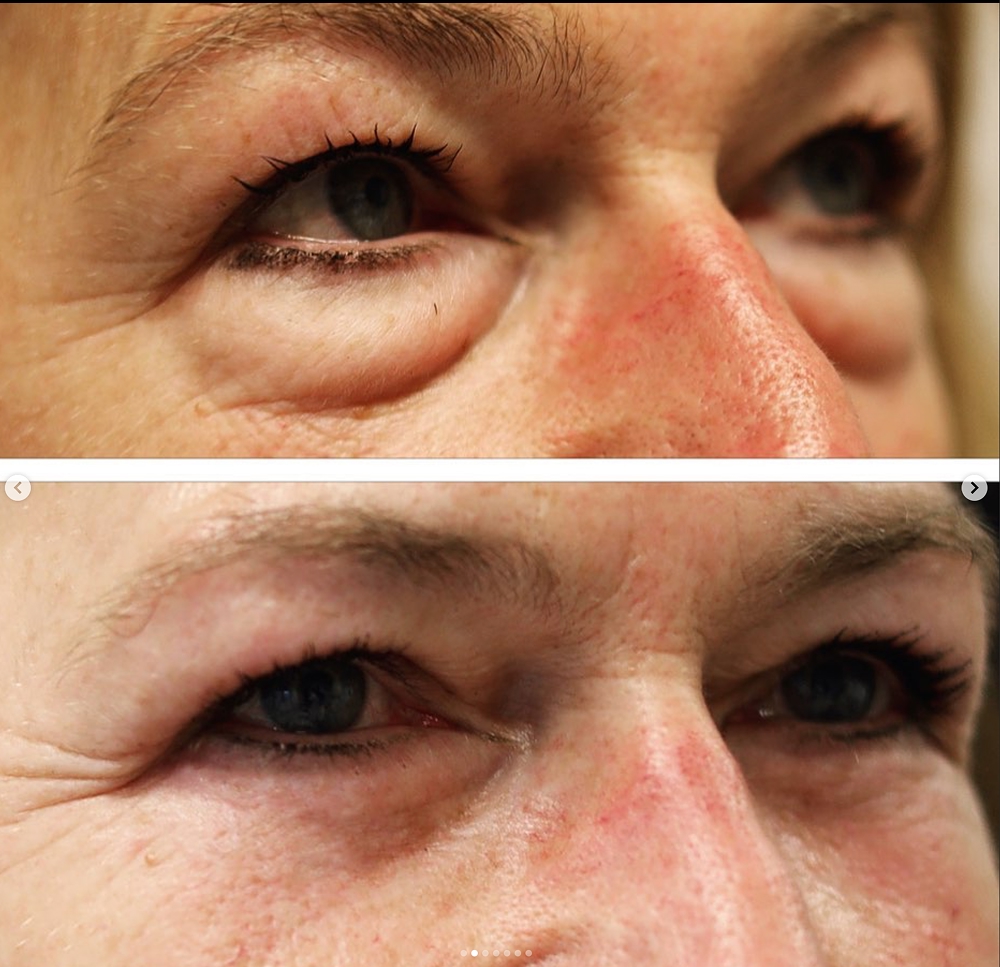
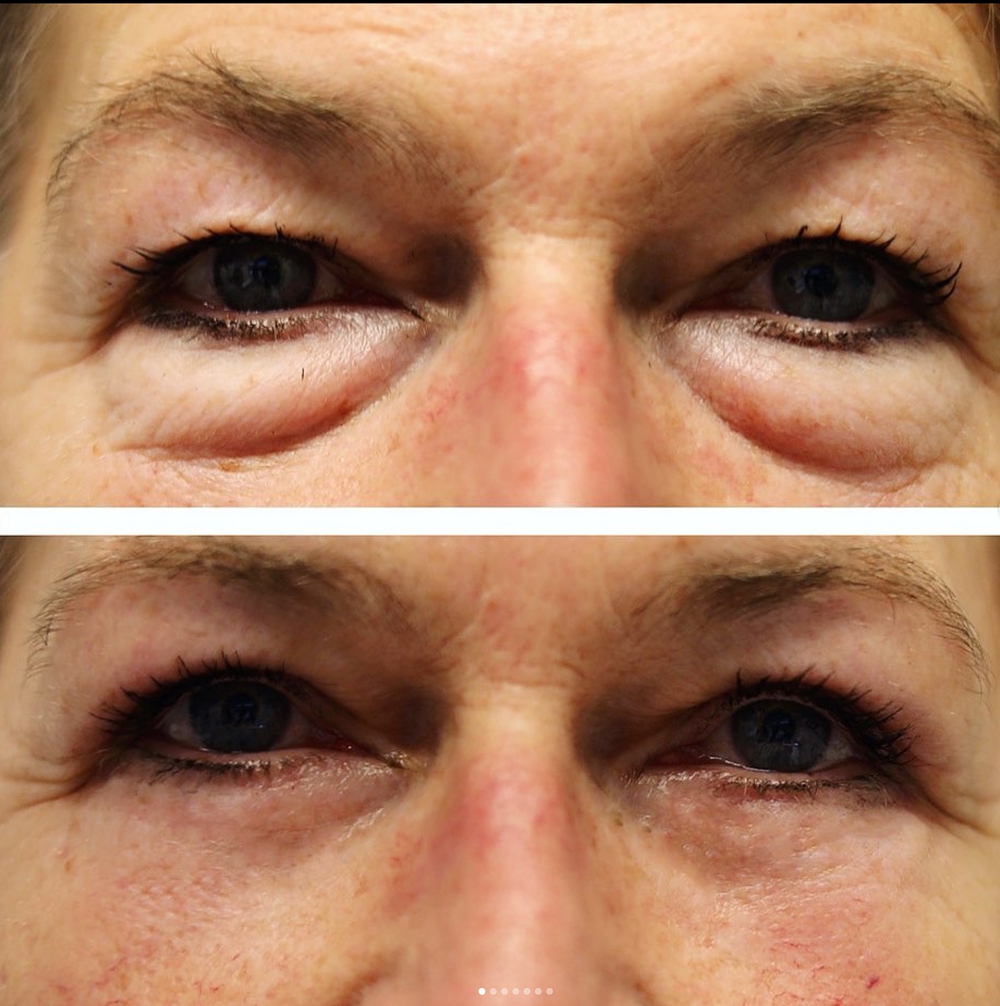
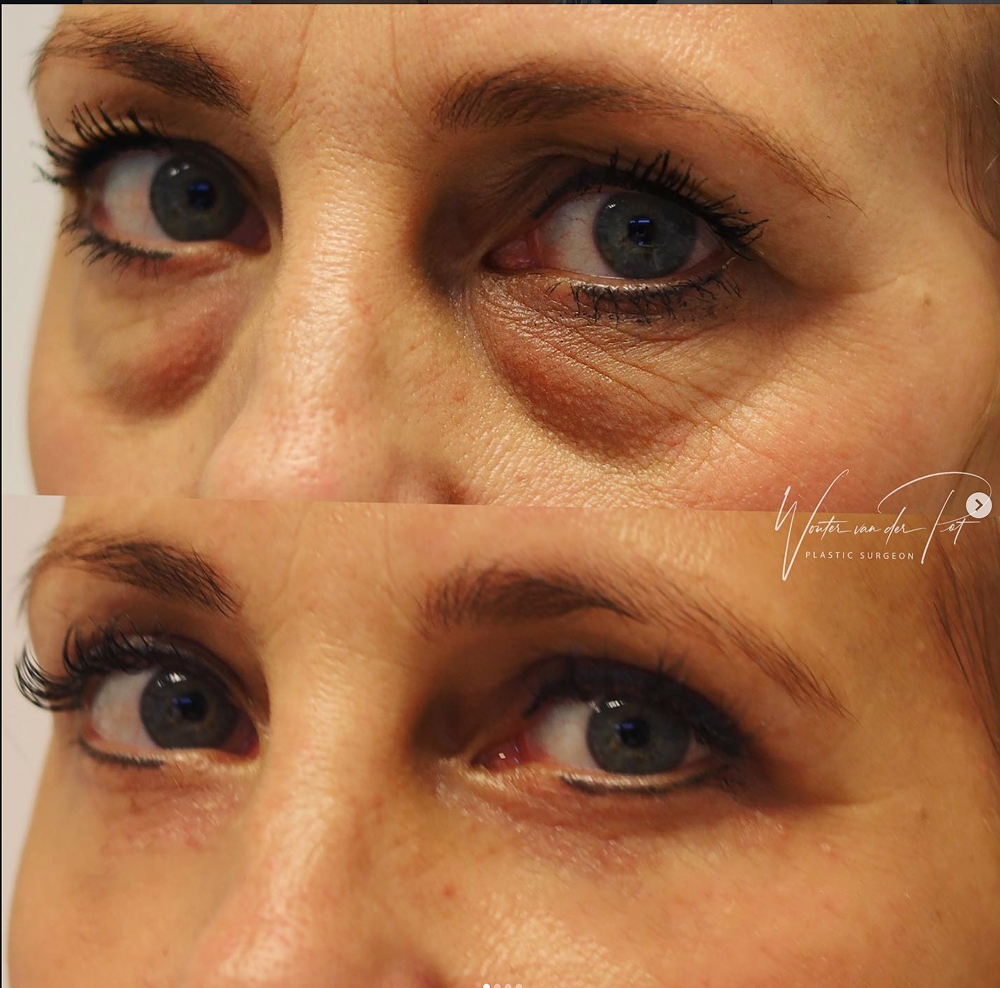
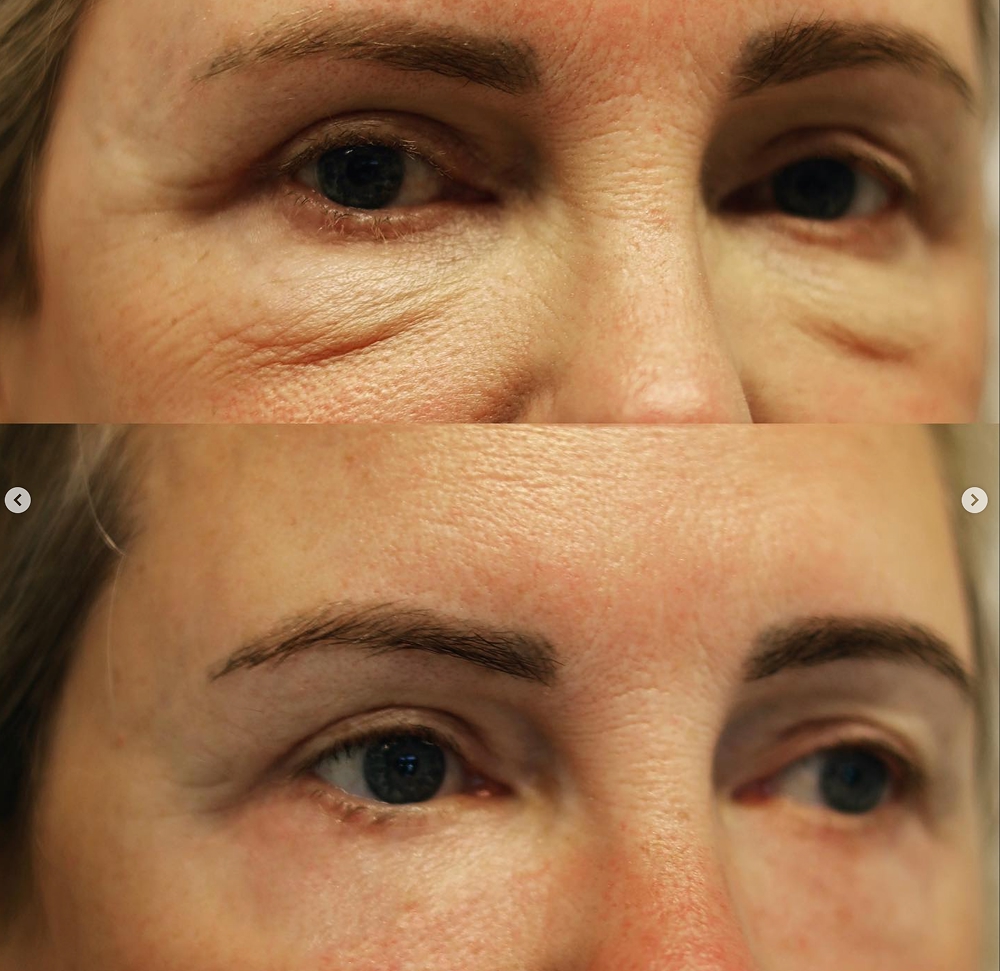
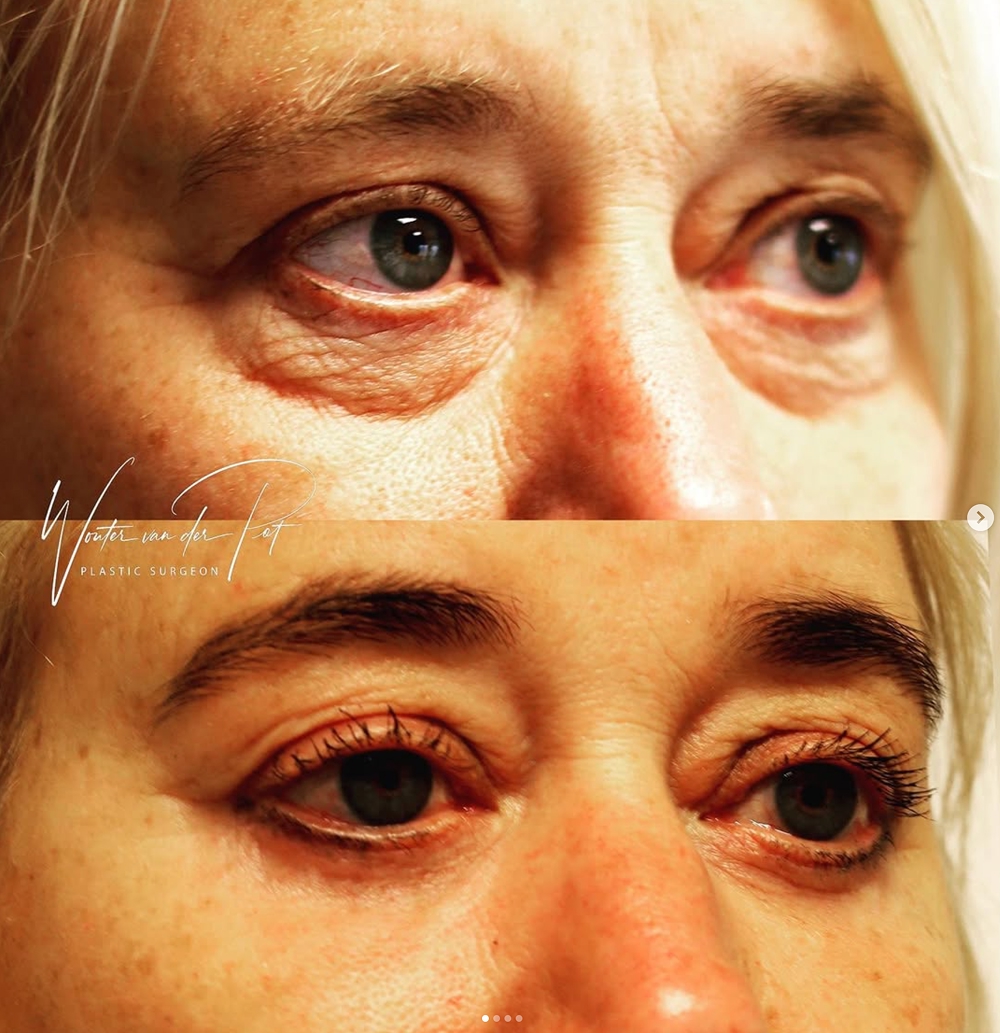
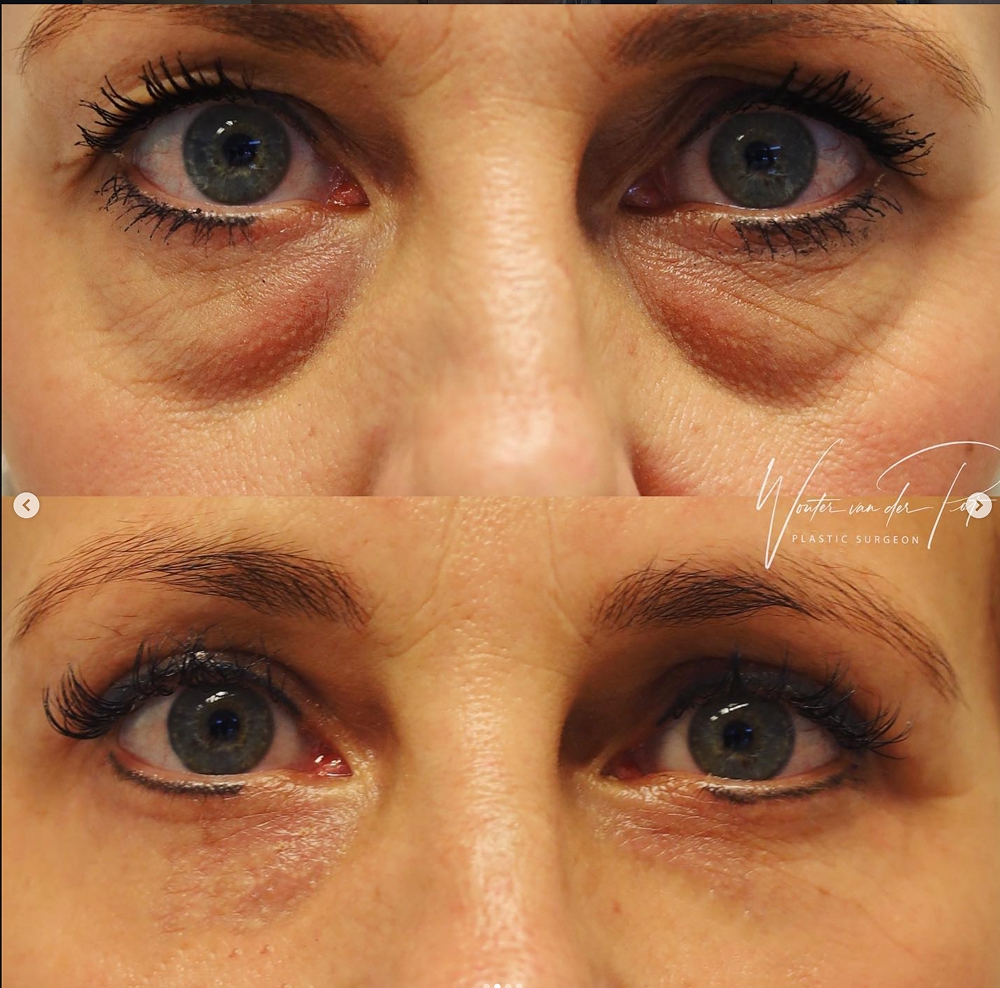
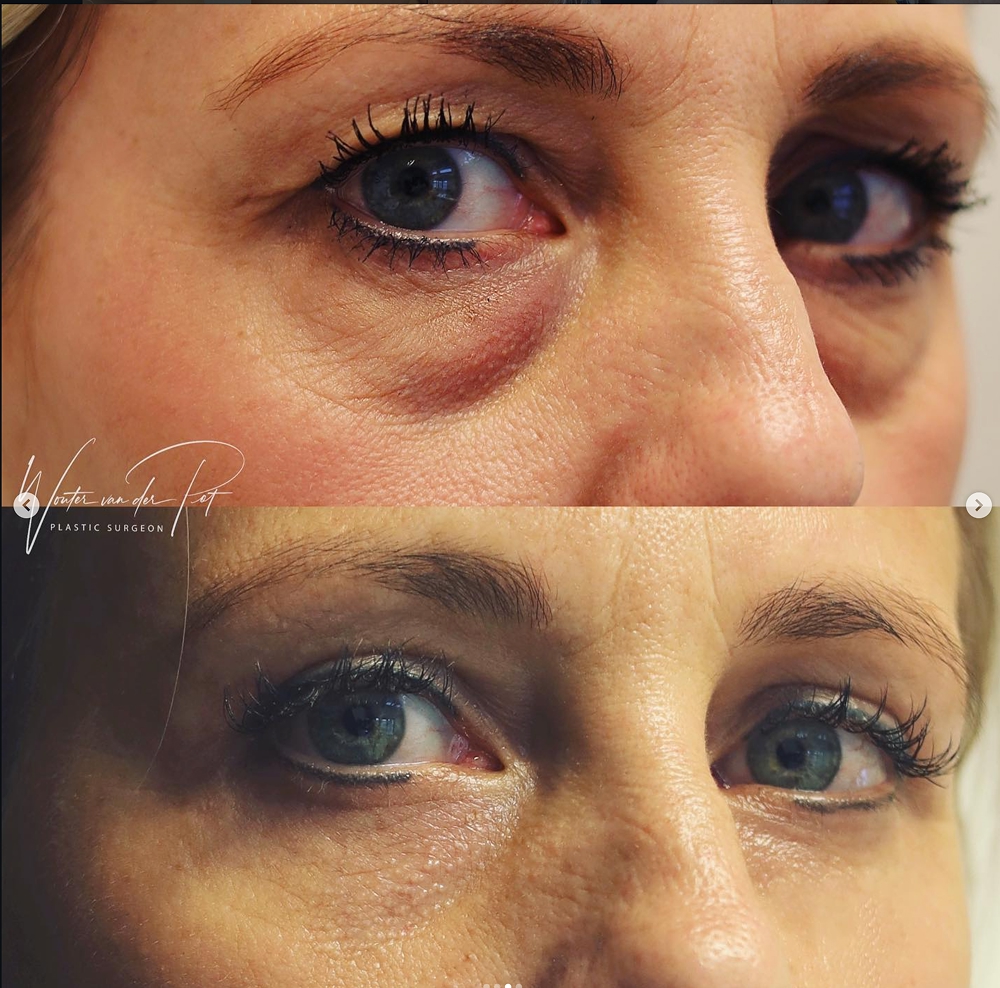
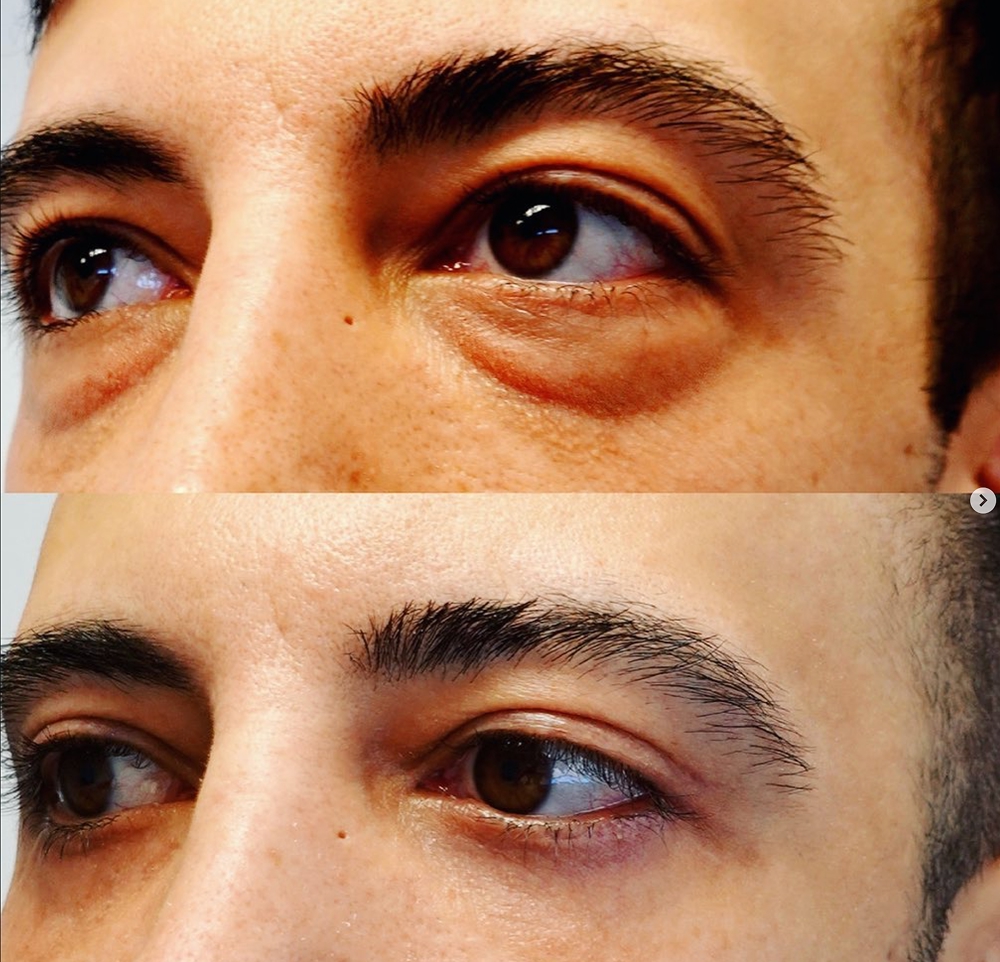
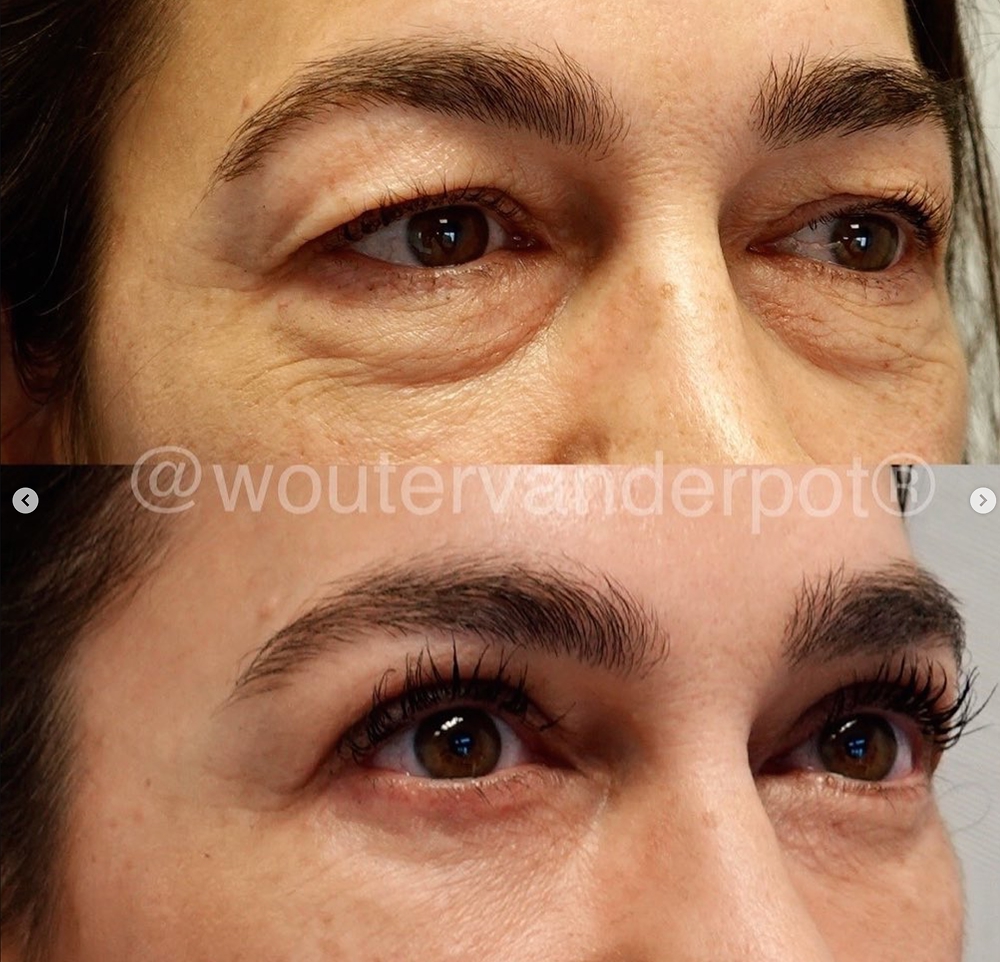
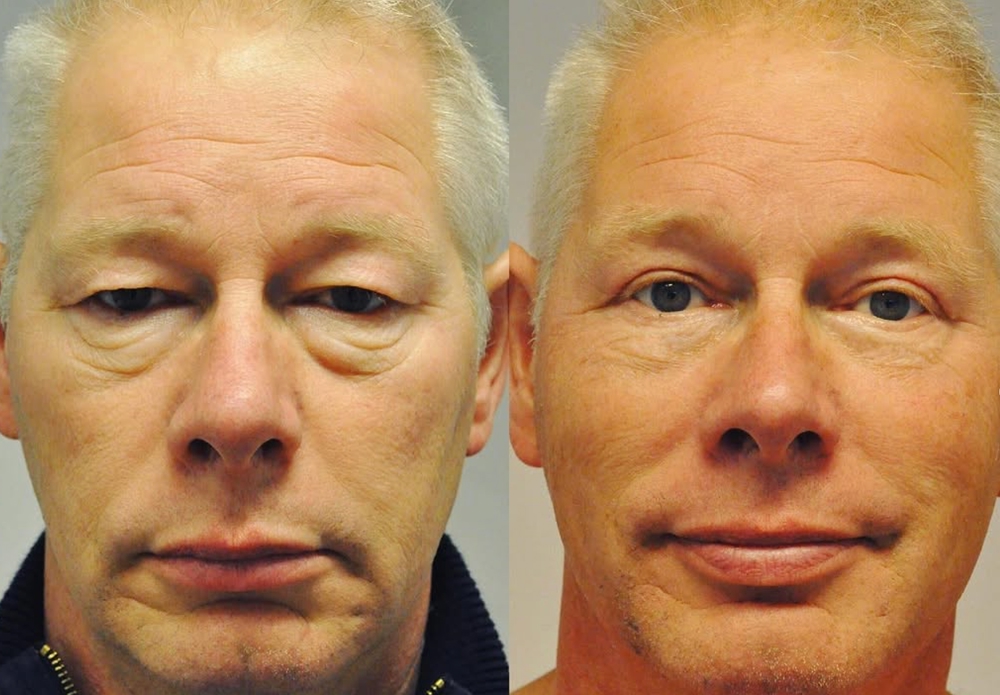
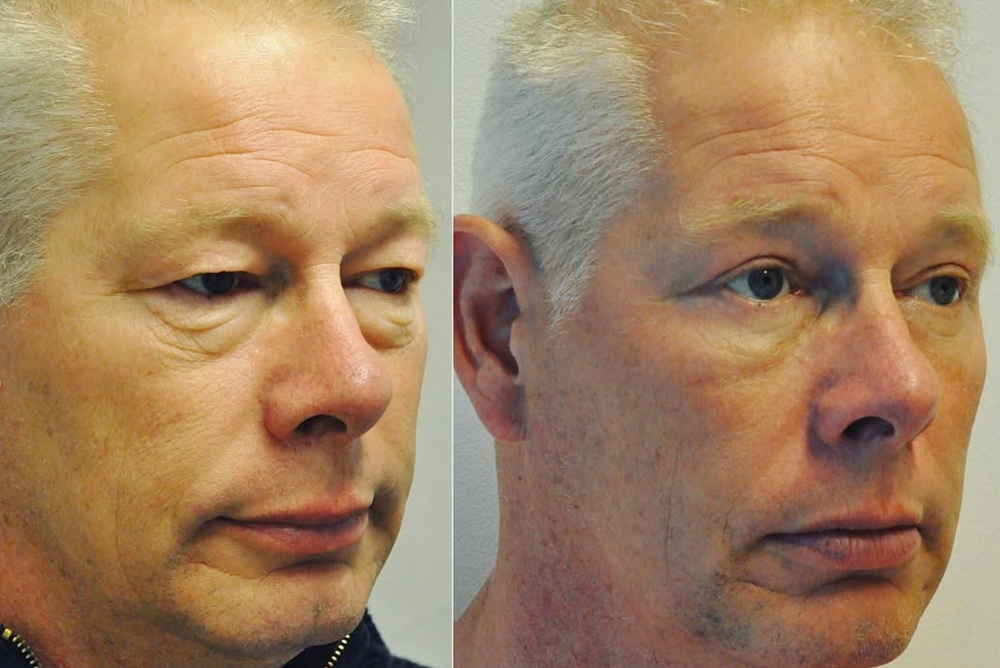
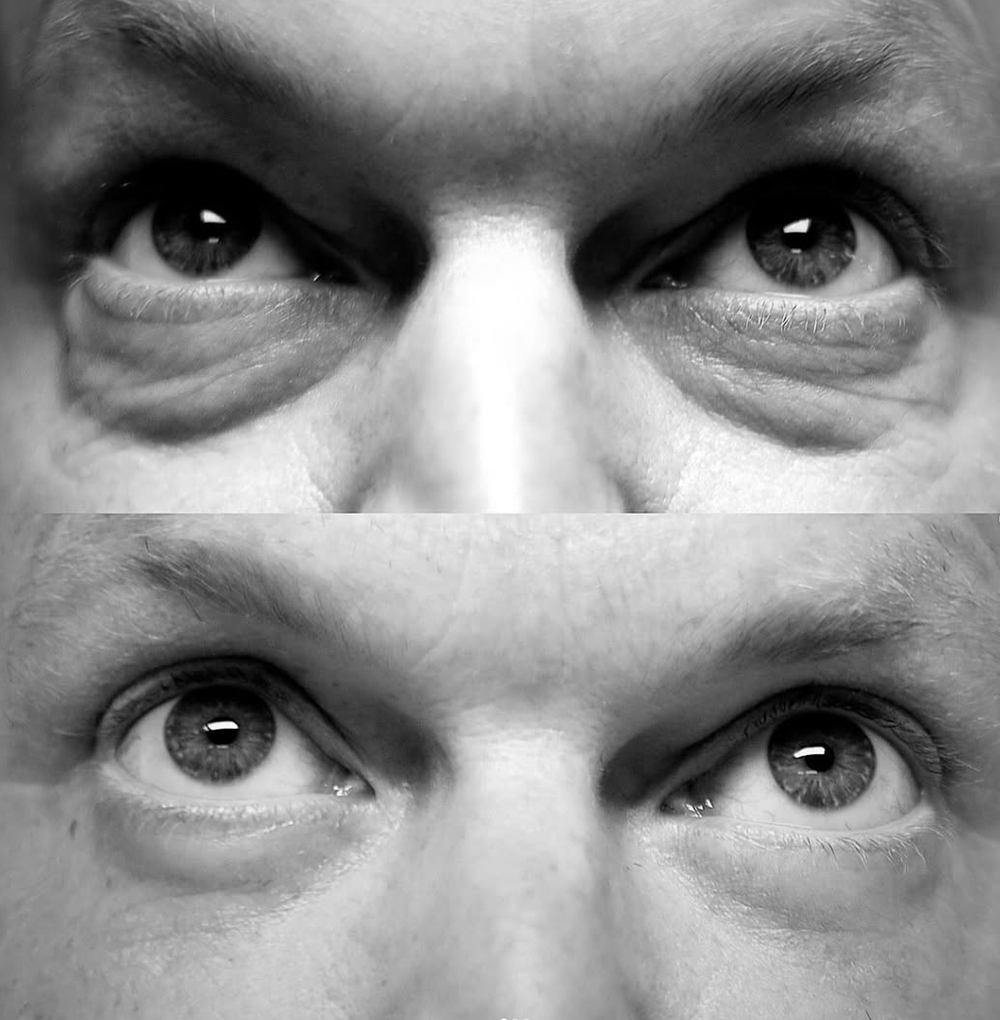
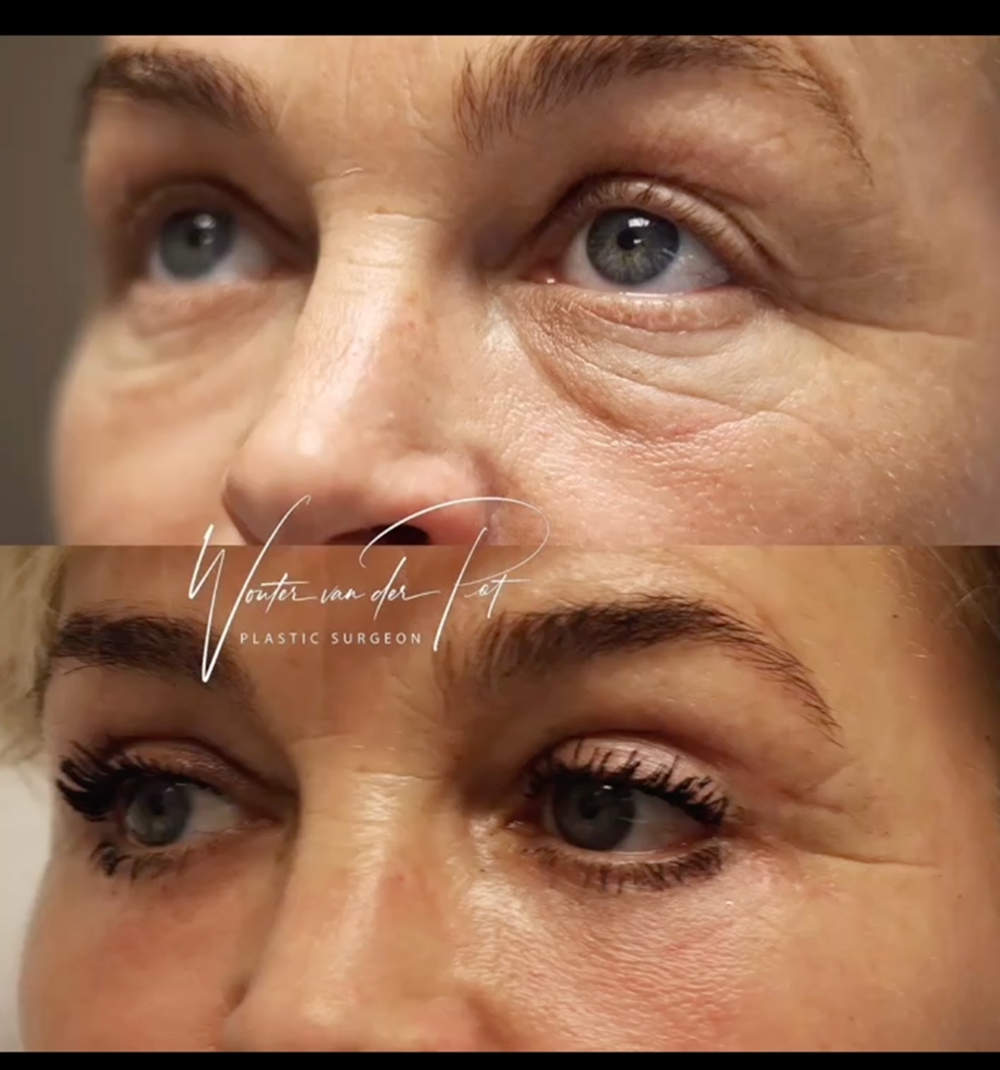
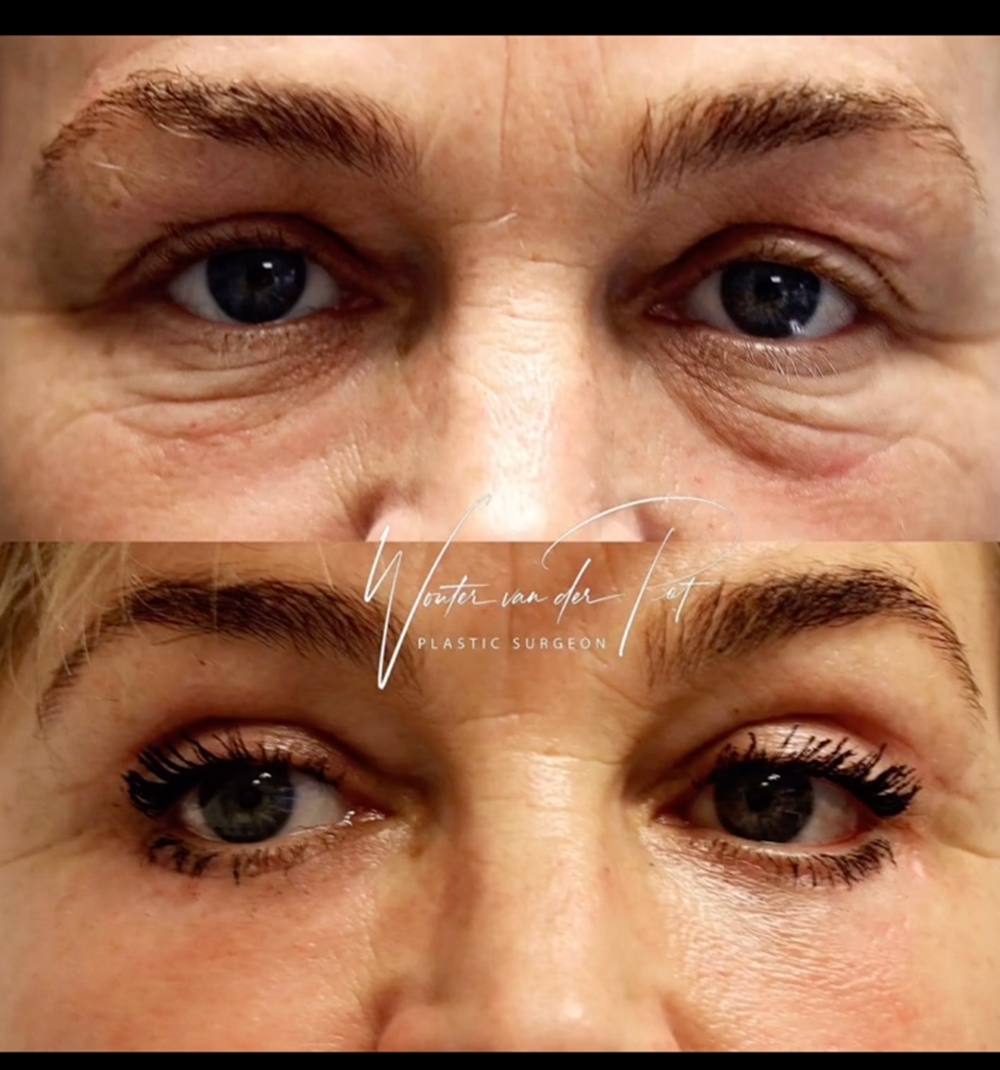
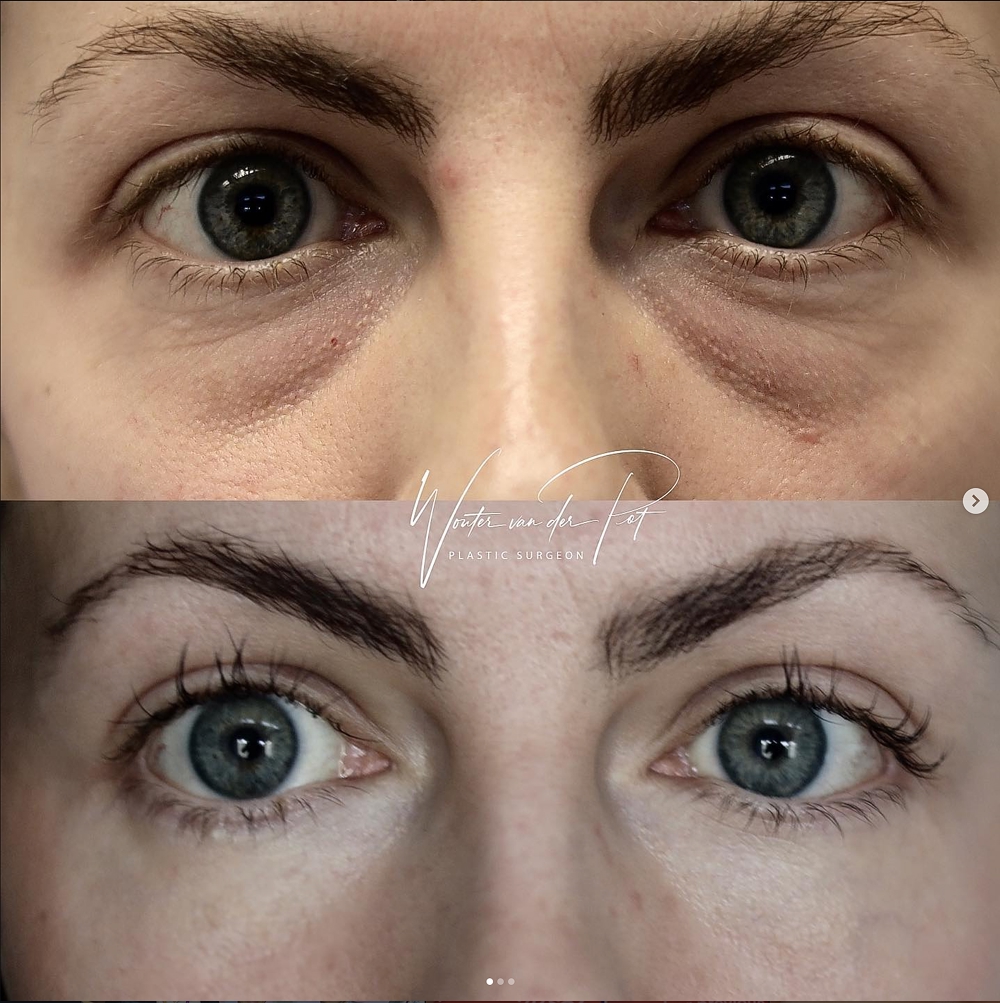
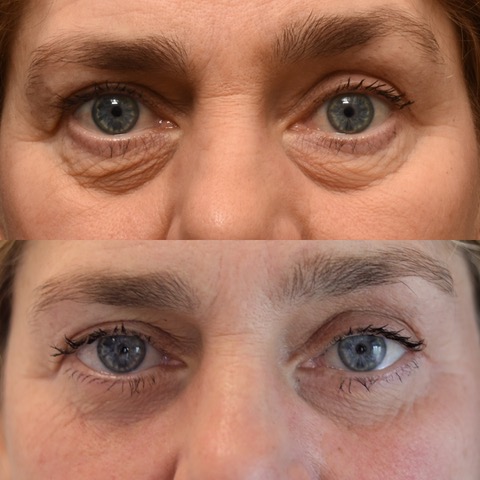
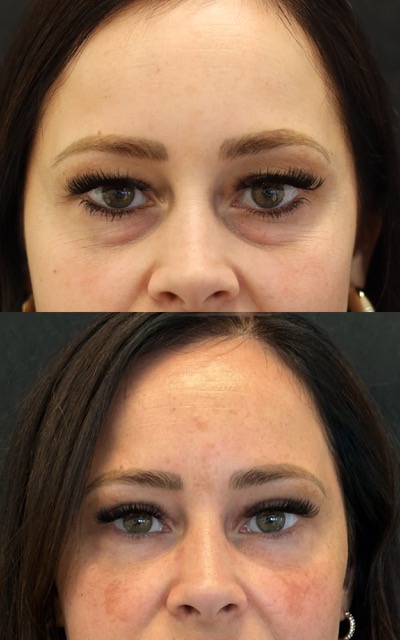
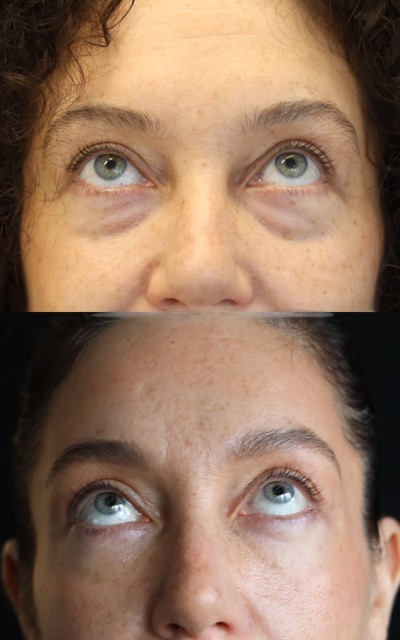
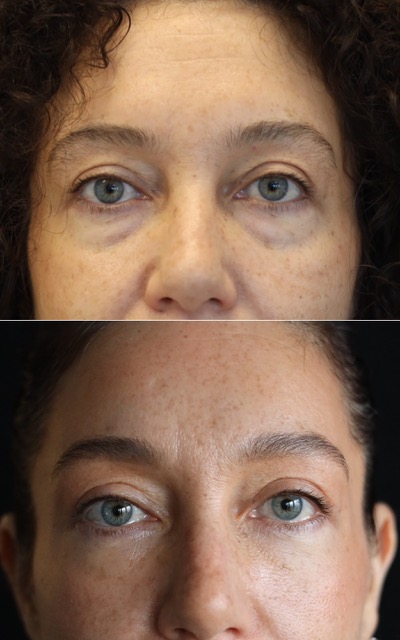
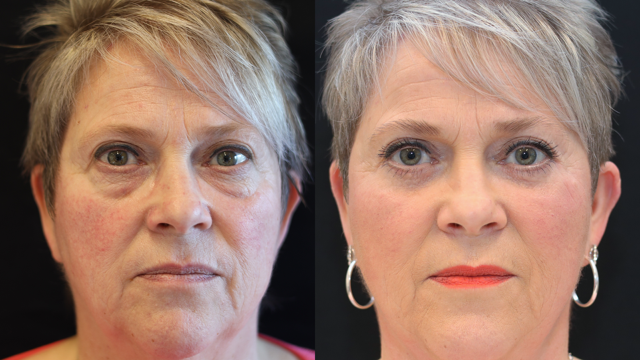
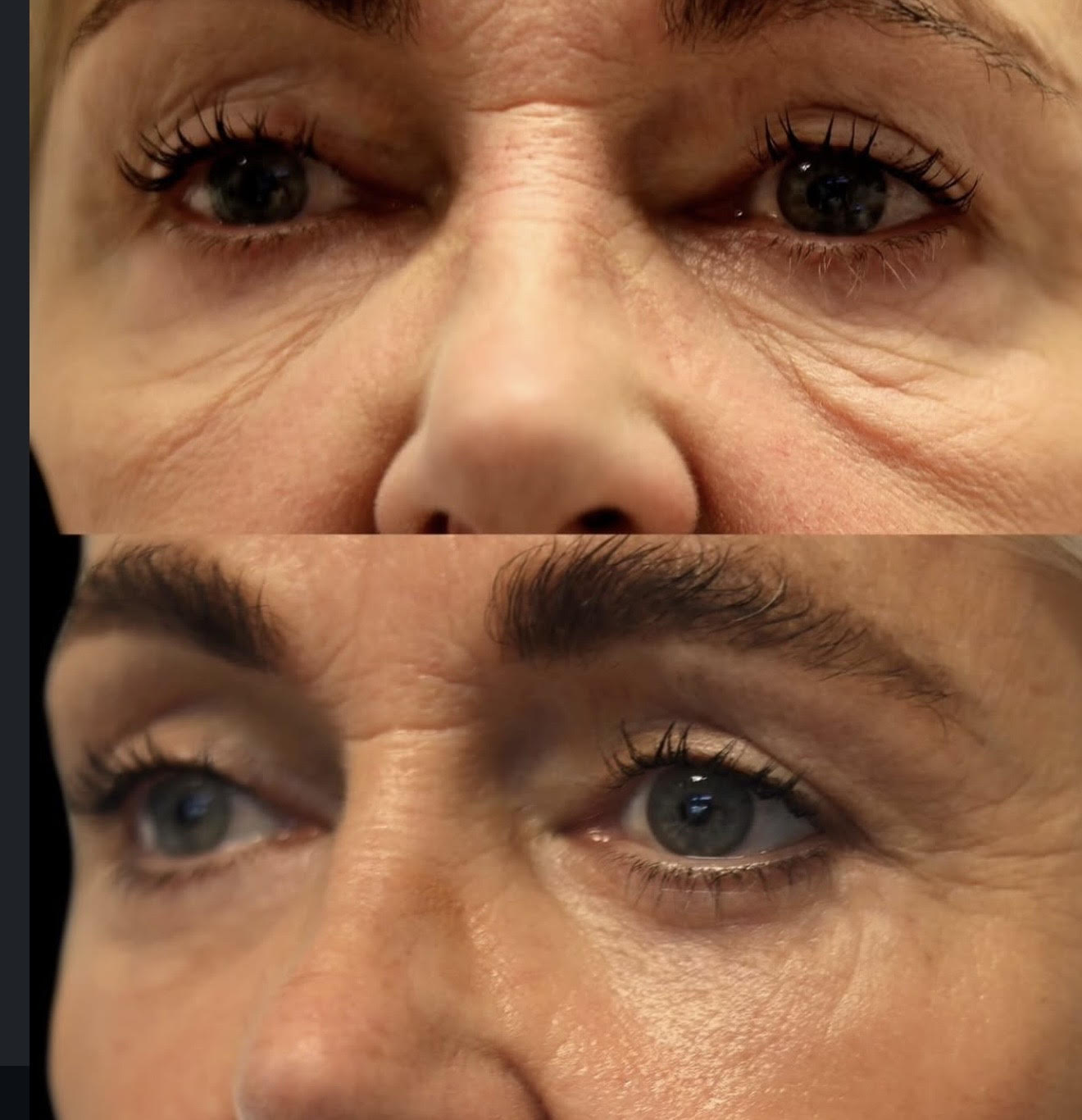
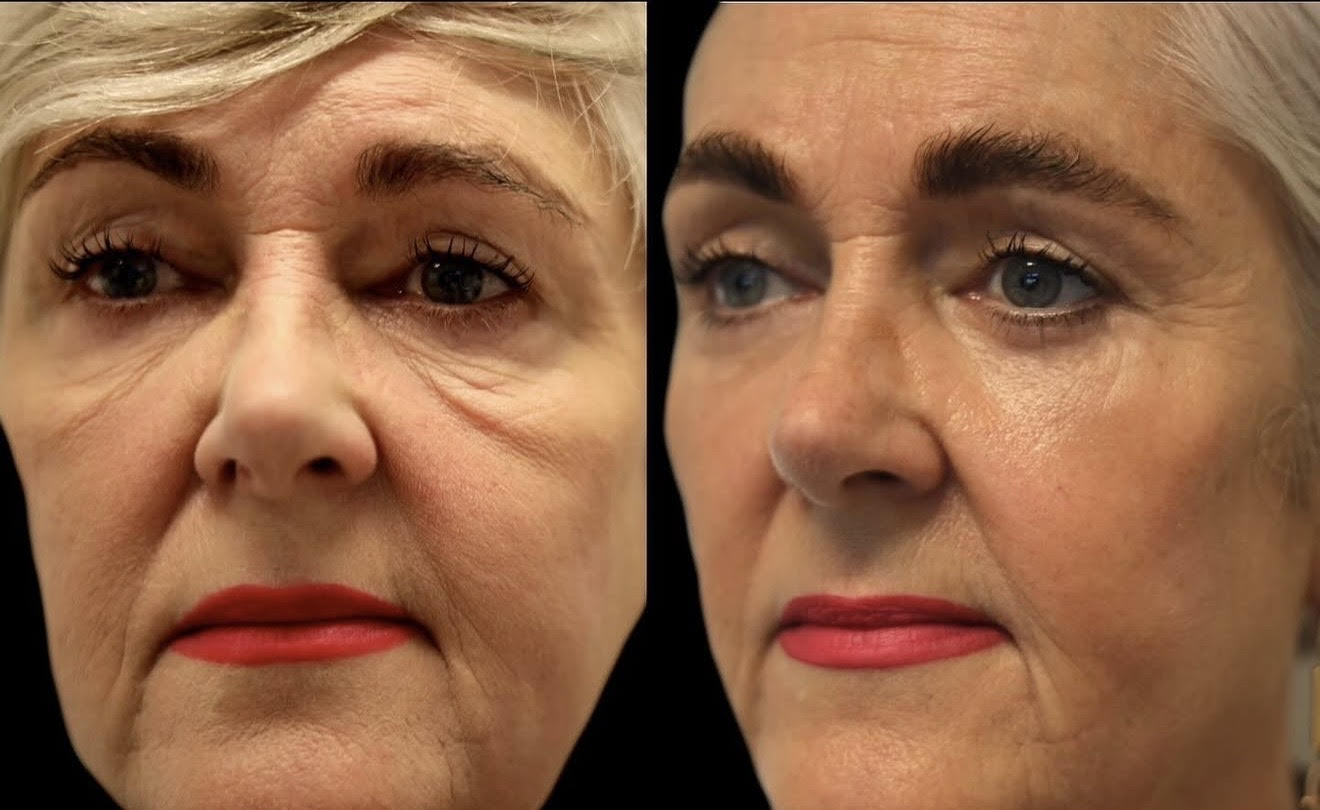
Bags under the eyes often make someone look tired, older or even unhealthy, even though they don't feel that way at all. Lower eyelid correction is a refined and technically complex procedure, the aim of which is not to “tighten” the skin, but to make the transition from the lower eyelid to the cheek smooth and natural again.
At Gooimeer Clinics, lower eyelid correction is one of our core specialisations. Our plastic surgeons have extensive experience with this procedure and are internationally renowned for their anatomical approach and natural results.
Wallen are rarely a purely skin-related problem. In most cases, they are caused by a combination of factors:
protruding fat from the eye socket
a deepened tear trough beneath the bulge
laxity of the muscle and supporting tissue
sometimes fluid retention or lower-lying swelling (festoons)
The fat that surrounds the eyeball is normally held in place by a firm membrane. As this weakens over the years, the fat can shift forward, creating a bulge with a shadow or groove underneath. This produces the typical appearance of “under-eye bags with a tired look.”
A successful lower eyelid correction starts with understanding the anatomy. Not every under-eye bag is the same, and therefore not every solution is the same.
At Gooimeer Clinics, we systematically assess:
skin quality
the circular muscle around the eye
the position and amount of fat
the degree and location of swelling
Based on this, we determine which technique is the best fit. Our guiding principle is always: as natural as possible, while preserving volume where it is needed.
Click on an subject for more information
In most cases, we perform an extensive lower eyelid correction with fat repositioning and muscle support. This technique was sometimes referred to in the past as a “midface lift,” but because that can be confusing, we deliberately no longer use that term.
Skin
Only a small amount of skin is removed. Removing too much skin can pull the lower eyelid downward, and we absolutely want to avoid that.
Muscle (orbicularis oculi)
The circular muscle around the eye is used like an internal hammock. It is reinforced and suspended to the bony rim of the eye socket to support the lower eyelid.
Fat repositioning
The fat that bulges forward from the eye socket is not simply removed, but is often repositioned into the tear trough. This makes the bulge less prominent and the groove less deep—addressing two problems at once.
Festoons / lower-lying swelling
When there is lower-lying swelling around the cheekbone, we adjust the technique accordingly. Improvement is often possible, but this requires extra precision and realistic expectations.
The procedure is usually performed under local anesthesia, optionally combined with sedation.
The goal is not to create a “different face,” but rather:
a smoother transition from the lower eyelid to the cheek
less shadowing and depth under the eyes
a fresh, well-rested appearance
preservation of a natural-looking gaze
Afterwards, people often hear: “You look well rested”—without being able to pinpoint exactly why.
During the first few days, there will be swelling and bruising.
After approximately 2 to 3 weeks, you are usually presentable again.
Mild residual swelling may persist for several weeks.
We assess the final result after about 3 months.
You will receive clear aftercare instructions, and follow-up appointments will take place with your treating plastic surgeon.
The displaced fat cannot return to its original position. Although the face continues to age naturally, the deep groove under the eyes usually does not return to the same extent. The effect of a well-performed lower eyelid correction is therefore long-lasting.
In most cases, we perform an extensive lower eyelid correction with fat repositioning and muscle support. This technique was sometimes referred to in the past as a “midface lift,” but because that can be confusing, we deliberately no longer use that term.
Skin
Only a small amount of skin is removed. Removing too much skin can pull the lower eyelid downward, and we absolutely want to avoid that.
Muscle (orbicularis oculi)
The circular muscle around the eye is used like an internal hammock. It is reinforced and suspended to the bony rim of the eye socket to support the lower eyelid.
Fat repositioning
The fat that bulges forward from the eye socket is not simply removed, but is often repositioned into the tear trough. This makes the bulge less prominent and the groove less deep—addressing two problems at once.
Festoons / lower-lying swelling
When there is lower-lying swelling around the cheekbone, we adjust the technique accordingly. Improvement is often possible, but this requires extra precision and realistic expectations.
The procedure is usually performed under local anesthesia, optionally combined with sedation.
The goal is not to create a “different face,” but rather:
a smoother transition from the lower eyelid to the cheek
less shadowing and depth under the eyes
a fresh, well-rested appearance
preservation of a natural-looking gaze
Afterwards, people often hear: “You look well rested”—without being able to pinpoint exactly why.
During the first few days, there will be swelling and bruising.
After approximately 2 to 3 weeks, you are usually presentable again.
Mild residual swelling may persist for several weeks.
We assess the final result after about 3 months.
You will receive clear aftercare instructions, and follow-up appointments will take place with your treating plastic surgeon.
The displaced fat cannot return to its original position. Although the face continues to age naturally, the deep groove under the eyes usually does not return to the same extent. The effect of a well-performed lower eyelid correction is therefore long-lasting.
Is lower eyelid surgery painful?
The procedure itself can be performed under local anaesthetic. Post-operative pain is usually limited and can be easily controlled with painkillers.
Will I have a scar from lower eyelid surgery?
The scar is located just below the lash line and is usually barely visible after healing.
Can lower eyelid correction be combined with other procedures?
Yes, lower eyelid correction can be combined with upper eyelid correction or a facelift, if appropriate.
Will my eyes look different after lower eyelid surgery?
No. The aim is to preserve your natural appearance, without any pulling or tightening effect.
Are you considering lower eyelid correction?
Would you like to know whether a lower eyelid correction is the right option for you? In a personal consultation, we look beyond “eye bags” alone. We assess the lower eyelid and the transition into the cheek, because under-eye concerns are usually a combination of fat position, support structures, skin quality and sometimes swelling (festoons).
During the consultation, you will receive:
an anatomical assessment of the lower eyelid, tear trough, fat position, muscle/support tissue and any swelling
a clear recommendation on the most suitable technique (e.g., fat repositioning, muscle support, limited skin correction, or a combination)
realistic guidance on what can be improved (shadowing, contour, lid–cheek transition) and what is less predictable (e.g., pigmentation)
a detailed explanation of recovery, aftercare, scarring and potential risks
example results and a personalised treatment plan with transparent pricing
Then we warmly invite you for a personal consultation at Gooimeer Clinics.
Sign up for our newsletter to stay up to date with the latest news.
Follow us on social media to stay up to date with our practice and see the latest stories.