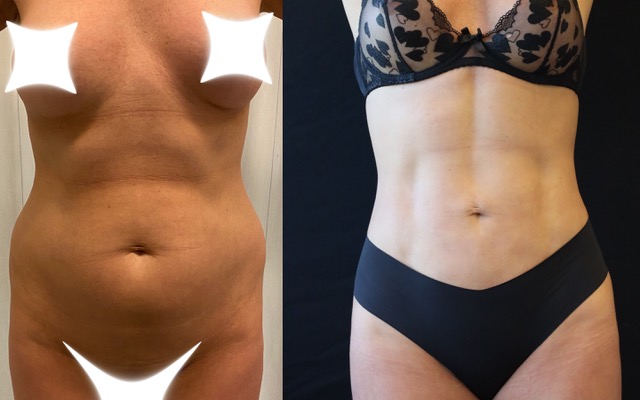
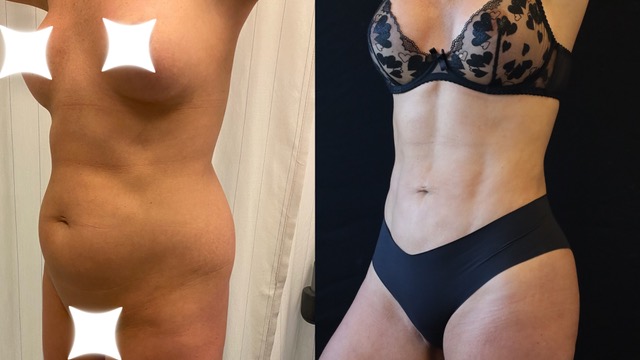
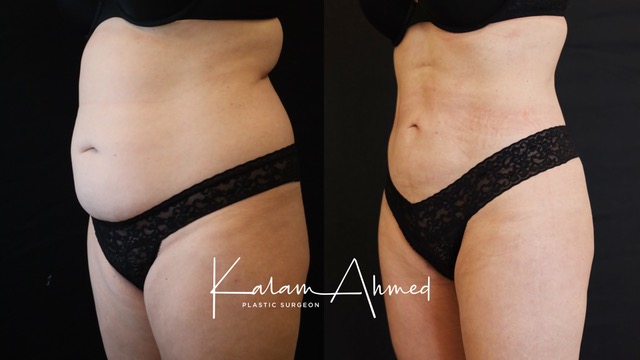
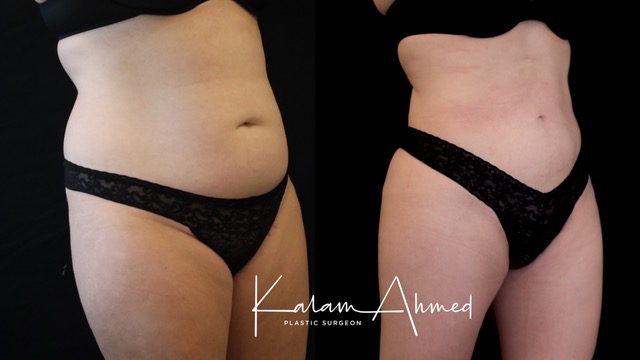
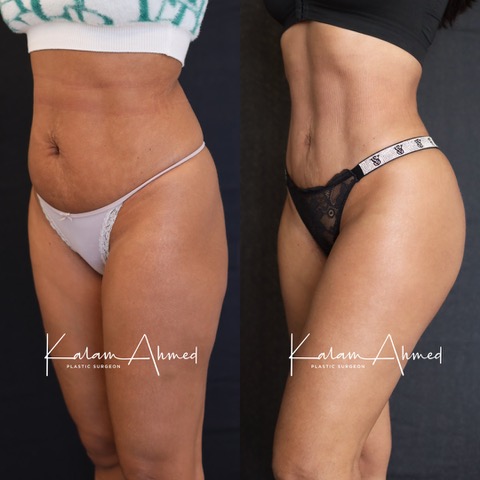
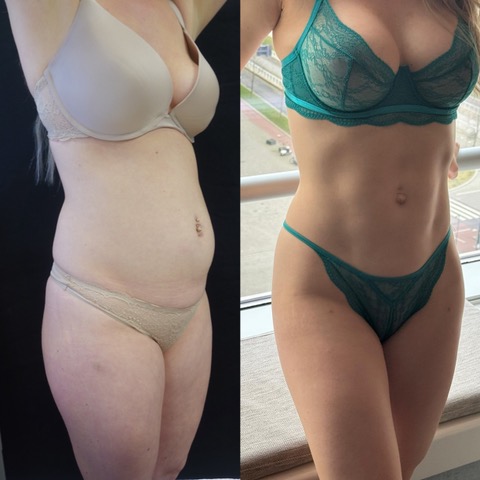
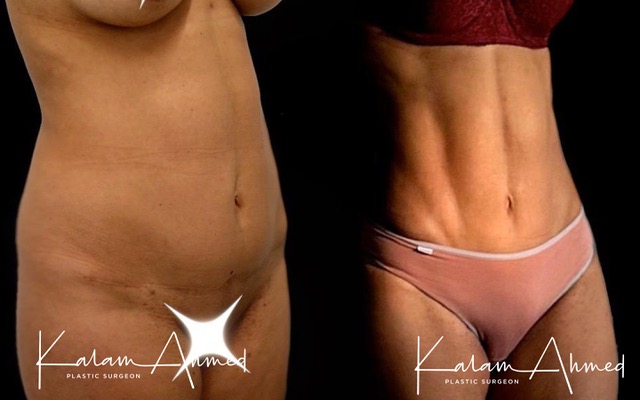
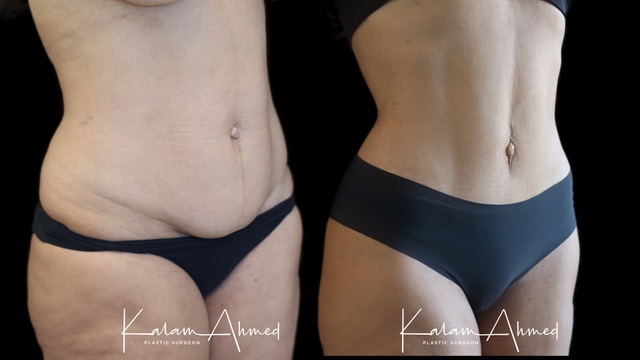
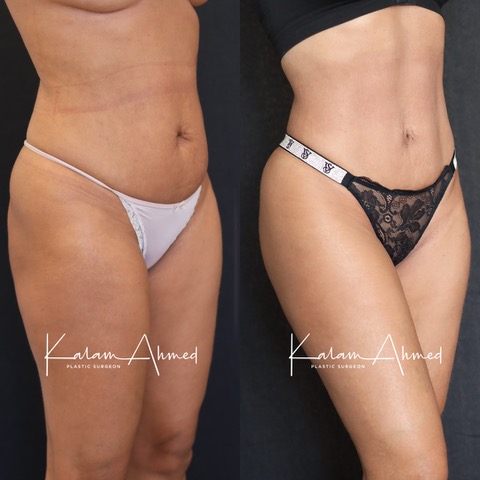
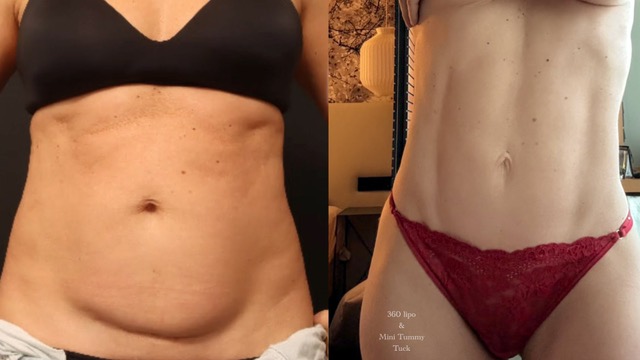
A body lift is a major surgical procedure that permanently changes the body. This treatment is performed on people who have lost a lot of weight and suffer from excess skin around the abdomen, flanks, hips, lower back, and buttocks. It is important that you only undergo this surgery if you understand what the treatment entails, what risks are involved, and what you can and cannot expect from the results.
This text is intended to provide you with detailed information so that you can make an informed decision.
A body lift involves removing excess skin and sometimes underlying fatty tissue around the lower torso. This is done not only at the front of the body, but also at the sides and back. The skin is then redistributed and tightened. This flattens the abdomen, makes the waist more visible, and lifts the buttocks and flanks.
The procedure changes your body shape, but is not intended for weight loss.
A body lift is intended for people who have lost a lot of weight and whose skin has not shrunk sufficiently. You are only eligible if your weight is stable and your physical condition allows you to undergo major surgery. It is also important that you have realistic expectations. The surgery can improve your contours, but cannot guarantee a perfect body.
During the consultation, the plastic surgeon will assess whether a body lift is appropriate in your situation.
Click on a topic for more information
The body lift is performed under general anesthesia. During the operation, excess skin is removed and the remaining tissue is reattached. In many cases, the navel is repositioned.
As with any anesthesia, there is a small risk of side effects or complications, such as allergic reactions, breathing problems, or fluctuations in blood pressure. These risks are discussed with the anesthesiologist beforehand.
After the operation, you will usually stay in hospital overnight. You may experience pain, swelling, and a feeling of tightness. This is normal after this type of procedure. You will wear compression garments for several weeks to support healing and limit fluid retention.
Recovery usually takes six to eight weeks. During this period, you should avoid physical exertion, lifting, and sports. The body needs time to recover, and the final result will only be visible after several months.
A body lift leaves a scar that runs around the lower torso. Initially, this scar will be red and swollen. Over the course of several months, it will gradually fade, but it will always remain visible. The way a scar heals varies from person to person and cannot be predicted in advance.
As with any surgical procedure, there is a risk of complications with a body lift. These can include infections, post-operative bleeding, fluid accumulation, delayed wound healing, or changes in sensation. It is also possible that the skin may experience poor blood circulation in certain areas or that the cosmetic result may not be entirely satisfactory. In some cases, additional treatment or correction may be necessary.
Although complications are rare, they cannot be completely ruled out.
It is important that you inform the plastic surgeon about all medications you are taking, especially blood thinners. Conditions such as diabetes, high blood pressure, or clotting problems can also affect the safety of the procedure and recovery.
Smoking and nicotine use have a strong negative impact on blood flow to the skin. This increases the risk of wound problems, infections, and scarring disorders. It is therefore necessary to completely stop smoking and using nicotine products at least six weeks before and six weeks after the operation.
A body lift can greatly improve your body shape and comfort. However, it is important to understand that no surgery can guarantee perfection. The body continues to change due to aging and possible weight fluctuations. Asymmetry may also occur, or scars may heal differently than expected.
Cosmetic surgery can have a positive impact on self-image, but it is not a solution for deeper psychological problems. It is important that you undergo a body lift with realistic expectations and stable motivation.
By choosing a body lift, you declare that you have read and understood this information, that you accept the risks and limitations, and that you voluntarily consent to the treatment.
The body lift is performed under general anesthesia. During the operation, excess skin is removed and the remaining tissue is reattached. In many cases, the navel is repositioned.
As with any anesthesia, there is a small risk of side effects or complications, such as allergic reactions, breathing problems, or fluctuations in blood pressure. These risks are discussed with the anesthesiologist beforehand.
After the operation, you will usually stay in hospital overnight. You may experience pain, swelling, and a feeling of tightness. This is normal after this type of procedure. You will wear compression garments for several weeks to support healing and limit fluid retention.
Recovery usually takes six to eight weeks. During this period, you should avoid physical exertion, lifting, and sports. The body needs time to recover, and the final result will only be visible after several months.
A body lift leaves a scar that runs around the lower torso. Initially, this scar will be red and swollen. Over the course of several months, it will gradually fade, but it will always remain visible. The way a scar heals varies from person to person and cannot be predicted in advance.
As with any surgical procedure, there is a risk of complications with a body lift. These can include infections, post-operative bleeding, fluid accumulation, delayed wound healing, or changes in sensation. It is also possible that the skin may experience poor blood circulation in certain areas or that the cosmetic result may not be entirely satisfactory. In some cases, additional treatment or correction may be necessary.
Although complications are rare, they cannot be completely ruled out.
It is important that you inform the plastic surgeon about all medications you are taking, especially blood thinners. Conditions such as diabetes, high blood pressure, or clotting problems can also affect the safety of the procedure and recovery.
Smoking and nicotine use have a strong negative impact on blood flow to the skin. This increases the risk of wound problems, infections, and scarring disorders. It is therefore necessary to completely stop smoking and using nicotine products at least six weeks before and six weeks after the operation.
A body lift can greatly improve your body shape and comfort. However, it is important to understand that no surgery can guarantee perfection. The body continues to change due to aging and possible weight fluctuations. Asymmetry may also occur, or scars may heal differently than expected.
Cosmetic surgery can have a positive impact on self-image, but it is not a solution for deeper psychological problems. It is important that you undergo a body lift with realistic expectations and stable motivation.
By choosing a body lift, you declare that you have read and understood this information, that you accept the risks and limitations, and that you voluntarily consent to the treatment.
Click on an questions to see the answer
What is the difference between a body lift and an abdominoplasty?
An abdominoplasty treats only the front of the abdomen. A body lift addresses the body circumferentially: not only the abdomen, but also the flanks, lower back, and buttocks. This creates a more balanced and natural body contour.
Am I a suitable candidate for a body lift?
You may be suitable if you have lost a significant amount of weight, your weight is stable, and you have excess skin around the torso. During the consultation, the plastic surgeon will assess whether your health and skin quality allow for this procedure.
Hoe lang duurt een bodylift-operatie?
A body lift typically takes around three to four hours, depending on how much skin needs to be removed and whether the procedure is combined with other corrections.
Do I need to stay in the clinic after a body lift?
Yes. You will usually stay overnight so you can recover safely and be medically monitored.
Is a body lift painful?
After the procedure, you may experience pain, stiffness, and a tight feeling. This is normal and is managed with pain medication. Most people find the pain manageable.
When can I return to work after a body lift?
For desk-based work, you can usually return after two to three weeks. Physically demanding work often requires a longer recovery period.
When can I exercise or lift heavy after a body lift?
Intense exercise and heavy lifting are usually allowed after about six weeks, depending on your recovery.
What do body lift scars look like?
The scars run around the lower torso and are placed as low as possible. They are initially red and noticeable and typically fade over months to a year. They will not disappear completely.
Is it possible to be unhappy with the result after a body lift?
Yes. Even with a carefully performed procedure, there is always a chance the outcome differs from what you hoped for. In some cases, an additional treatment may be needed.
Are body lift results permanent?
The removed excess skin does not come back. However, weight fluctuations and ageing can still affect your body shape over time.
Is a body lift covered by health insurance?
In some cases it may be, however Gooimeer Clinics does not provide insured care.
Do I have to stop smoking before and after a body lift?
Yes. Smoking and nicotine use significantly increase the risk of wound-healing problems and complications. You must stop completely at least six weeks before and six weeks after surgery.
What happens if complications occur after a body lift?
If complications arise, Gooimeer Clinics will treat them as effectively as possible. In some cases, additional medical care or an extra procedure may be required.
A body lift is an extensive body contouring procedure that treats the torso circumferentially: abdomen, flanks, lower back and often the buttocks. It is therefore more than “removing skin” — it is about restoring proportion, tension and balance after major weight loss. During your consultation, we take the time to assess excess skin, scar placement and overall safety in detail, and create a tailored plan with honest guidance on what is and is not worthwhile.
During the consultation, you will receive:
assessment of excess skin around the entire torso (front, flanks, lower back, buttocks)
evaluation of skin quality and tissue laxity: what can realistically be achieved
discussion of weight history and stability (key for long-lasting results)
recommendation of the most suitable approach: (lower) body lift / circumferential tummy tuck and any extensions
a scar plan: placed as low as possible, expected length, scar maturation and underwear concealment
evaluation of whether liposuction is beneficial for additional contour refinement (and where)
review of risks: wound issues, seroma, bleeding, infection, DVT/pulmonary embolism, sensory changes, asymmetry
recovery planning: mobilisation, compression, return to work/sport, follow-ups and aftercare
example results and a personalised treatment plan with transparent pricing
Then we warmly invite you for a personal consultation at Gooimeer Clinics.
Click on an article to see more information
Sign up for our newsletter to stay up to date with the latest news.
Follow us on social media to stay up to date with our practice and see the latest stories.