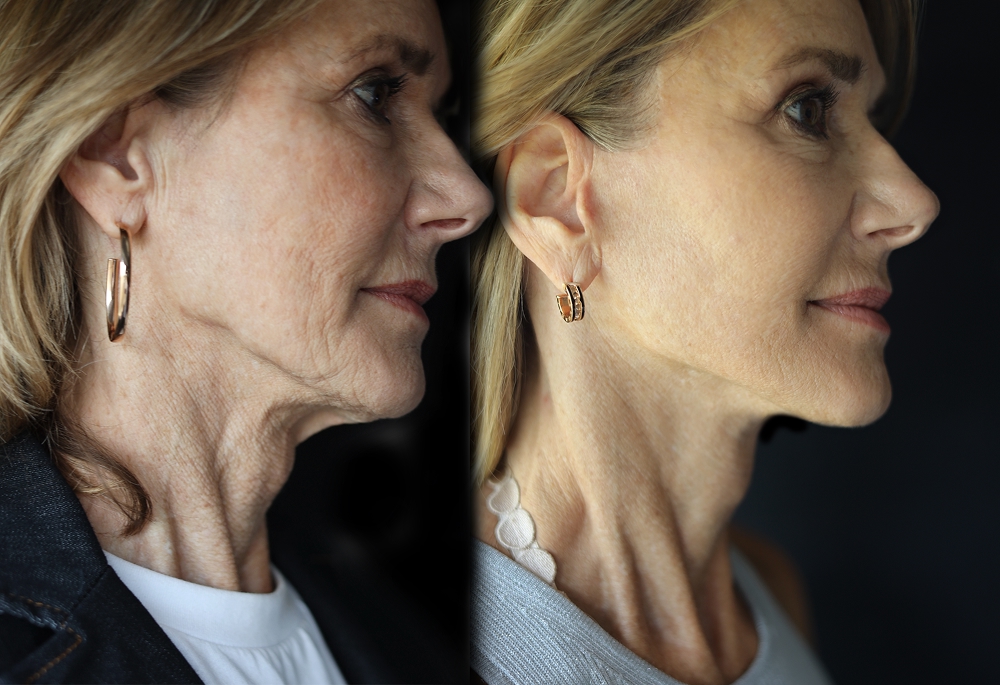
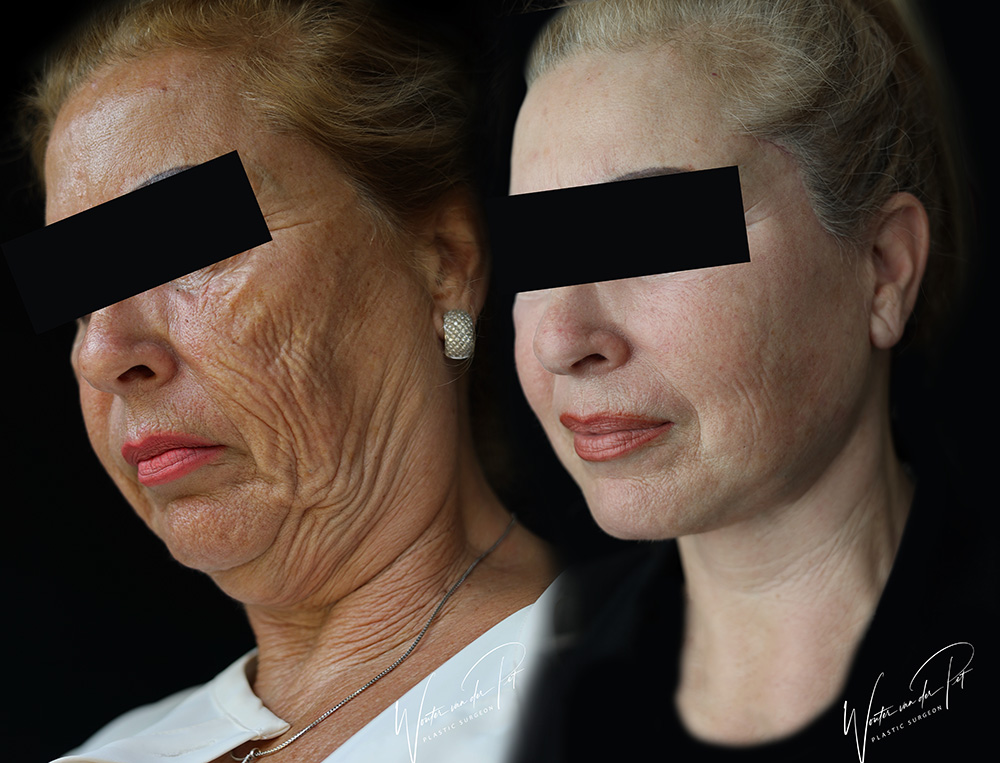
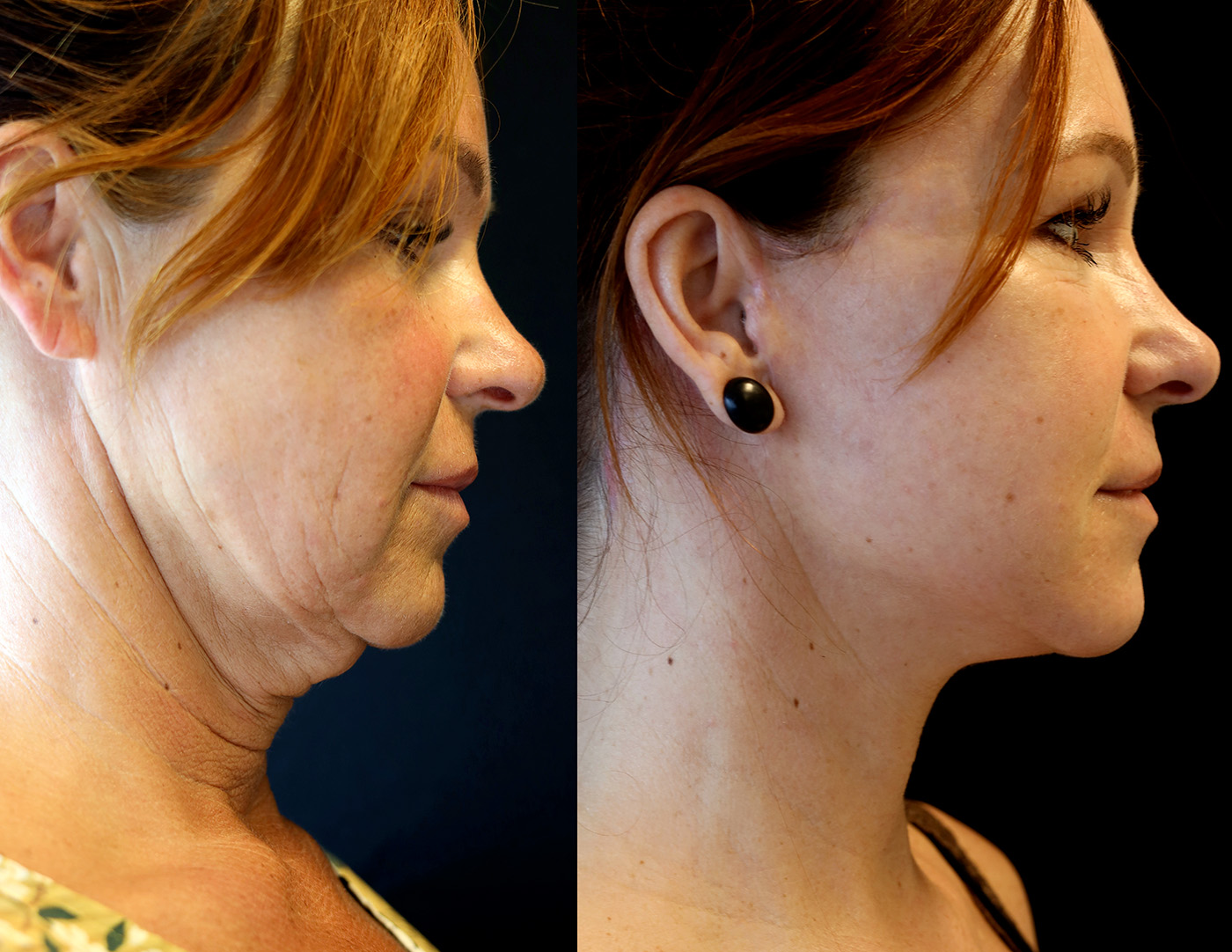
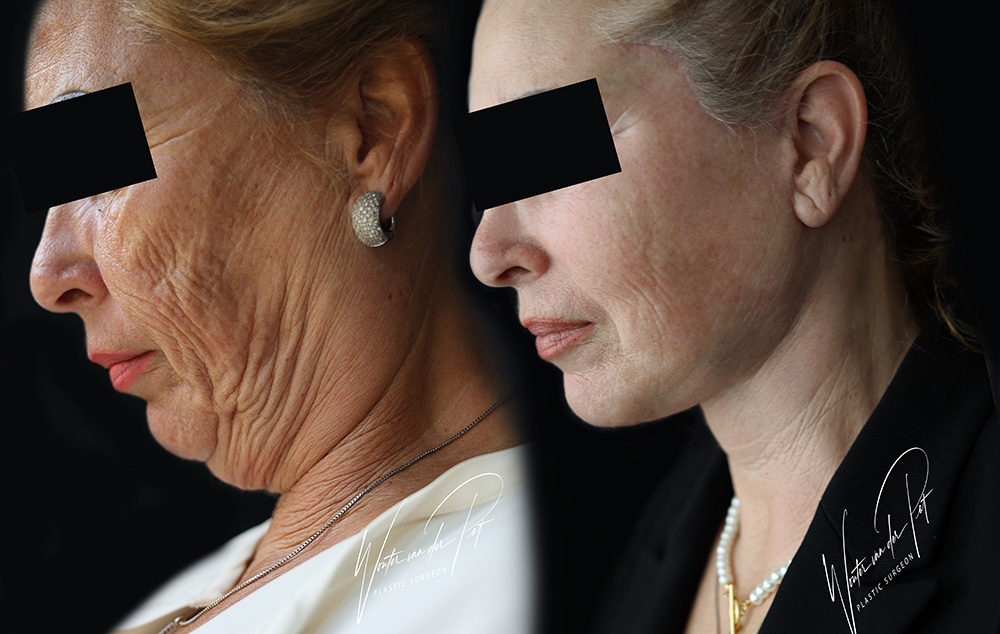
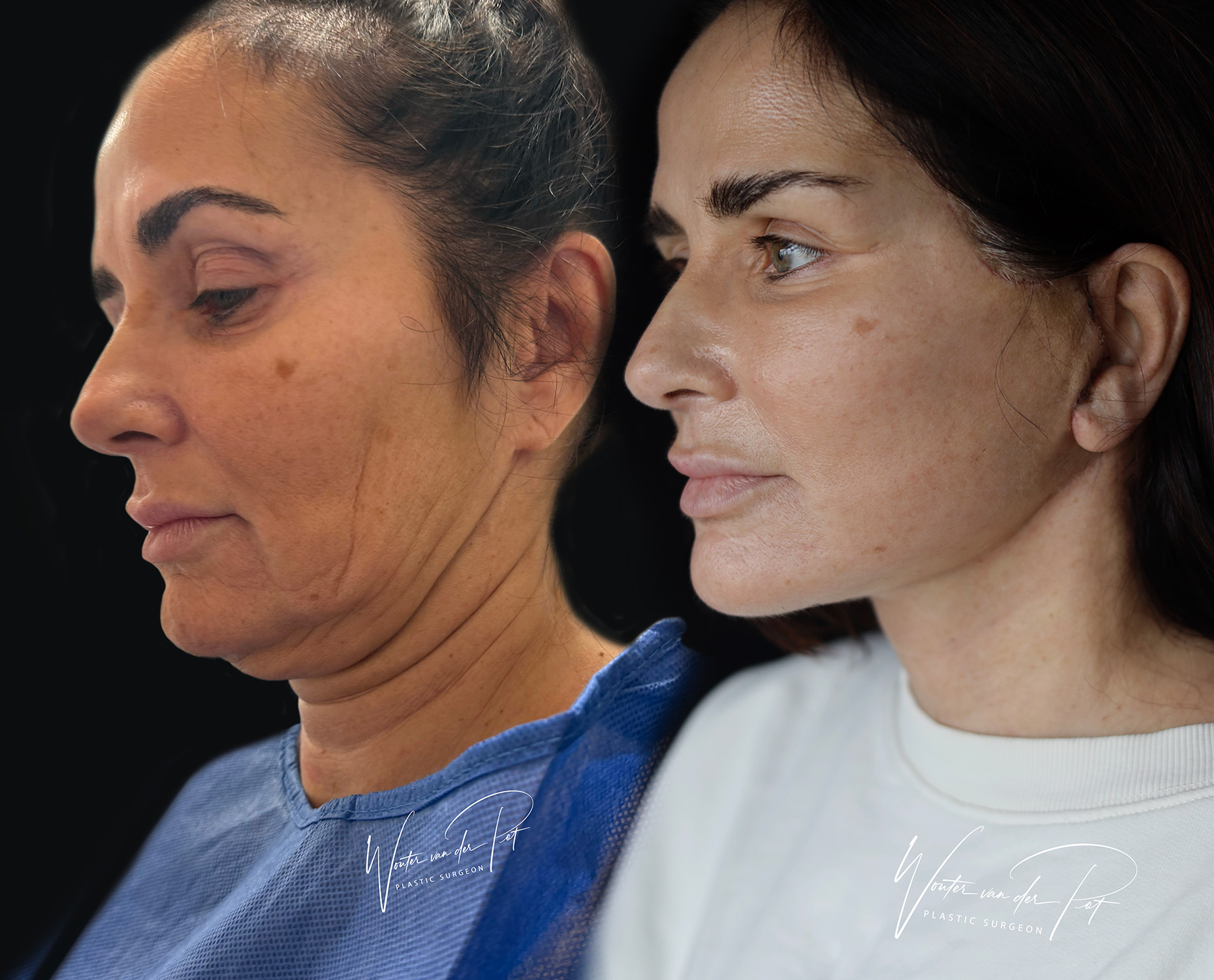
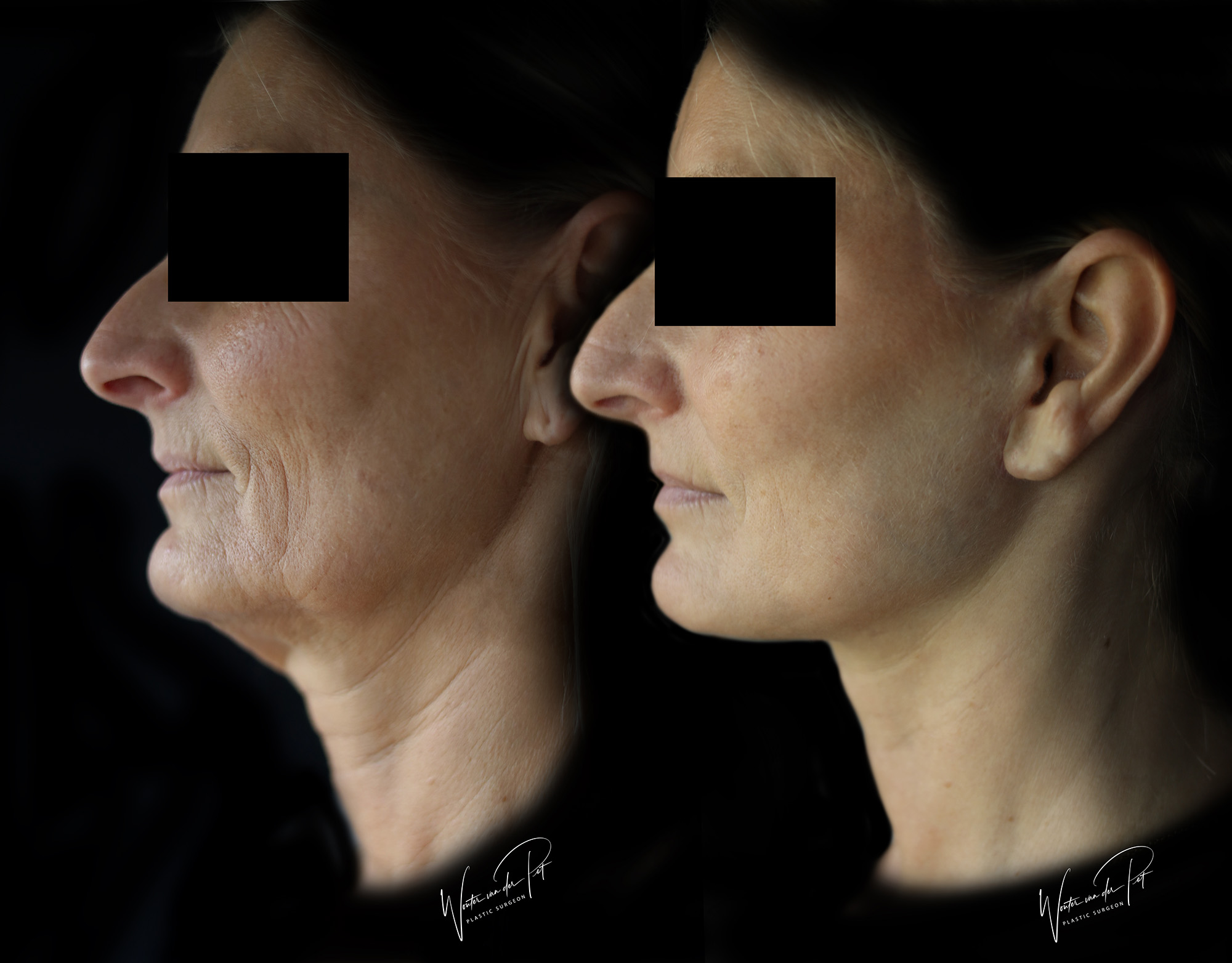
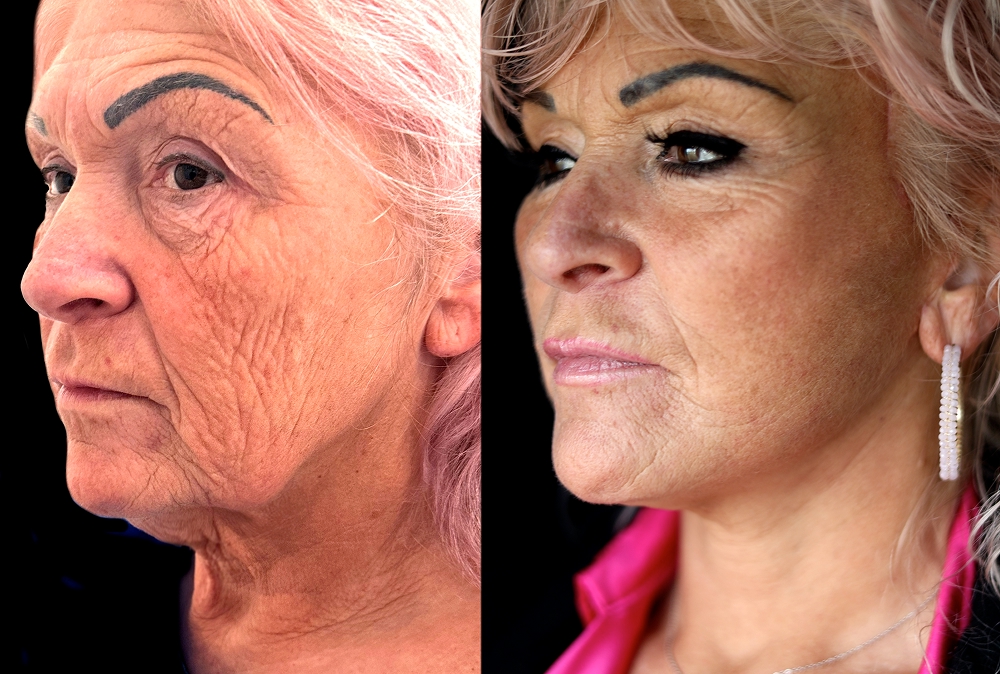
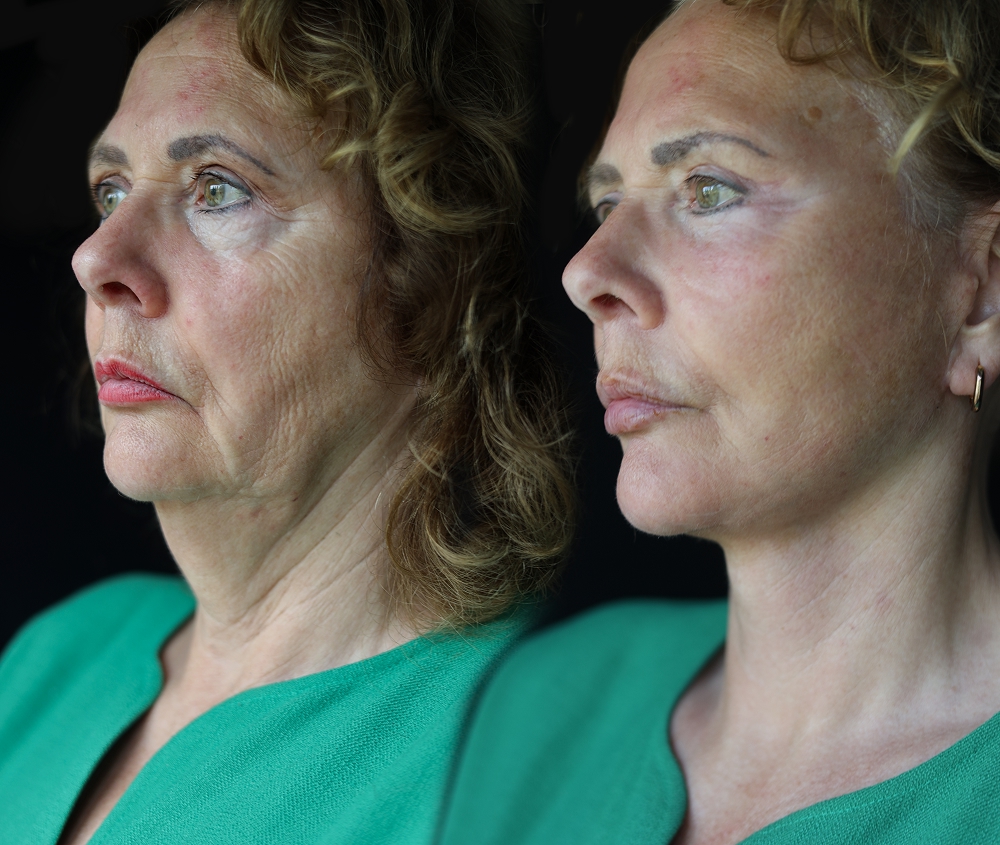
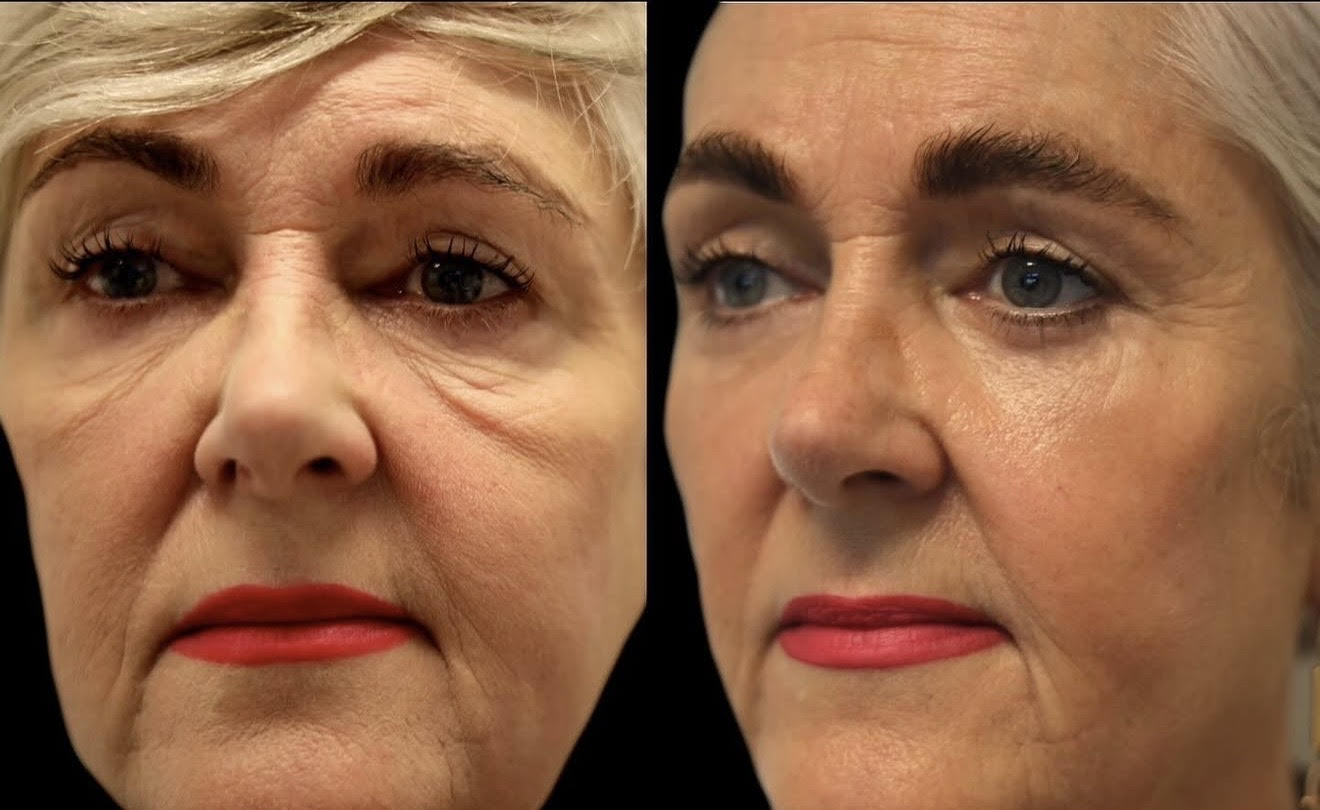
Facelift & Neck Lift

(Neck) facelift – understanding what we treat, and why

Anyone who starts researching facelifts quickly notices how confusing the landscape can be. Online, you’ll come across a tangle of terms and techniques: mini lift, S-lift, MACS lift, ponytail lift, vertical restore, deep-plane facelift—often with major price differences and very little explanation of what those differences actually mean. That makes it difficult to understand what is right for you, and why one facelift cannot simply be compared to another.

On this page, we therefore explain in a calm and clear way what facial ageing really involves, why the face ages the way it does, and why at Gooimeer Clinics we almost always choose a deep-plane facelift when surgical rejuvenation is being considered.

Unnamed

Facial ageing: not an isolated issue, but a connected process

Facial ageing is almost never caused by a single problem. It is not simply a matter of a few wrinkles or a bit of excess skin. Over the years, the soft tissues of the face gradually descend as a whole. As a result, the face loses its natural contours—especially along the jawline and in the neck. This often creates a tired, heavier, or sterner appearance, even though someone may still feel vital on the inside. The most natural and long-lasting results are therefore not achieved by treating isolated symptoms, but by addressing this overall descent at its source.

2vin3 IG
Dekk02a

How does ageing show in the face?

Although everyone is unique, we almost always see the same patterns. This can lead to:

  • marionette lines, as cheek tissue descends past the corners of the mouth

  • jowls, where the lower cheek begins to hang over the jawline

  • deepening of the nasolabial fold, caused by differences in mobility between the cheek and the upper lip

  • neck laxity, as descended facial tissue accumulates in the neck area

  • under-eye bags and tear trough formation, due to weakening support structures around the eye

  • drooping eyebrows, as the forehead as a whole can also descend

It is important to understand: these are not purely skin problems.

They are deeper shifts and descent of volume and supporting tissue.

1imm3 IG 1

Why does the face age the way it does?

To understand this properly, a small amount of anatomy is important. The face consists of several layers:

  • the skin

  • the subcutaneous fat

  • a firm connective-tissue layer: the SMAS (Superficial Musculo-Aponeurotic System)

  • the facial muscles

  • the underlying bone

Between some of these layers, movement must be possible. We call these mobile zones gliding planes. They allow us to smile, talk, frown, and use facial expression. In other areas, the layers are firmly connected via so-called zones of adhesion: natural suspension points where skin, fat, and muscles are anchored to the bone by connective tissue.

Through years of facial movement—talking, smiling, eating—the tissues in front of the ear become increasingly mobile. At the same time, connective tissue loses firmness with age. The result is that the tissue in front of an imaginary line from the outer corner of the eye to the angle of the jaw slowly slides downward, while the tissue just in front of the ear remains relatively fixed. This creates typical signs of aging such as jowls and loss of a sharp jawline.
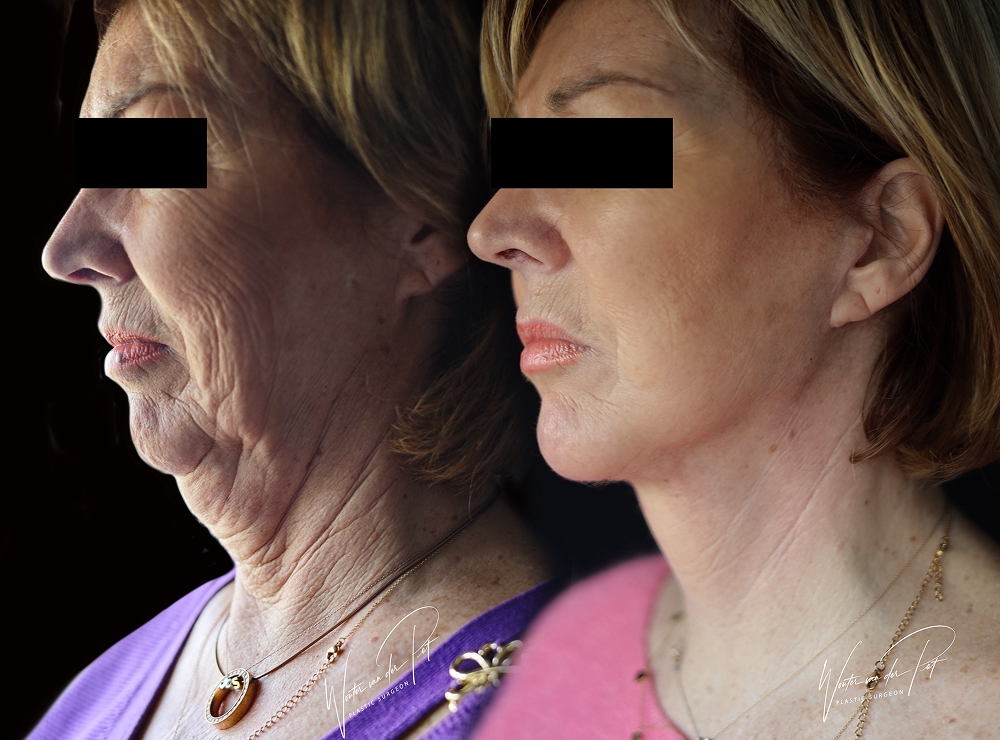
This process is influenced by factors such as:

  • genetic predisposition

  • sun exposure

  • smoking

  • weight fluctuations

  • and in women: hormonal changes around menopause

More information

Click on the subject to find more information

01 Repositioning volume instead of adding it

The essence of a good facelift is therefore:

restoring sagging volume to its original position, without adding extra volume.

That is exactly what a deep-plane facelift makes possible. By working beneath the SMAS layer, the natural suspension points can be released and the tissue can be moved upward and backward as a single unit. This improves the jawline, neck, and cheek contours in an anatomically correct way.

The goal is not to remove every fine line, but to restore harmony and balance to the face. A few age-appropriate wrinkles are not bothersome at all.

02 Why not a mini-lift?

A so-called mini-lift is usually a skin-only lift: the skin is loosened, pulled tight, and excess skin is removed. That sounds appealing—less invasive, faster recovery—but the effect is often limited and temporary.
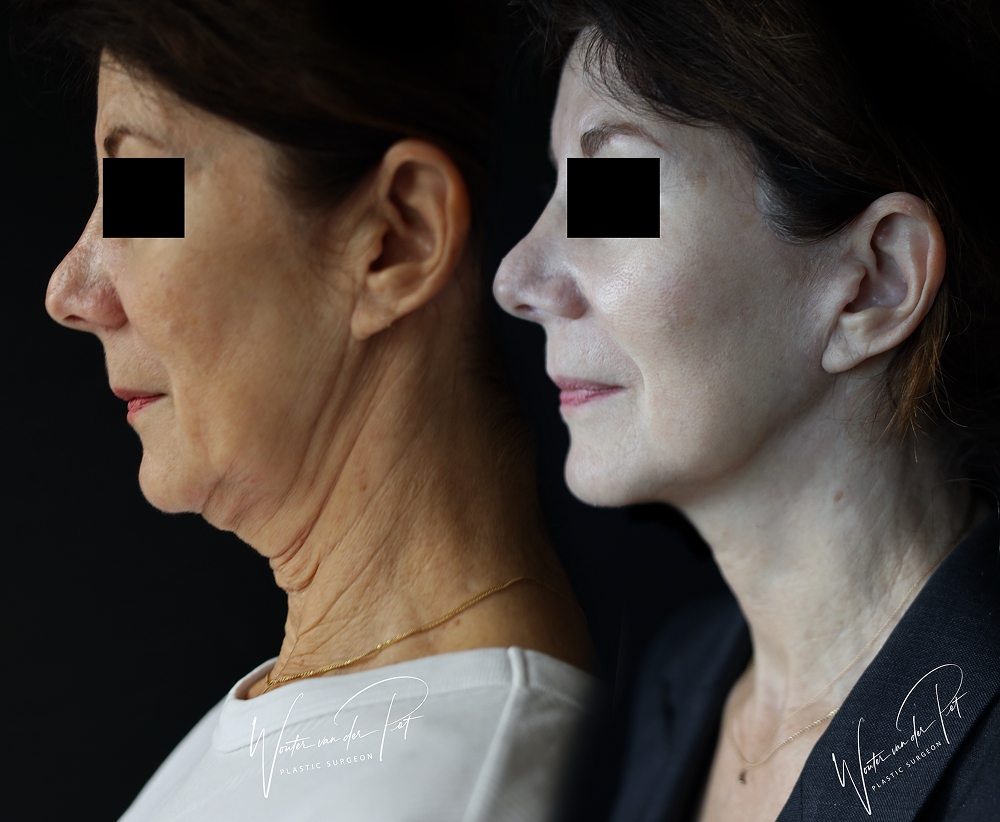
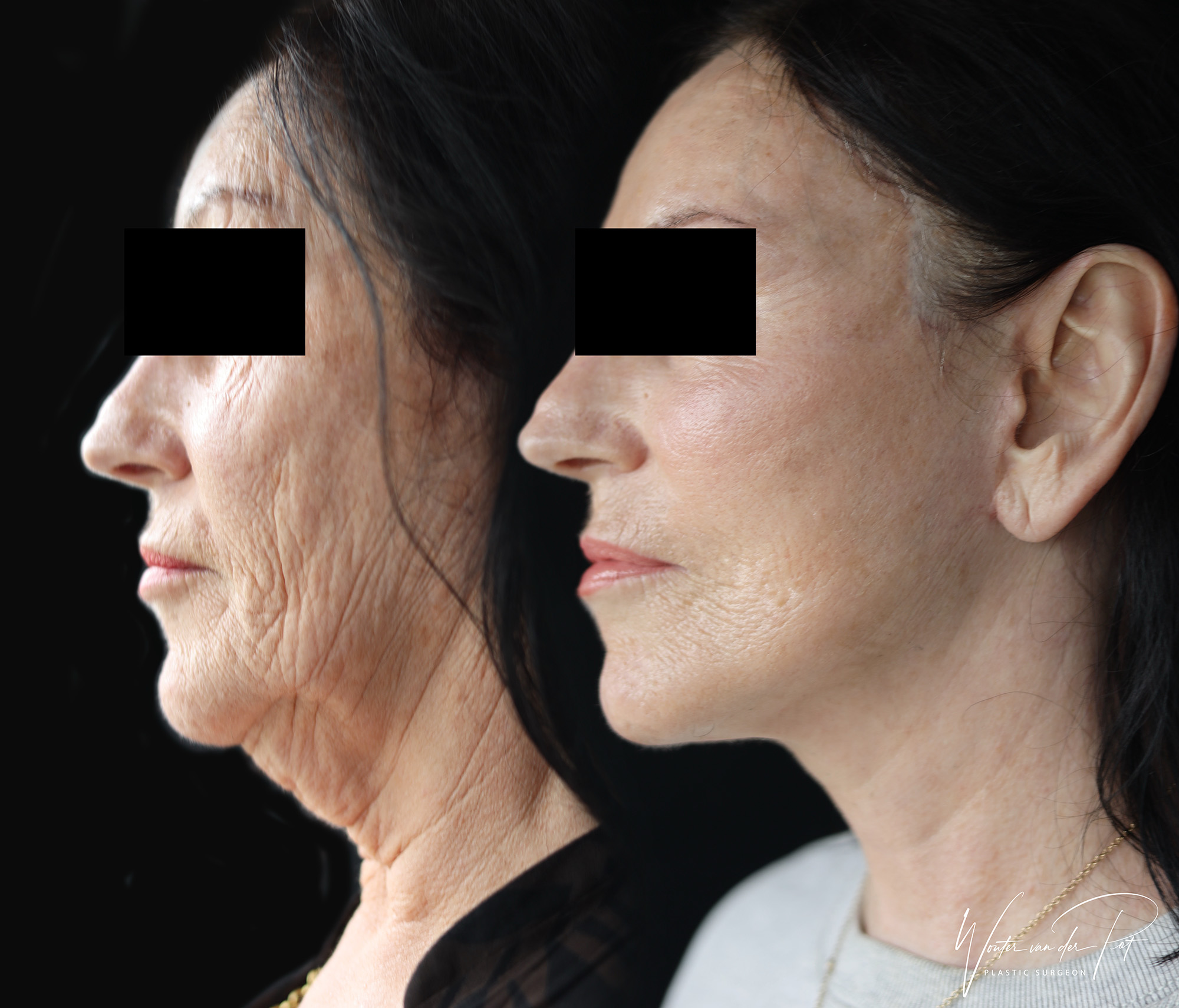
Because the skin is elastic, it gradually stretches again over time. Moreover, a skin-only lift does not address the true sagging, which can make the result look tight, unnatural, or distorted. To achieve a visible effect, a lot of tension often has to be placed on the skin, which increases the risk of wider scars and wound-healing problems.

03 Deep-plane facelift

Deep-plane facelift: the most advanced technique for a safe and natural-looking result that you can truly enjoy for a long time

With a deep-plane facelift, the fixed SMAS zone in front of the ear is bypassed in the subcutaneous plane, and the fascial layer is opened at the level of the sagging zone. From there, the tissue beneath the SMAS can be further released and repositioned as a whole.

This has several advantages:

the true problem area can be reached
the effect is stronger and more natural
the result is long-lasting (often 10–15 years)
the volume moves with the lift, instead of being flattened


At Gooimeer Clinics, we almost always treat the face and neck in combination. A facelift without addressing the neck rarely gives a harmonious result. A deep neck lift is therefore a standard part of our deep-plane facelift.

04 Experience and vision

Dr. Wouter van der Pot and Dr. Kalam Ahmed have continued to refine their deep-plane facelift and neck lift technique over the past 15 years. Through intensive international training, ongoing education, and extensive operative experience, they strive for a result that is safe, natural, and durable.

The starting point is always the same: you should not look “operated on,” but like yourself again—relaxed and in balance.

05 The procedure and recovery

The operation is performed under general anesthesia. You stay in the clinic for one night for observation. The next morning, the pressure dressing is removed and you go home with a supportive facial garment, antibiotics, and pain relief.

Recovery differs per person, but in general:

after 3–4 weeks you are socially presentable again
after ±12 weeks you are largely recovered
we only assess the final result after about one year, when the scars have fully matured as well


The procedure is generally not extremely painful, but it can be uncomfortable during the first few days due to swelling and a stiff neck.

06 Possible complications

Every operation carries risks, including a facelift. Fortunately, serious complications are exceptionally rare with an experienced facelift surgeon.

Possible complications include:

Bleeding (hematoma), usually within the first 24 hours
Infection, rare and usually treatable
Neuropraxia: temporary loss of function or weakness of a facial nerve. This may sound scary, but it is generally not a major issue; the main nerve branches lie deep and are essentially never a problem. There are two smaller branches that lie more superficially and can be bruised more easily during surgery because they run over a small “edge” of tissue; one runs along the jawline to the lower lip, and the other (much rarer) runs over the cheekbone margin toward the forehead. In about 1 in 30 patients, you may see that, for example, one side of the lower lip moves slightly differently than the other side. This is not a problem; it ALWAYS resolves spontaneously, in most cases within a few weeks and at most within 6 weeks.


During the consultation, we discuss these risks in depth and with complete openness.

07 Wrinkles, fillers and the misunderstanding of the 'liquid facelift'

Wrinkles are folds in the skin that arise from repeated movement. They can often be treated well with Botox or fillers. But you cannot solve tissue sagging that way. That is why the term liquid facelift is misleading: injectables cannot perform a true lift.


In fact, trying to camouflage sagging by adding more and more volume often leads to an unnatural appearance. The volume has usually not disappeared, but has descended. If you add volume higher up without repositioning it, you eventually create a distorted look in which someone no longer recognizes themselves.

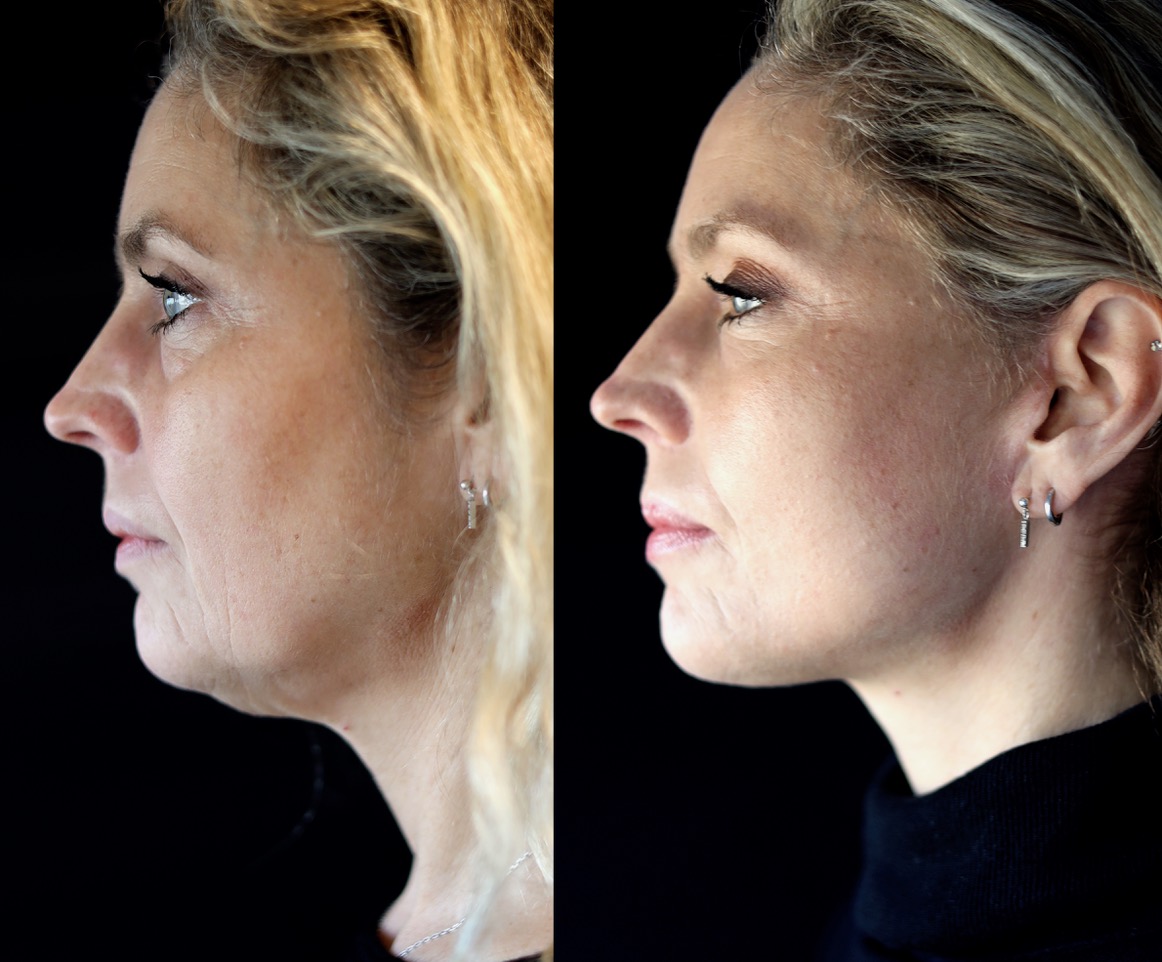
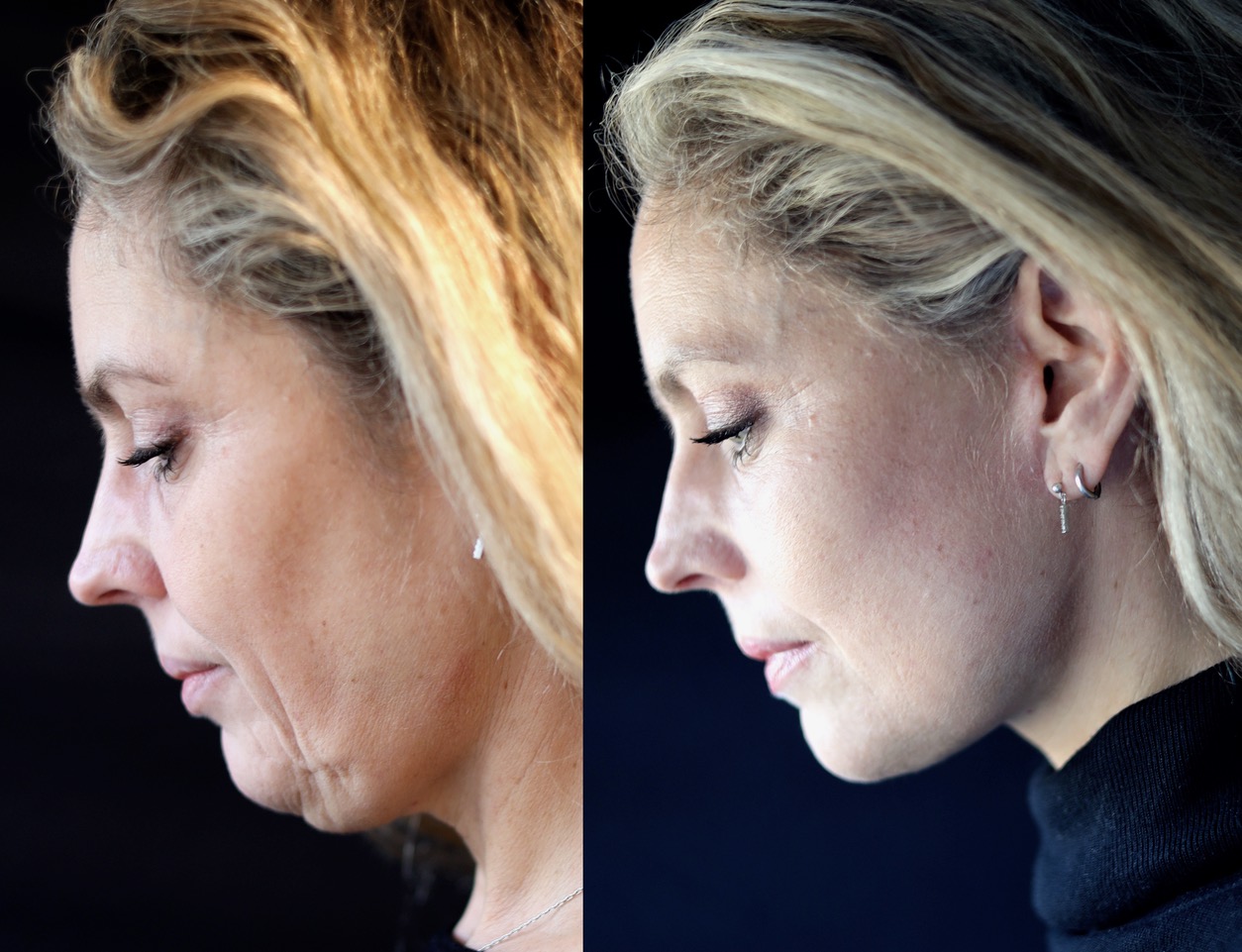
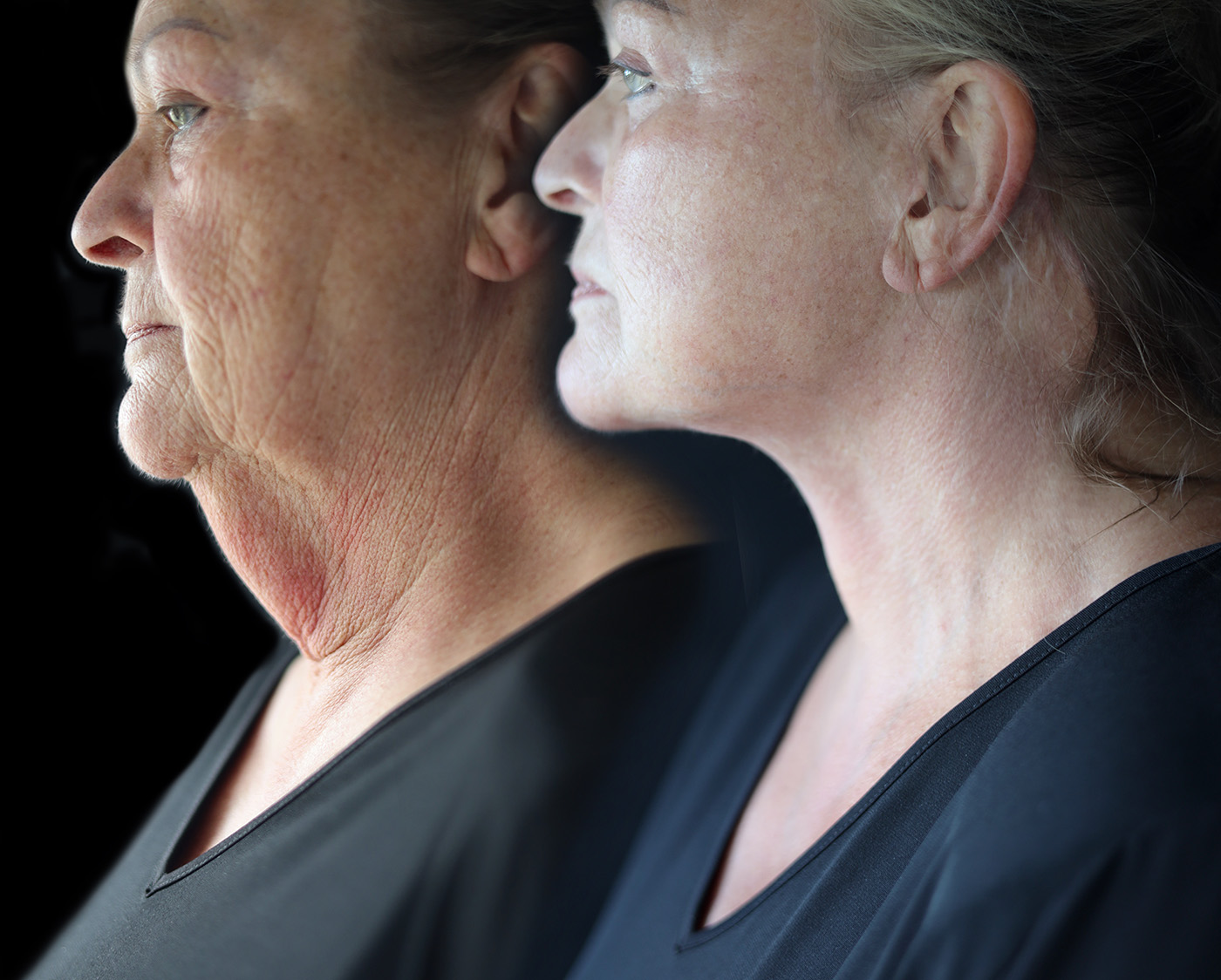
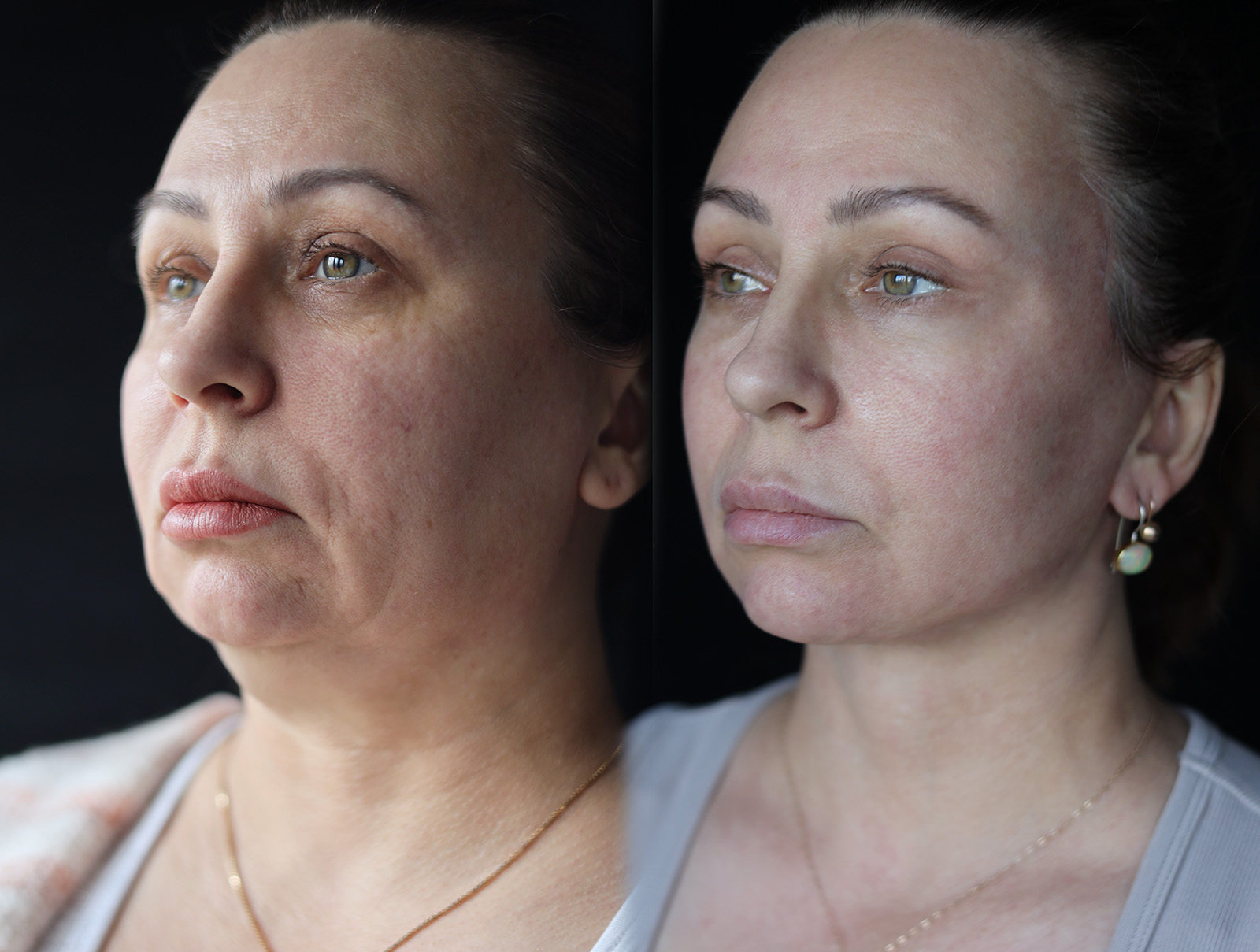
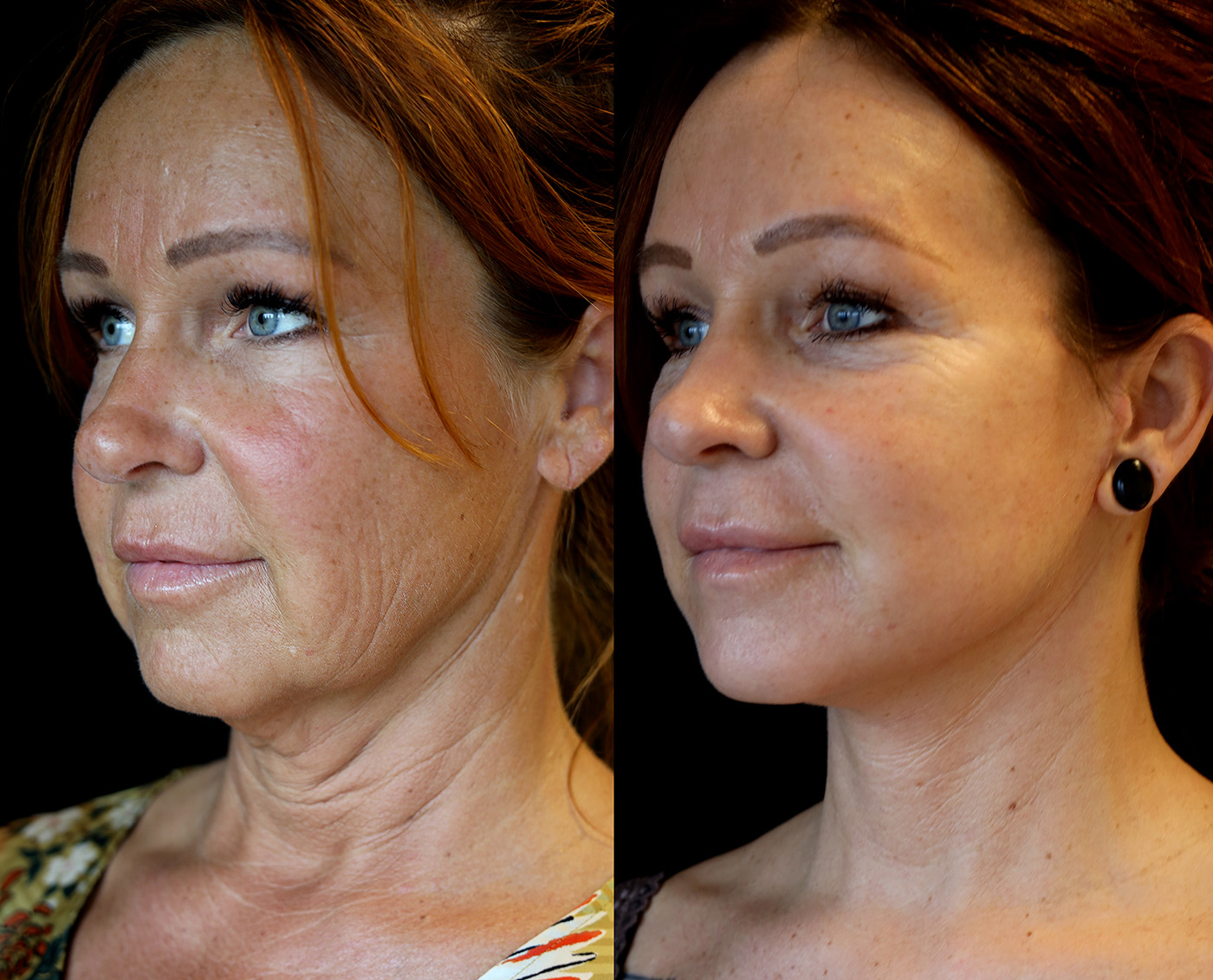
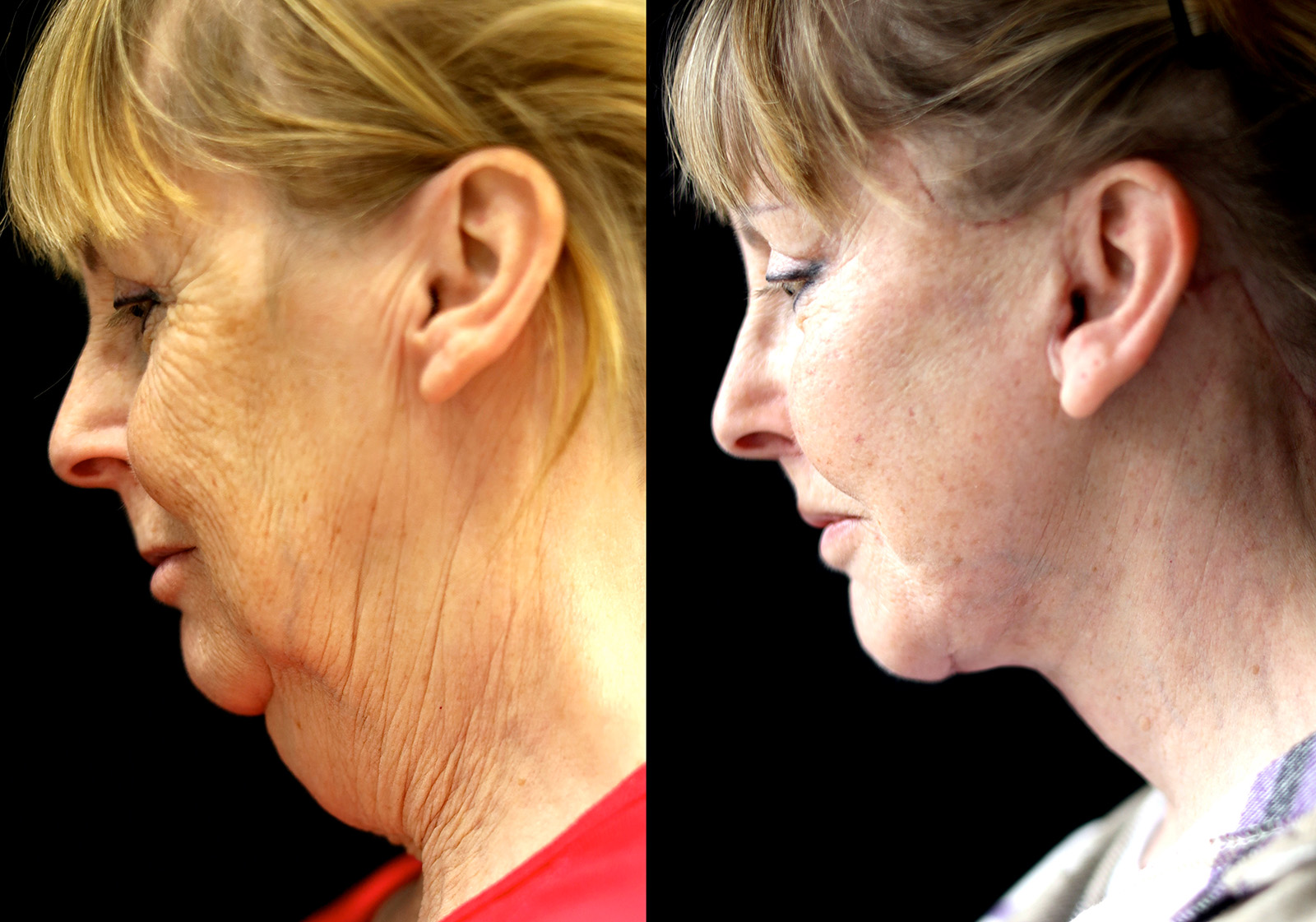
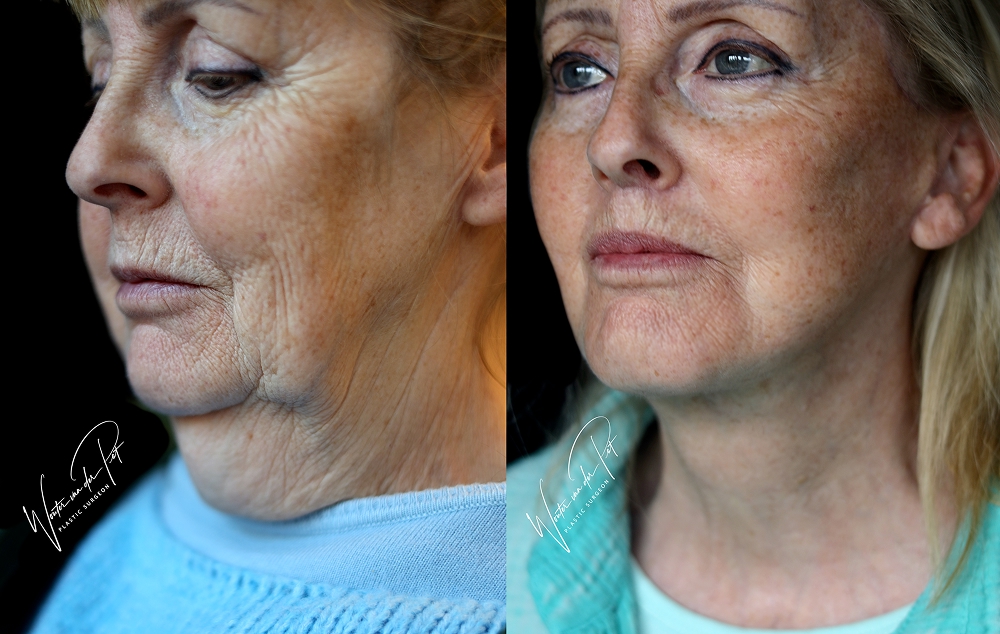
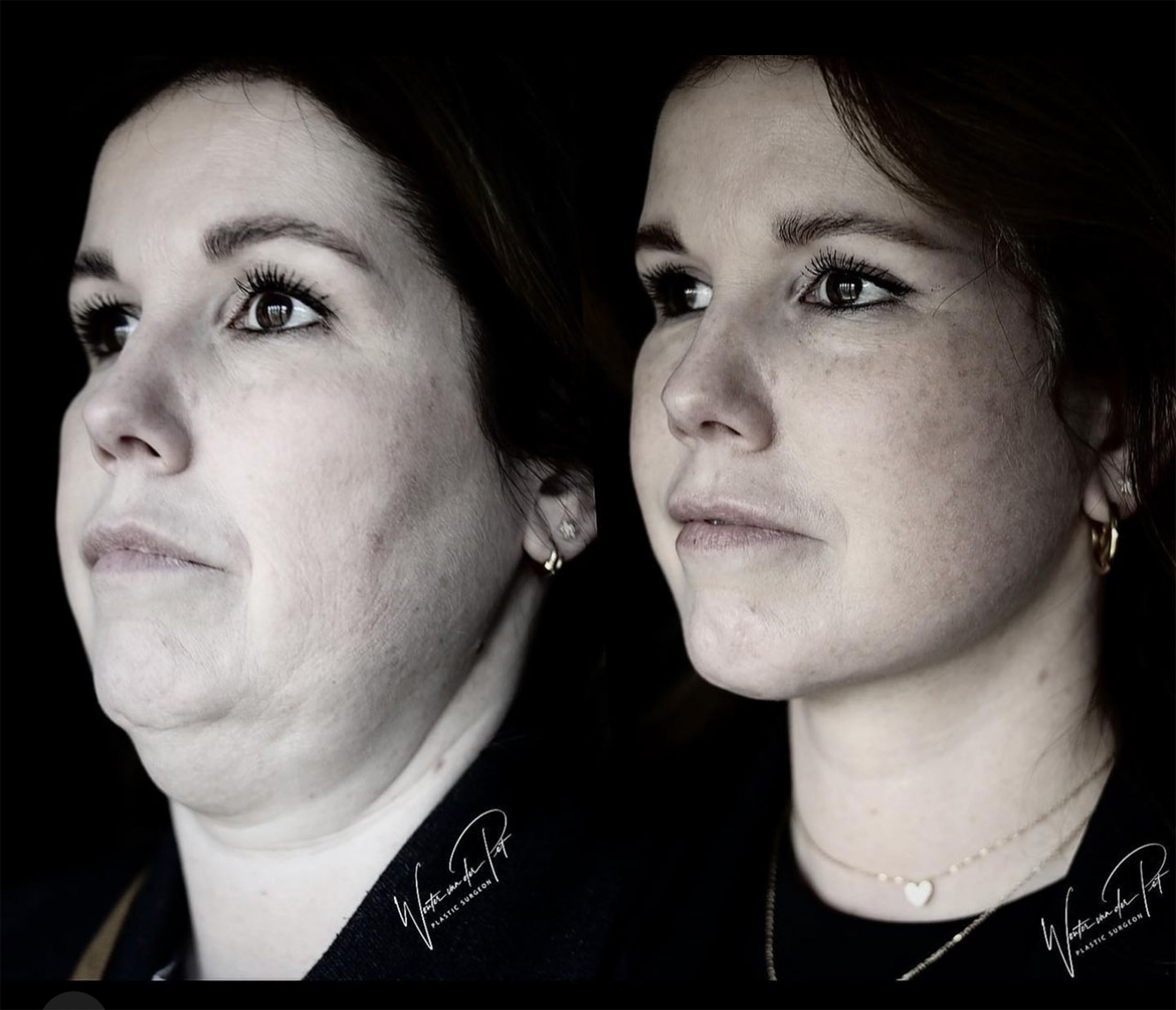
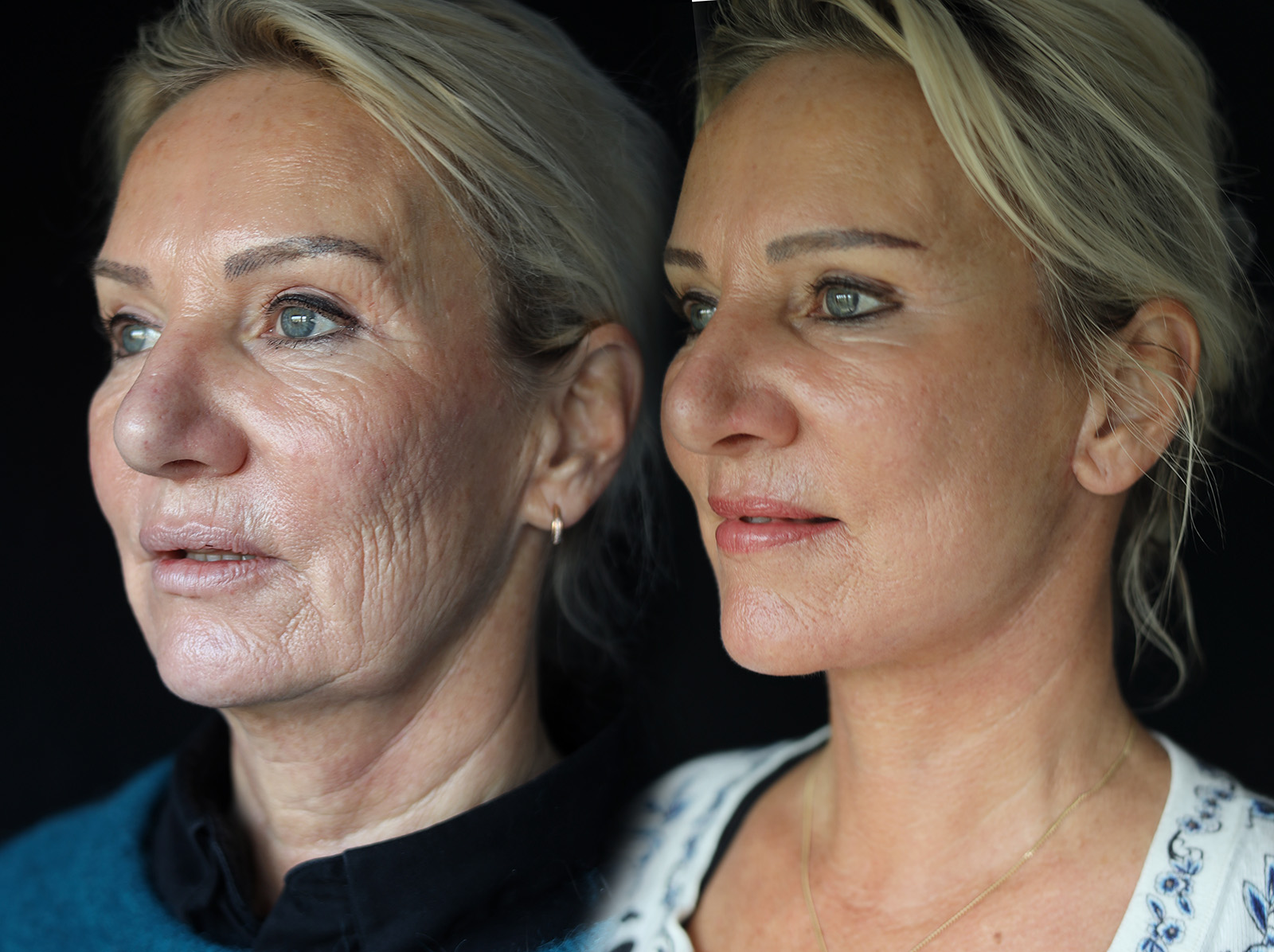
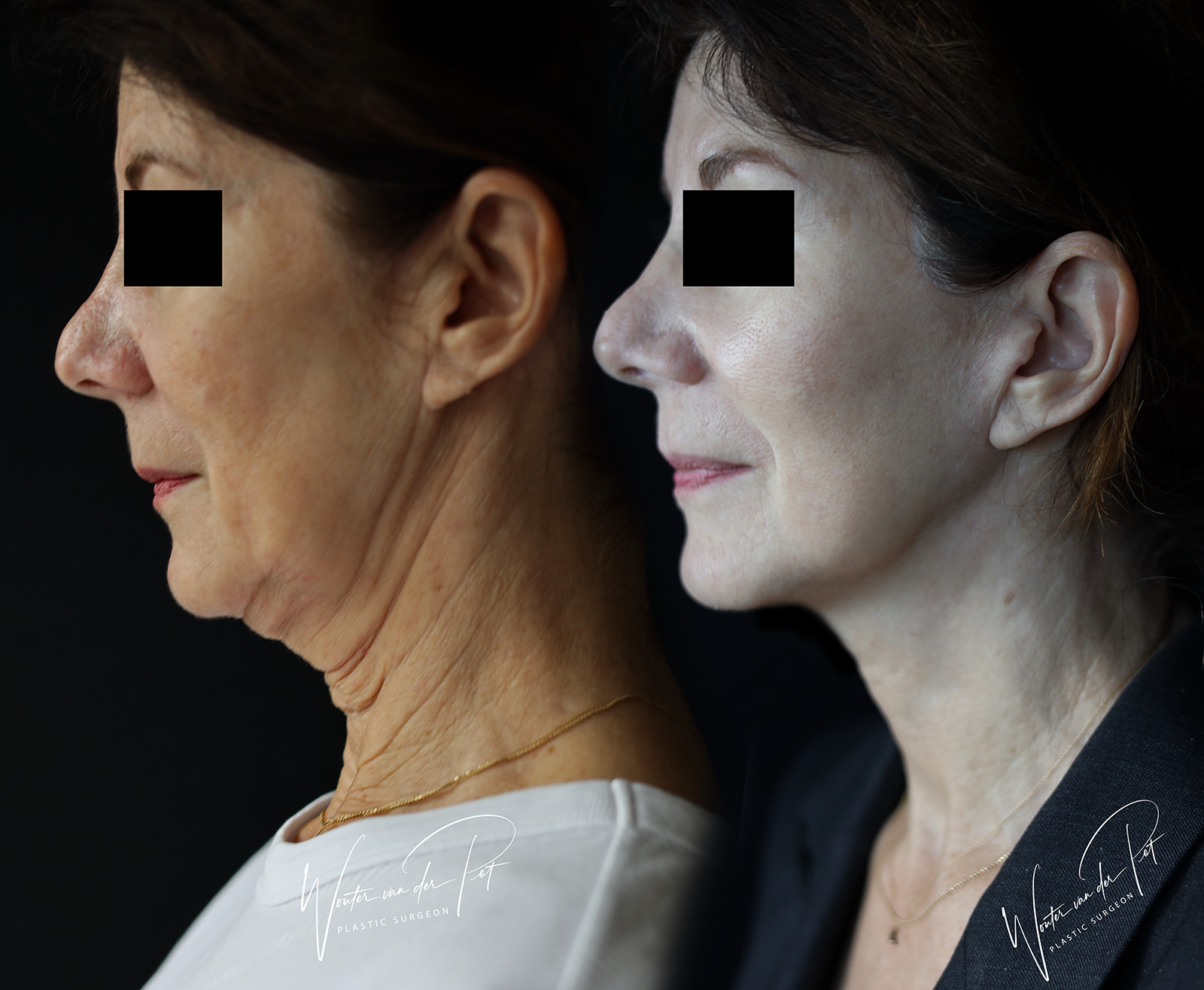
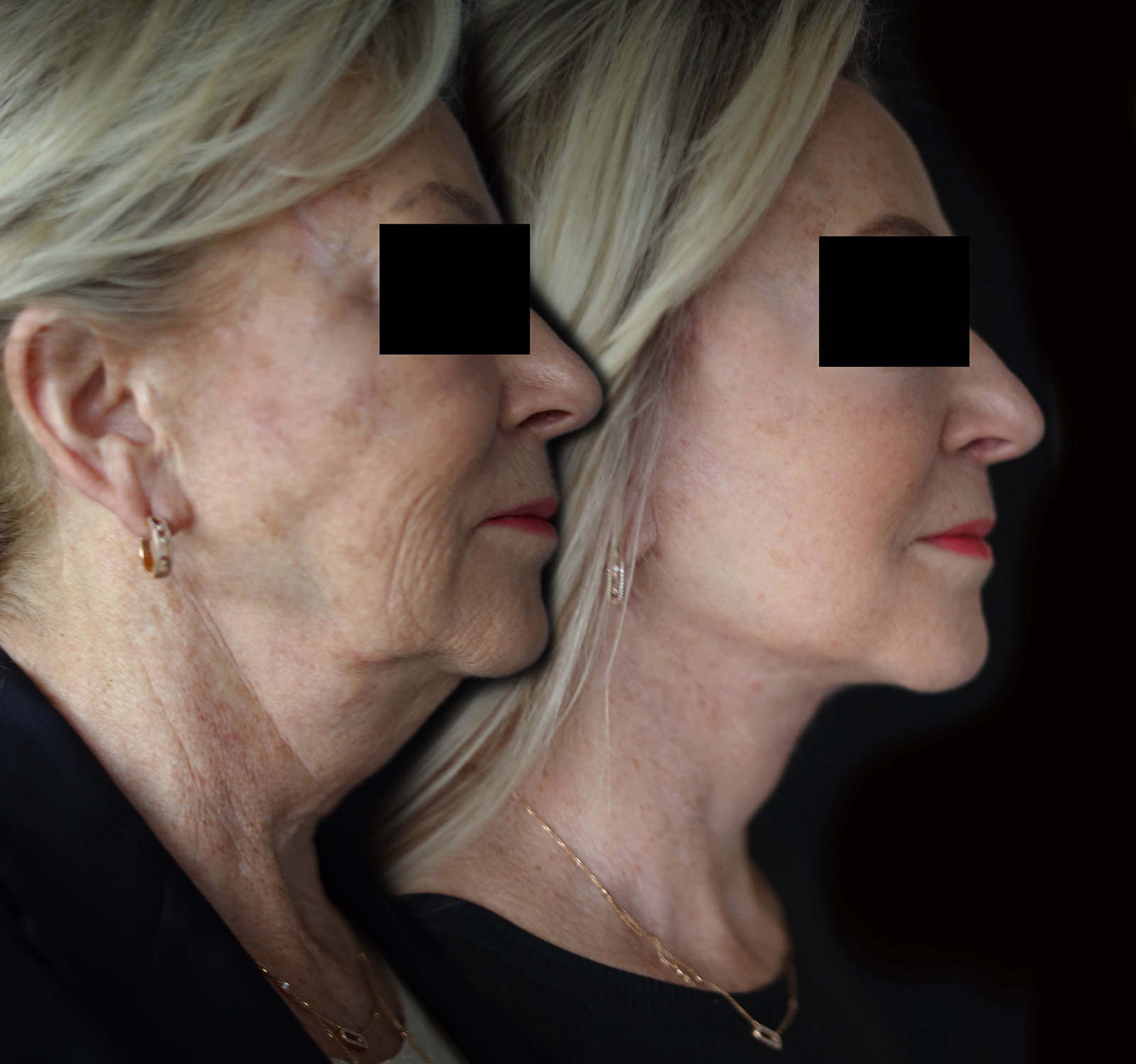
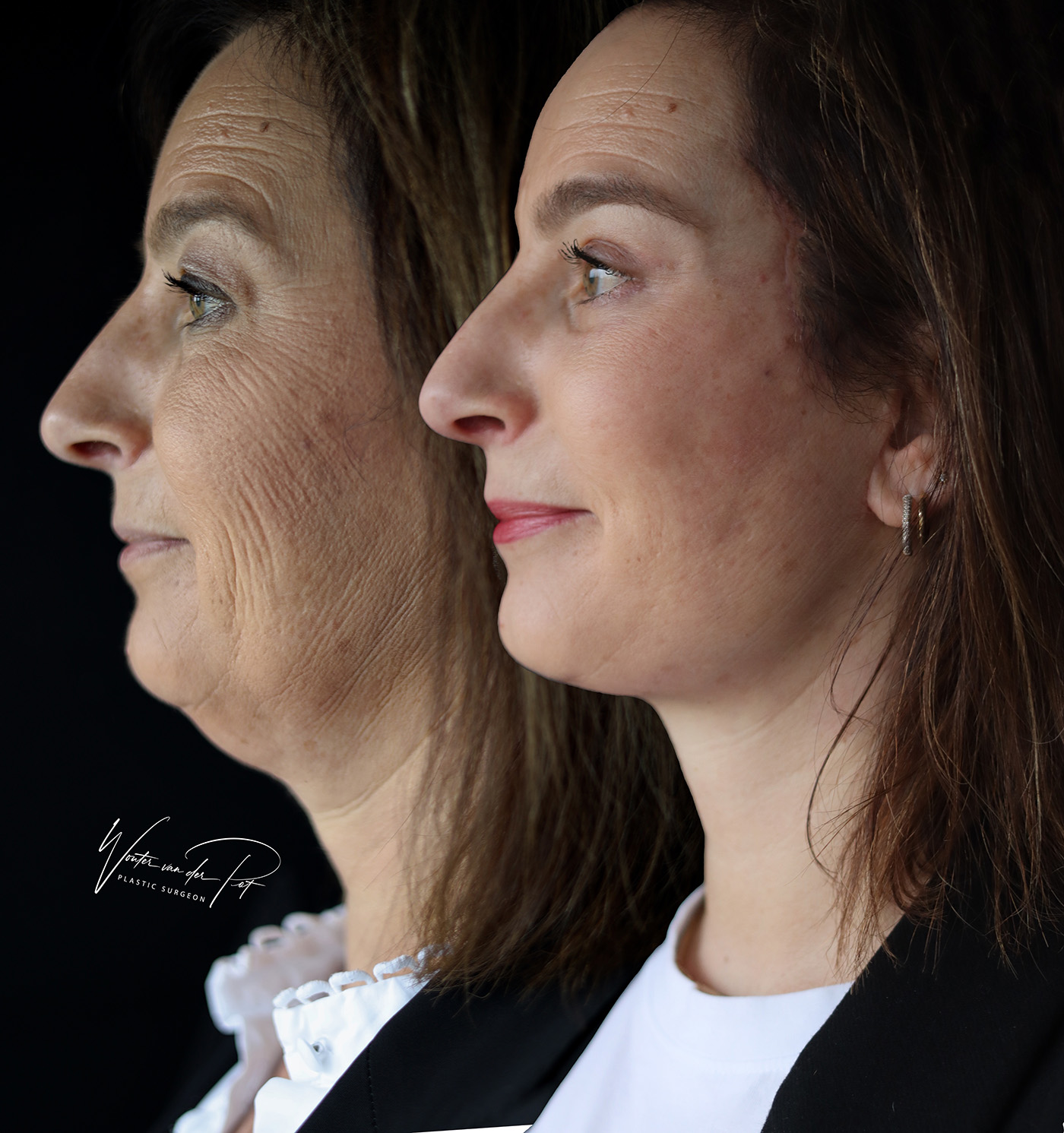
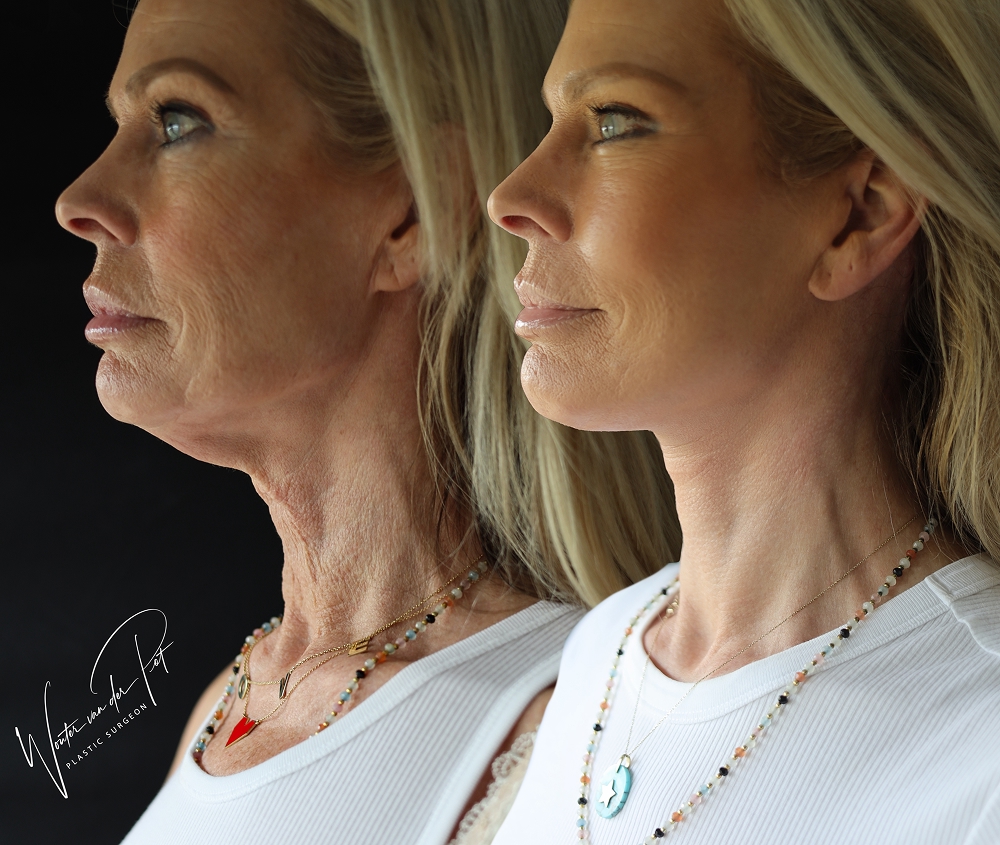
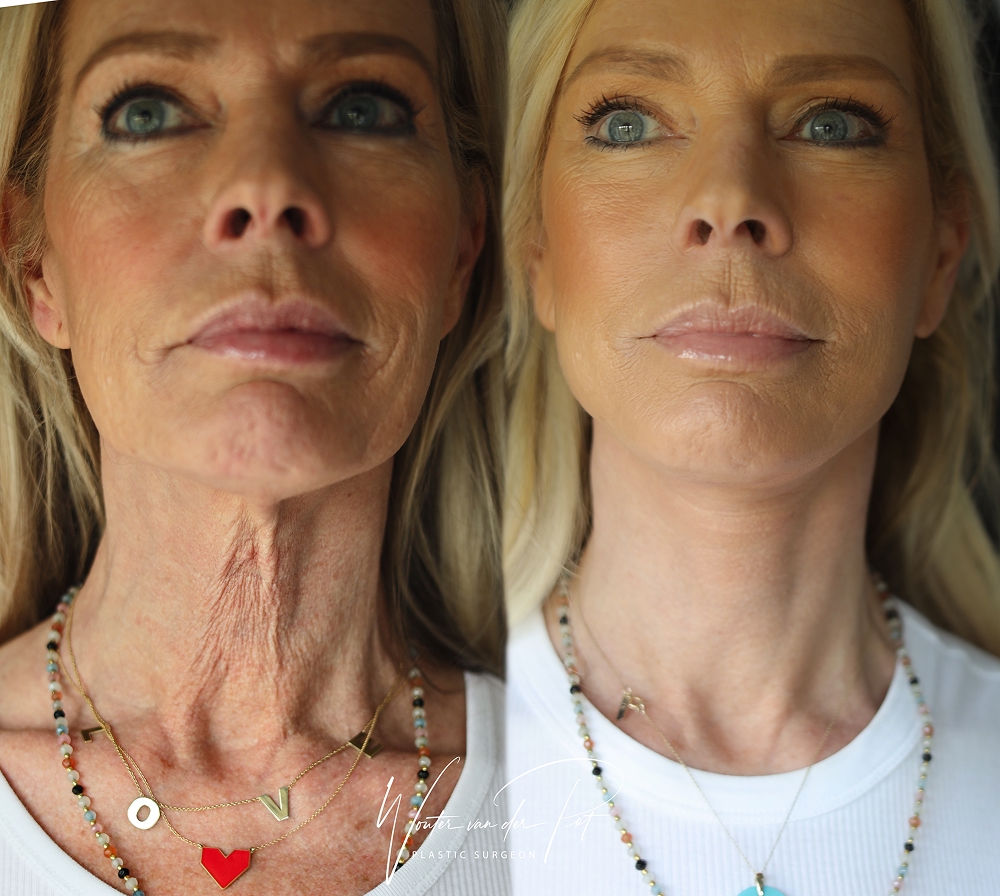
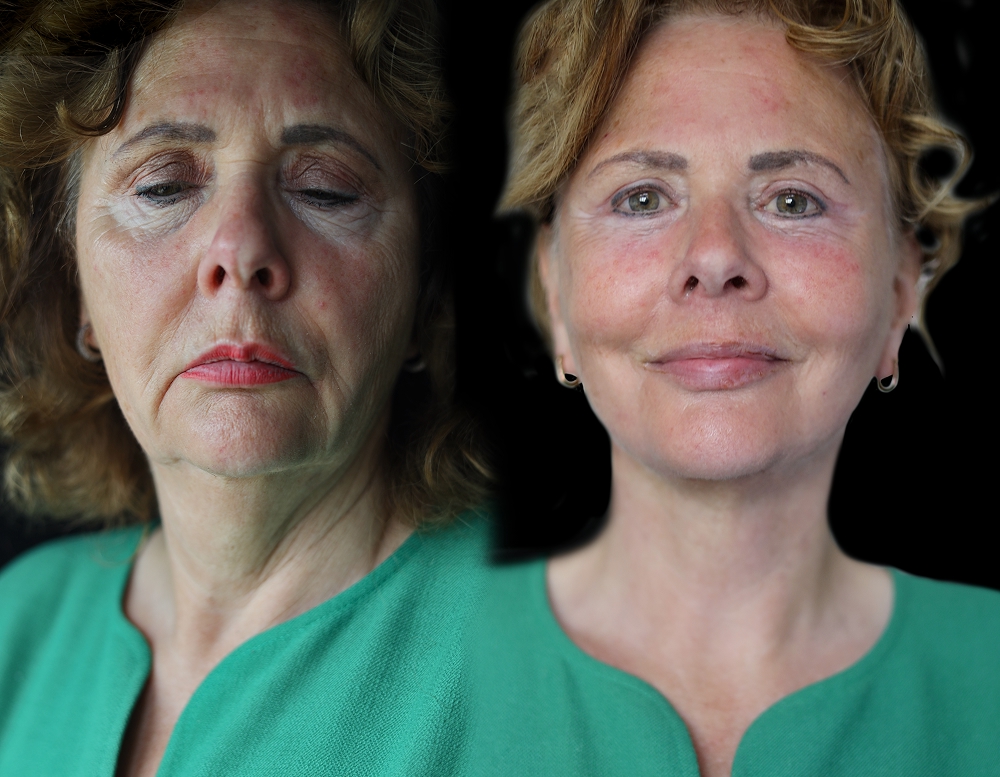
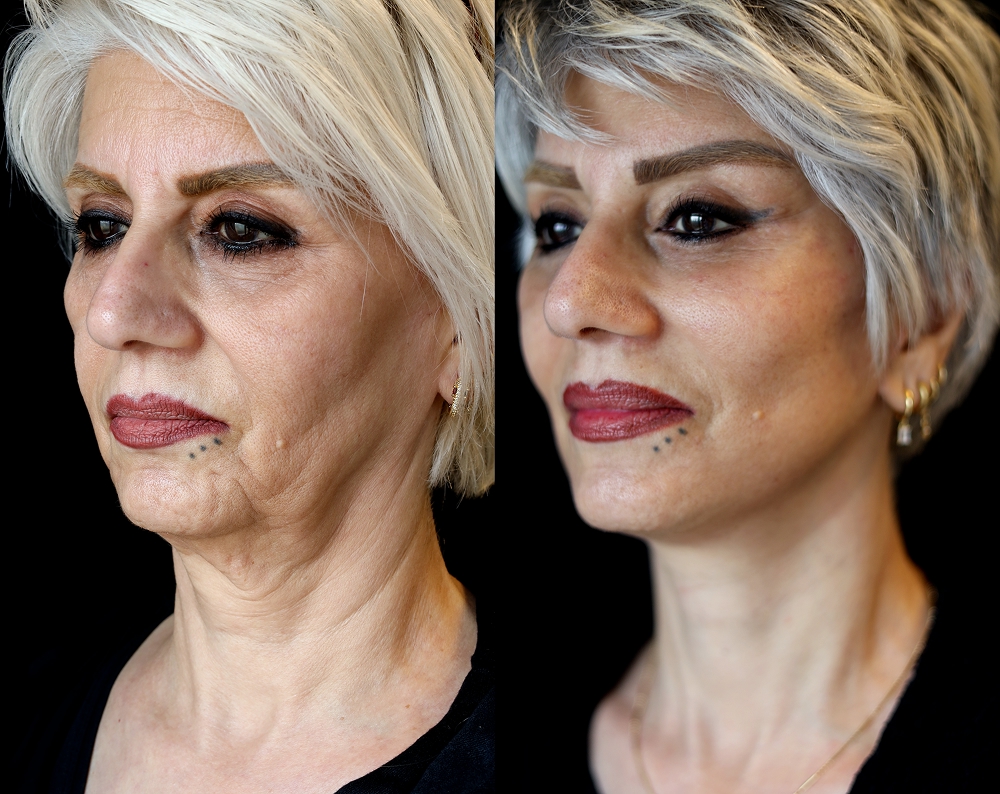
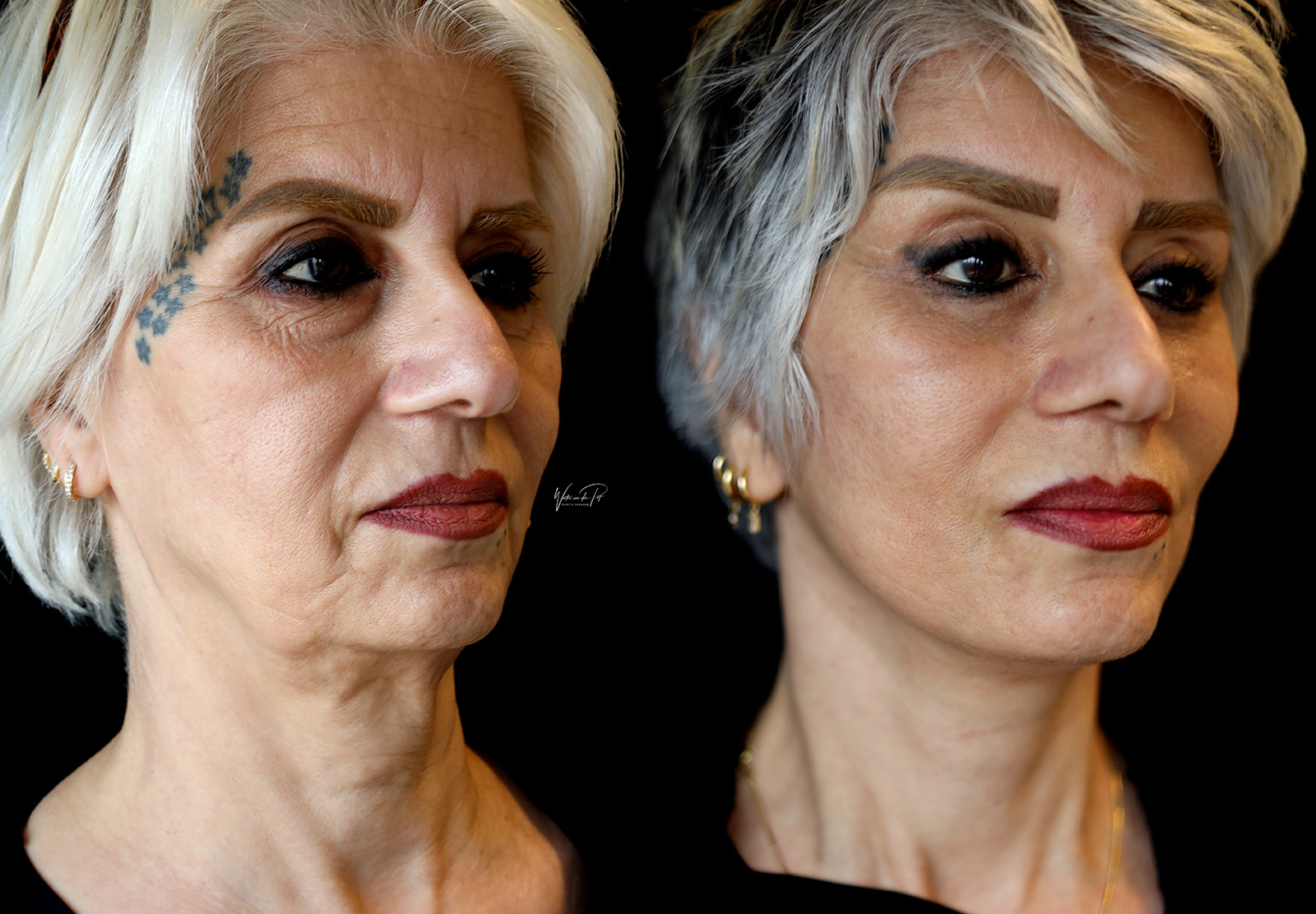
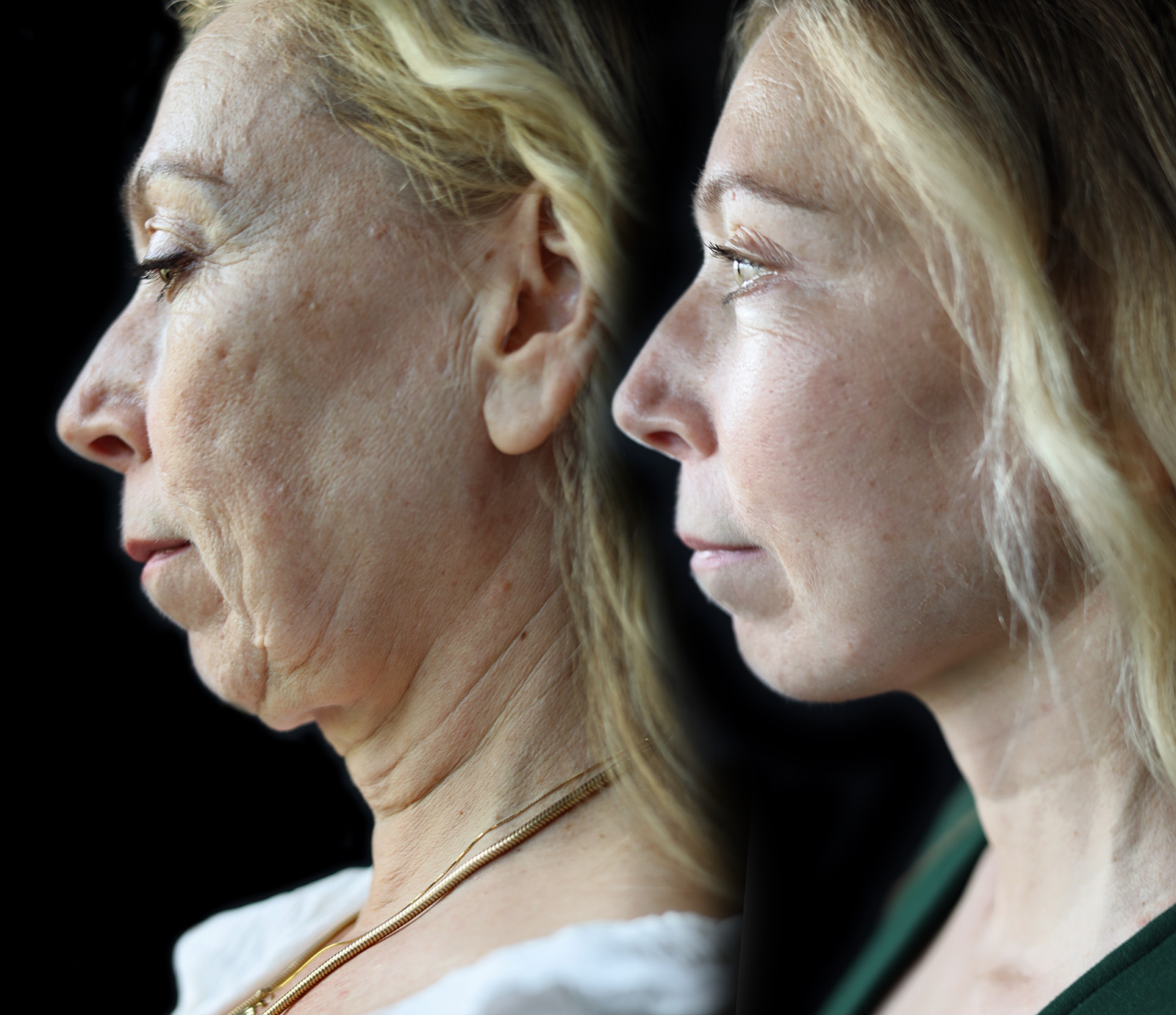
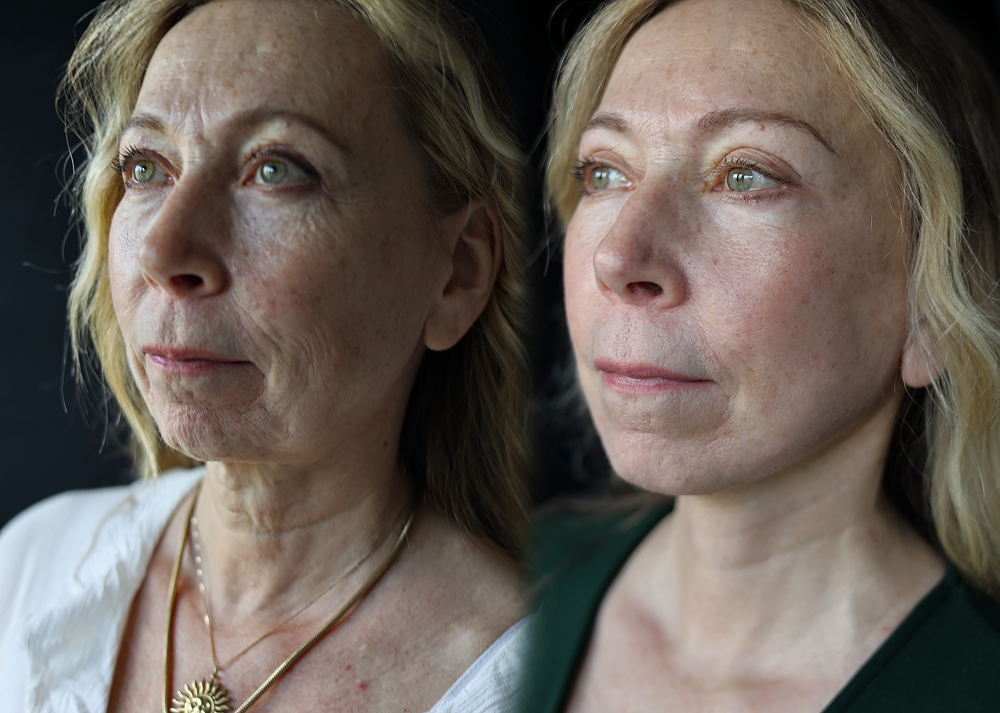
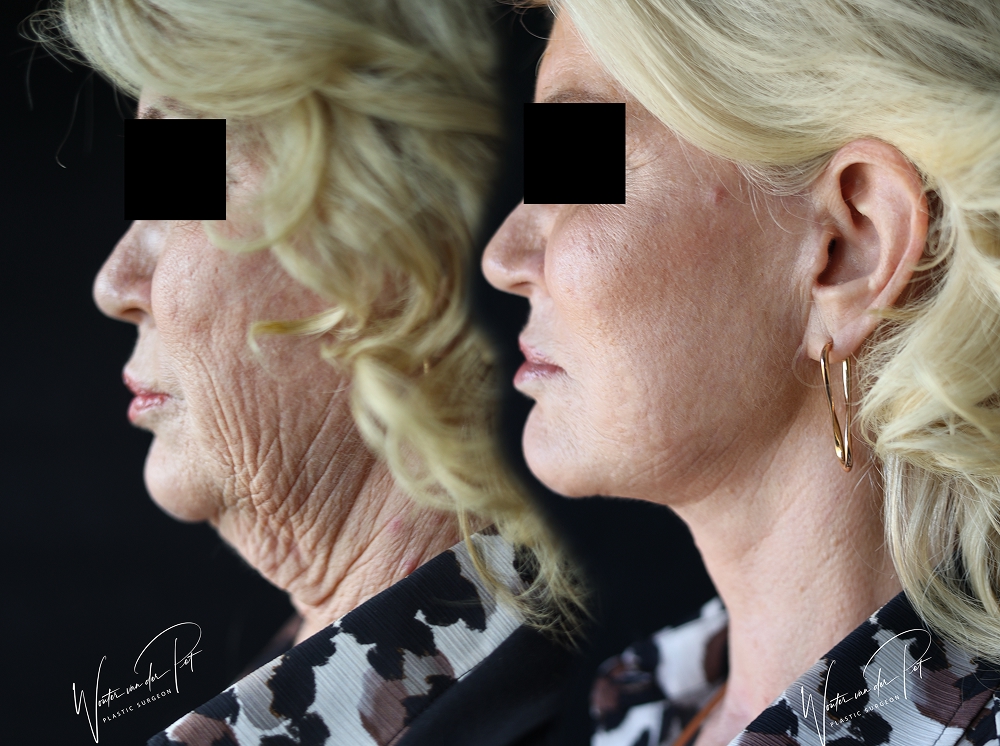
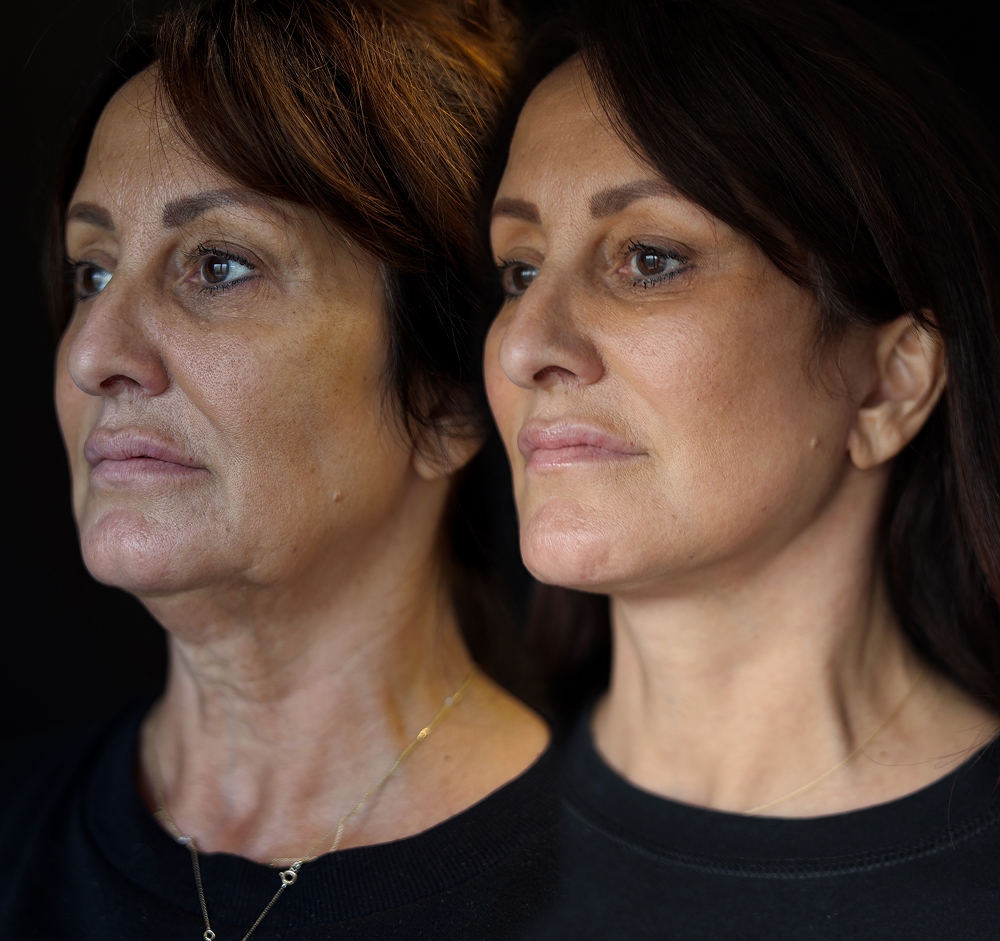
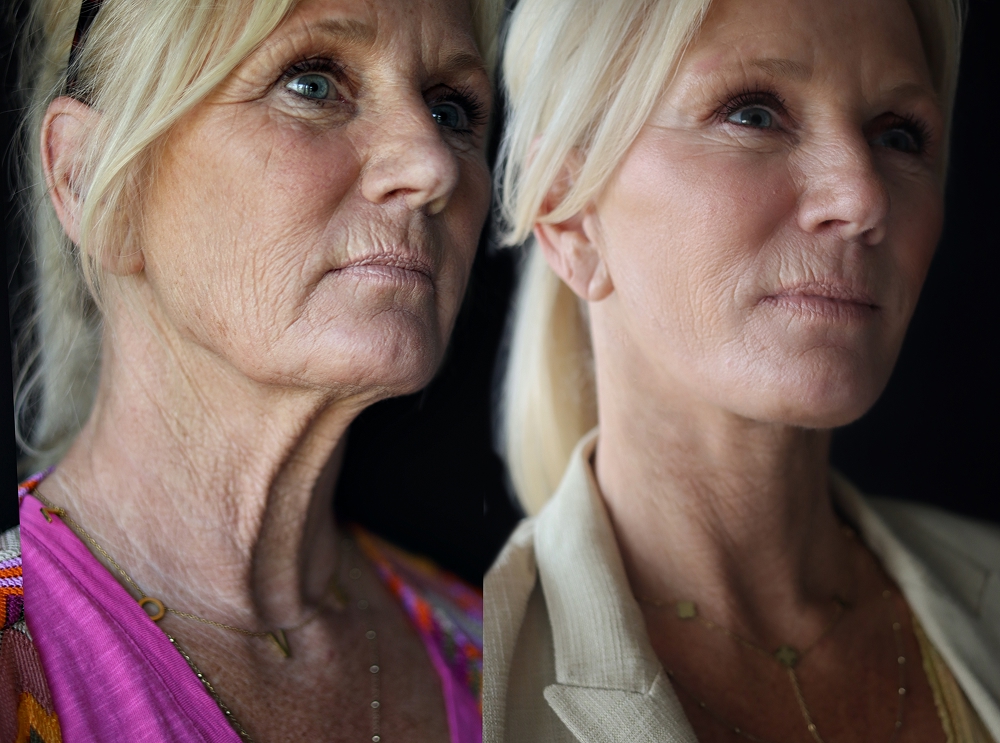
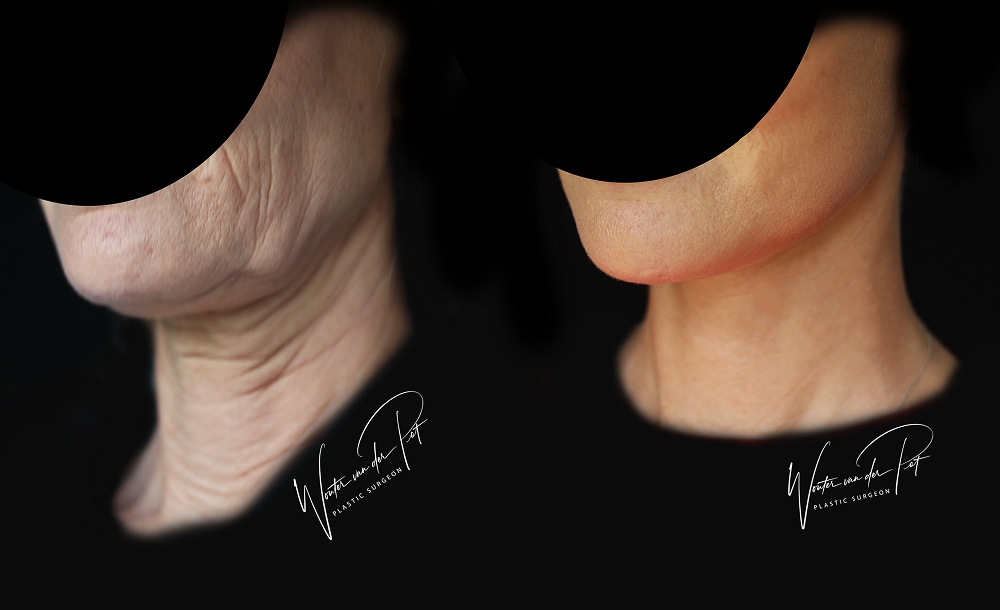
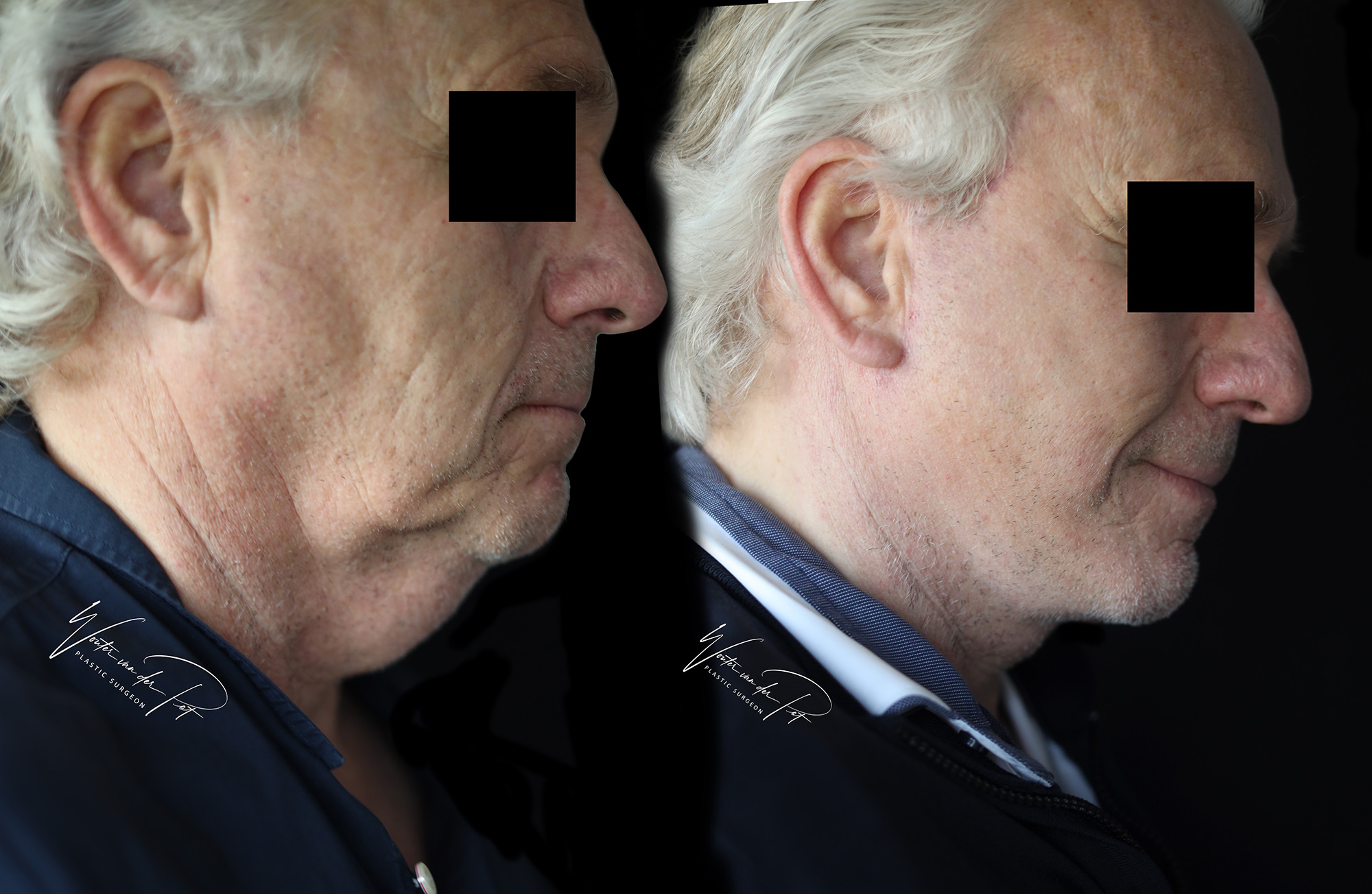
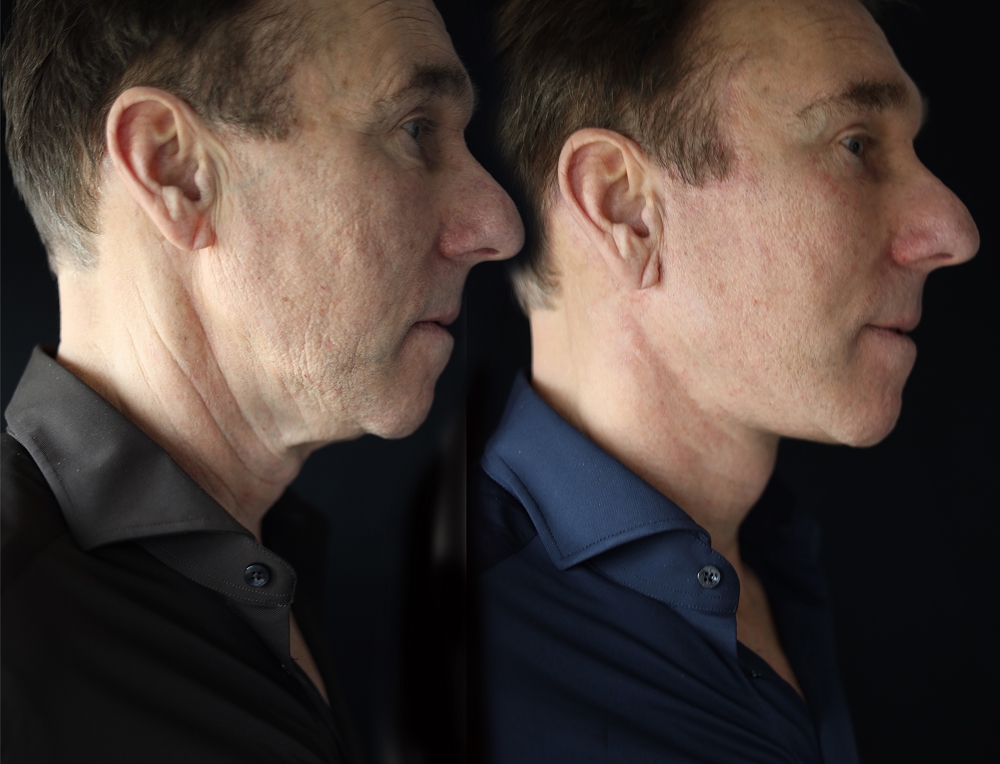
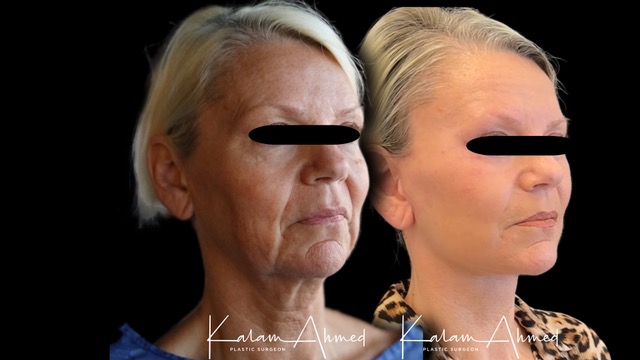
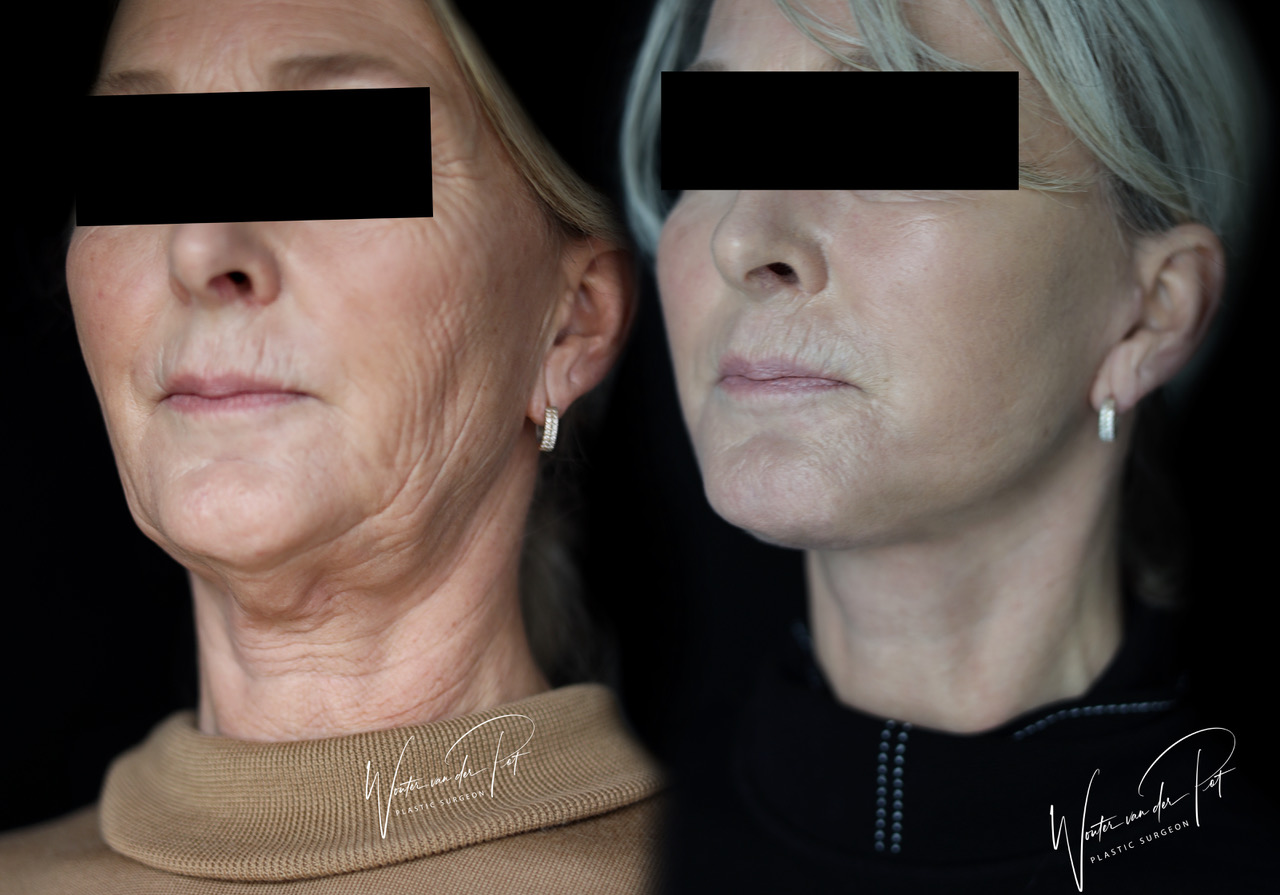
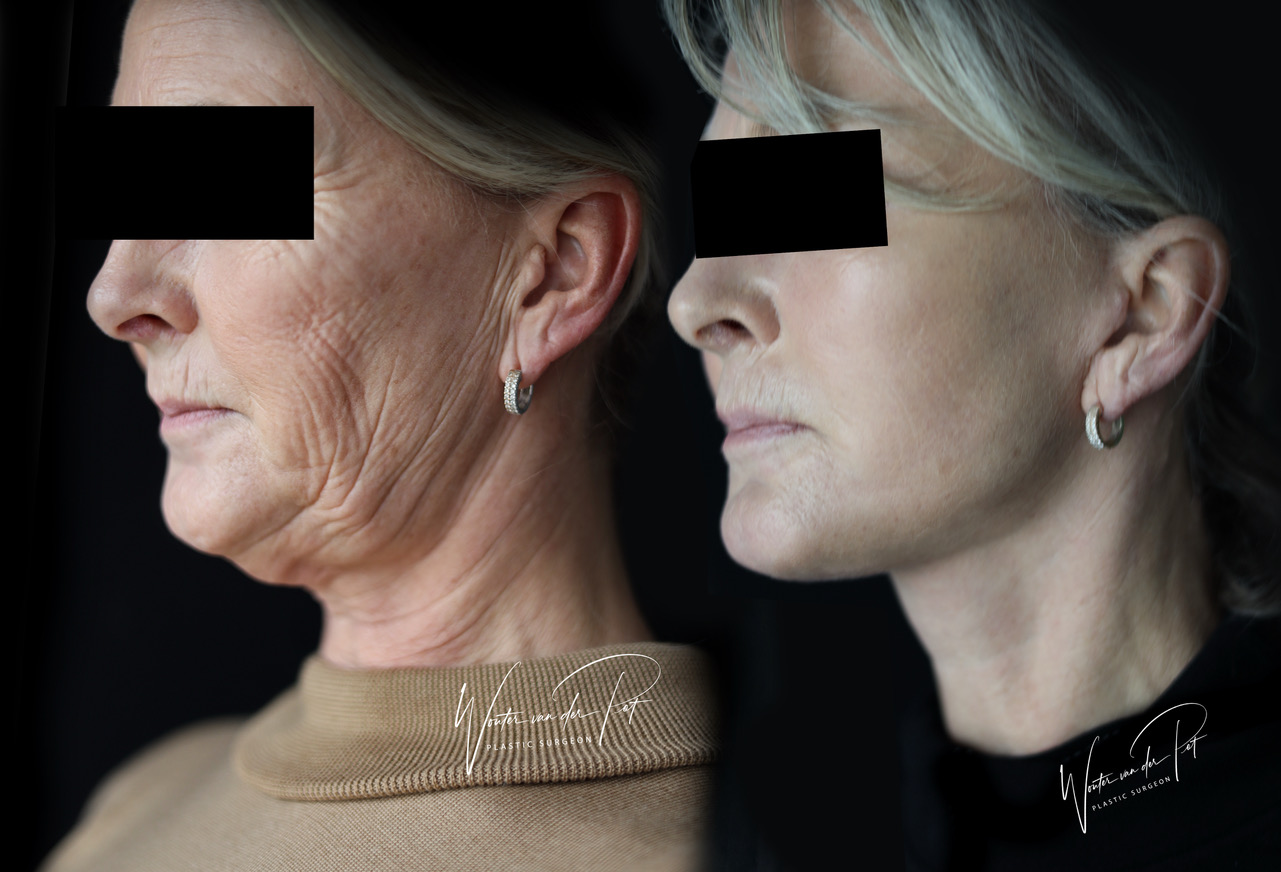
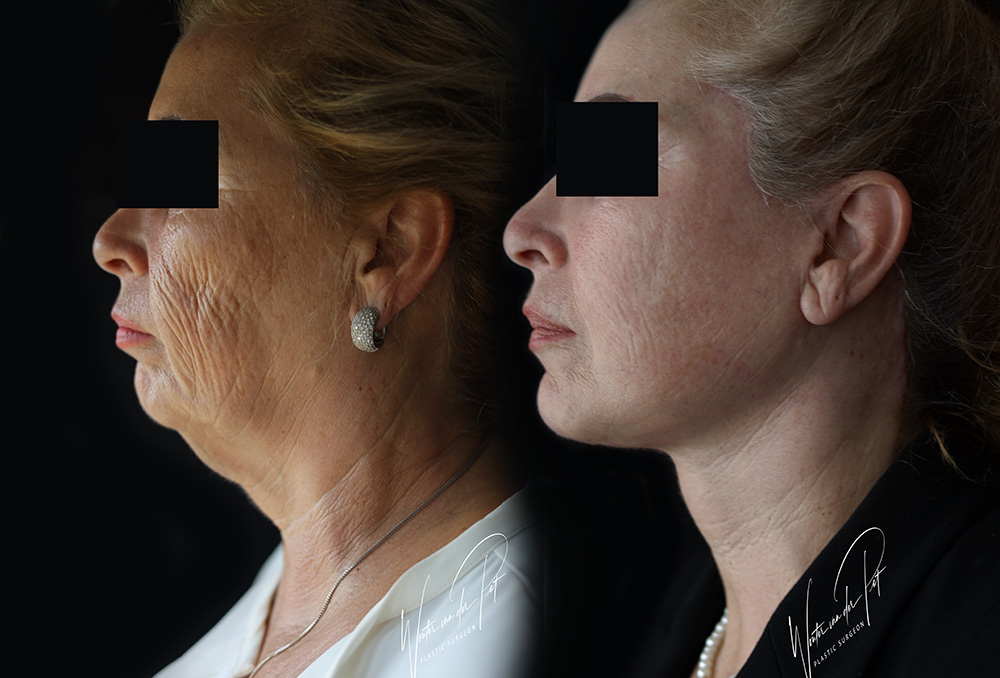
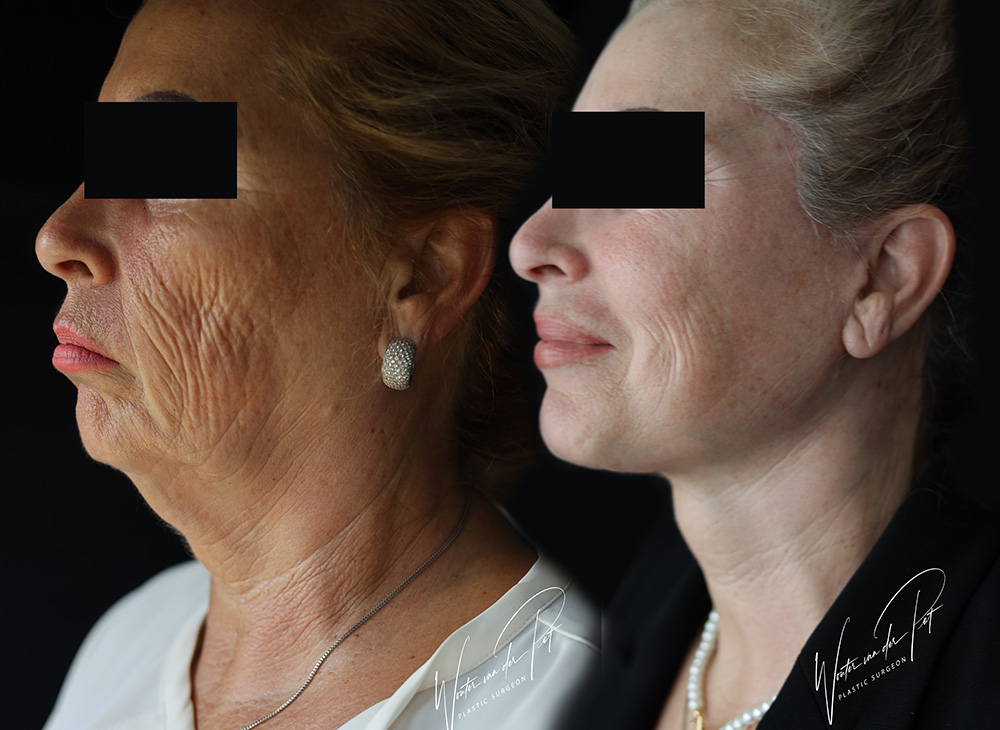
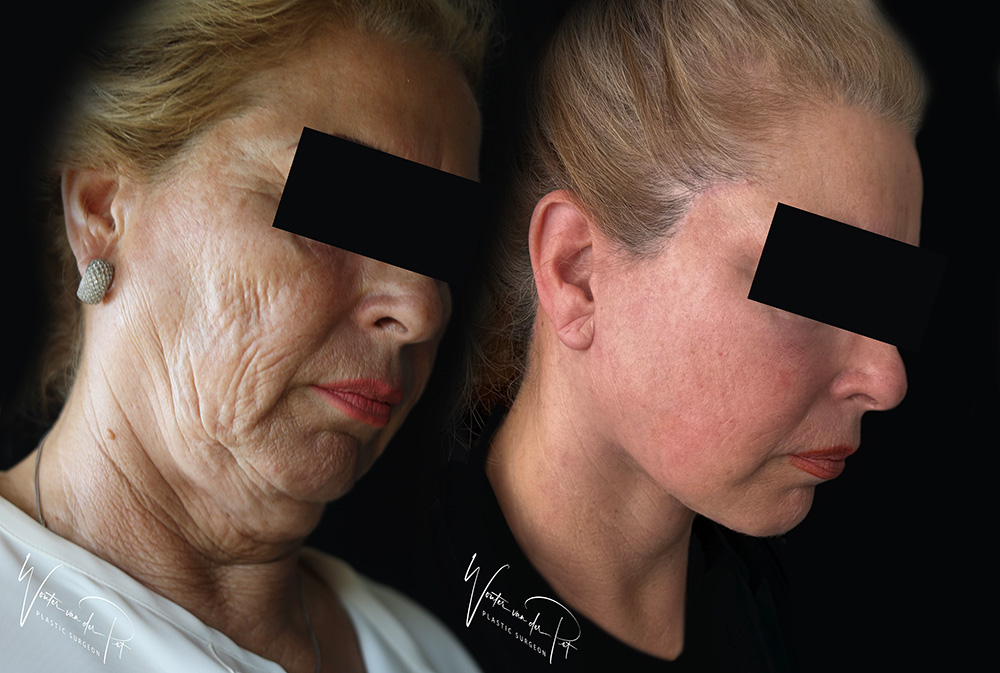
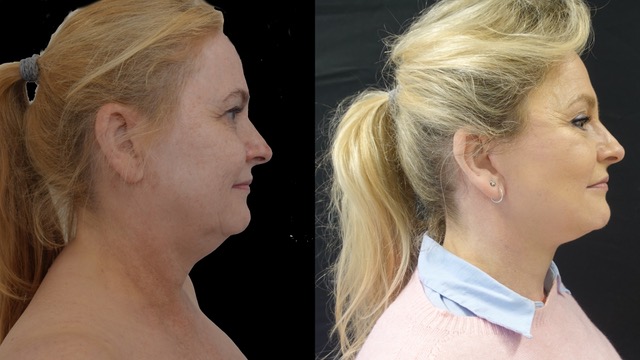
Before and after

What to expect after this treatment

Short explanations

Click on the video to find more information about this treatment

Frequently asked questions

Click on an questions to see the answer

  • What is the difference between a deep-plane facelift and other facelifts?

    The main difference lies in the depth at which the procedure is performed. A deep-plane facelift moves the deeper tissues and volume as a whole, while other techniques often mainly pull on the skin or superficial layers.

  • How long do the results of a facelift last?

    On average, 10–15 years. Ageing does not stop, of course, but you will always look younger than you would without surgery. We sometimes say: you turn the clock back 10–15 years, but it keeps ticking.

  • Does a deep-plane facelift look natural?

    Yes. Precisely because the volume is moved rather than tightened, your facial expressions remain intact and you will still recognise yourself in the mirror.

  • Is a facelift painful?

    Most patients mainly experience discomfort and swelling, not severe pain. This can be treated effectively with medication.

  • When can I get back to work after a facelift?

    For sedentary or light occupations, often after 2–3 weeks. Physically demanding work requires more recovery time. Most people are socially presentable again after 3–4 weeks, but to be on the safe side, we recommend taking a month off to allow yourself time to recover.

  • Is a liquid facelift an alternative option?

    No. Injectables can soften wrinkles, but they do not resolve tissue sagging and can give an unnatural appearance if used excessively.

Other treatments

Click on the subject to find more information about this treatment

Experiences

Very friendly, skilled plastic surgeon. Gives personal attention, listens to you, and takes time for you. The end result of a face and neck lift is natural and beautiful. If you have any questions after the treatment, you can always contact them and they will help you.

...

Professional, neat, honest! That's how I would describe Dr. Ahmed. I didn't experience any pain, and it already looks beautiful! The wounds are barely visible... and it's only been four weeks. I hesitated for years, but when I walked in here, I knew for sure! I'm going for it. I would advise everyone to go to Dr. Ahmed!

...

I hesitated for so long about this procedure, but I should have done it much earlier. Dr. Ahmed is knowledgeable, clear, and above all very honest about the procedure and the results. The operation is tough, and you really need to take the time to recover. Fortunately, I had little pain and am now very happy with the result. I would recommend Dr. Ahmed!

...

I came in for eyelid surgery and was advised to also have a forehead lift. Dr. Ahmed was right, and I am so happy with the results. Everything was explained clearly. The anesthesia was painful and unpleasant, but I had no pain afterwards. The results are beautiful, and I have received many positive comments from those around me.

I was treated kindly throughout the entire process and felt ...

Friendly and professional approach from all staff members. Comprehensive and careful information before and after the procedure. Dr. Ahmed did a wonderful job. I am very happy with the result.

...

For years, it had been my greatest wish to undergo this treatment, as I was unhappy with my appearance. After the treatment, I feel and look 20 years younger. I am so glad I had it done.

...

STAY UP TO DATE

Sign up for our newsletter to stay up to date with the latest news.

STAY IN TOUCH

Follow us on social media to stay up to date with our practice and see the latest stories.