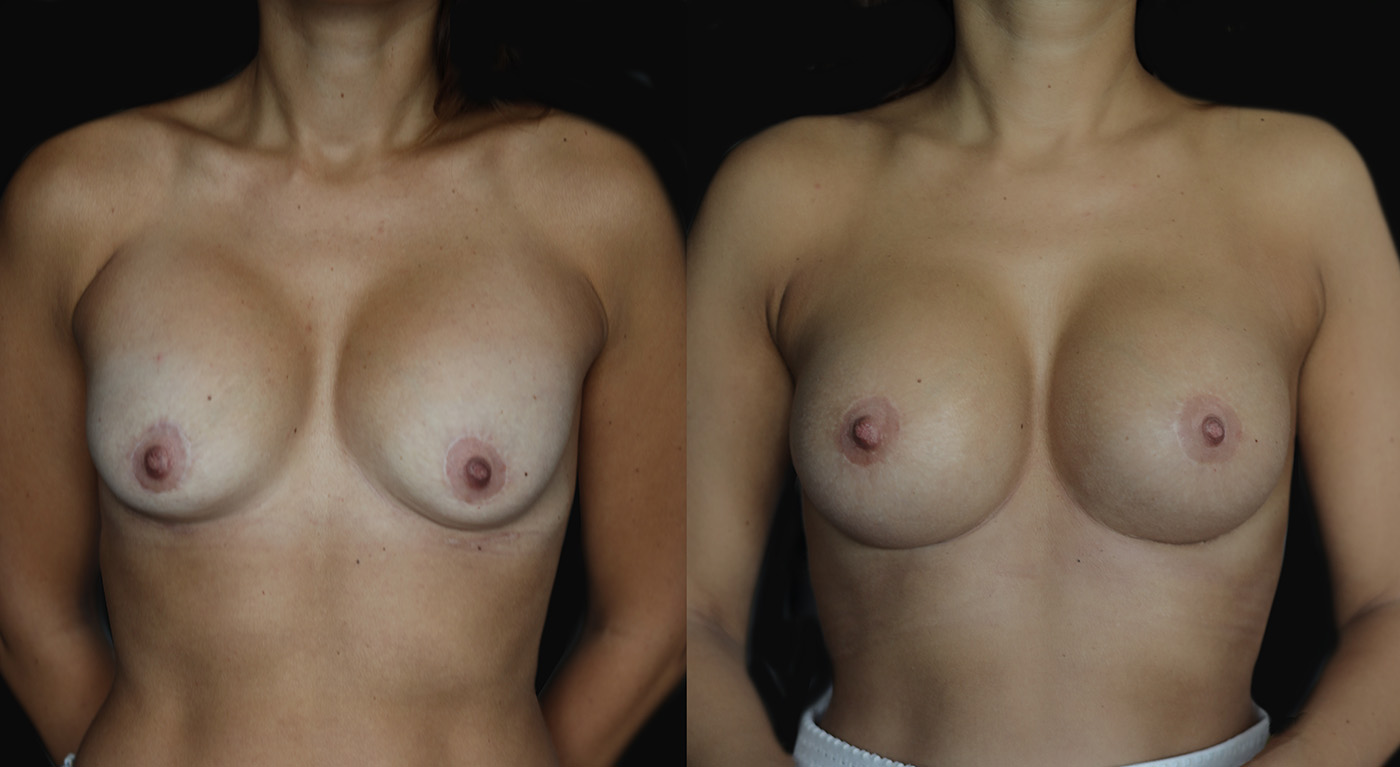
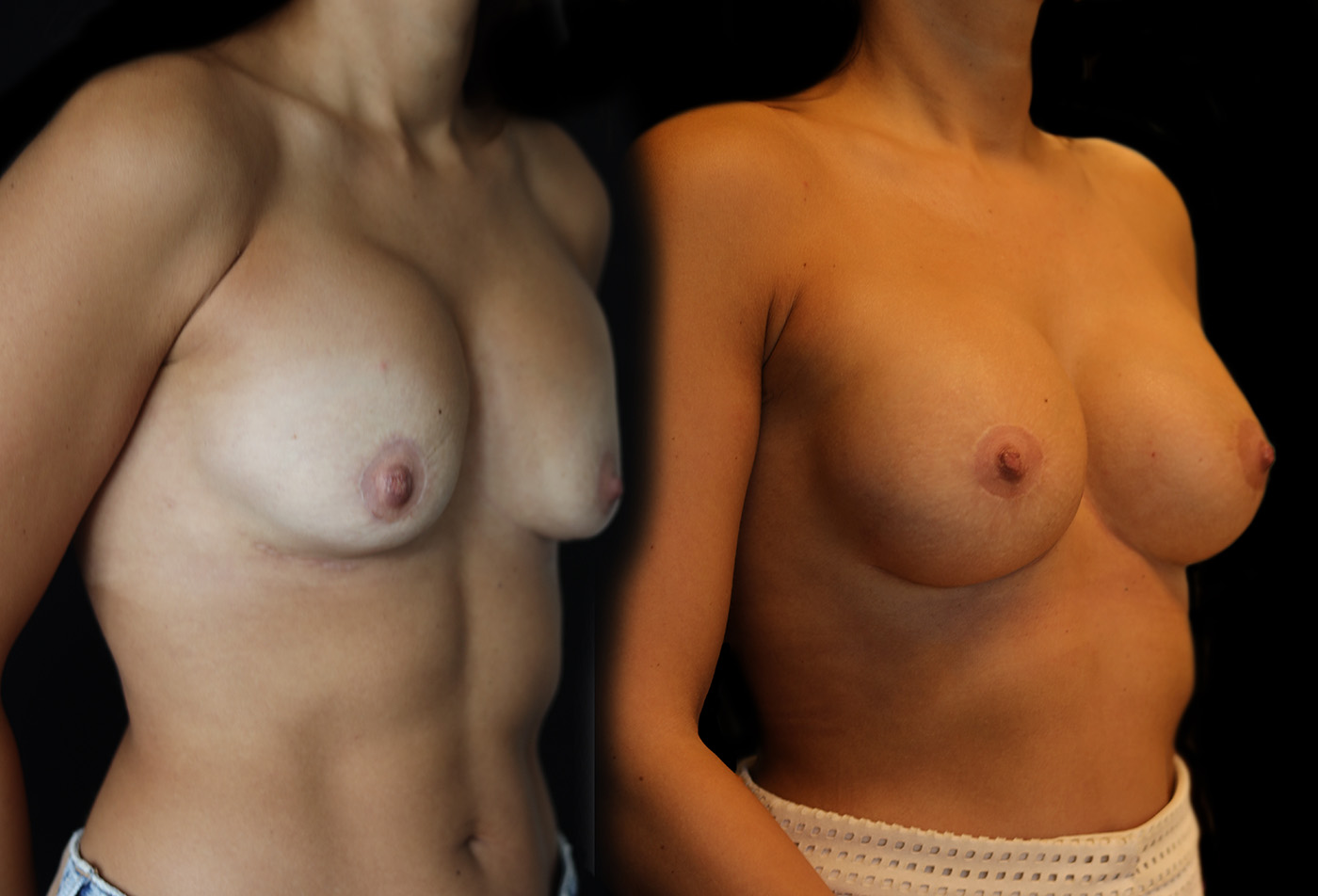
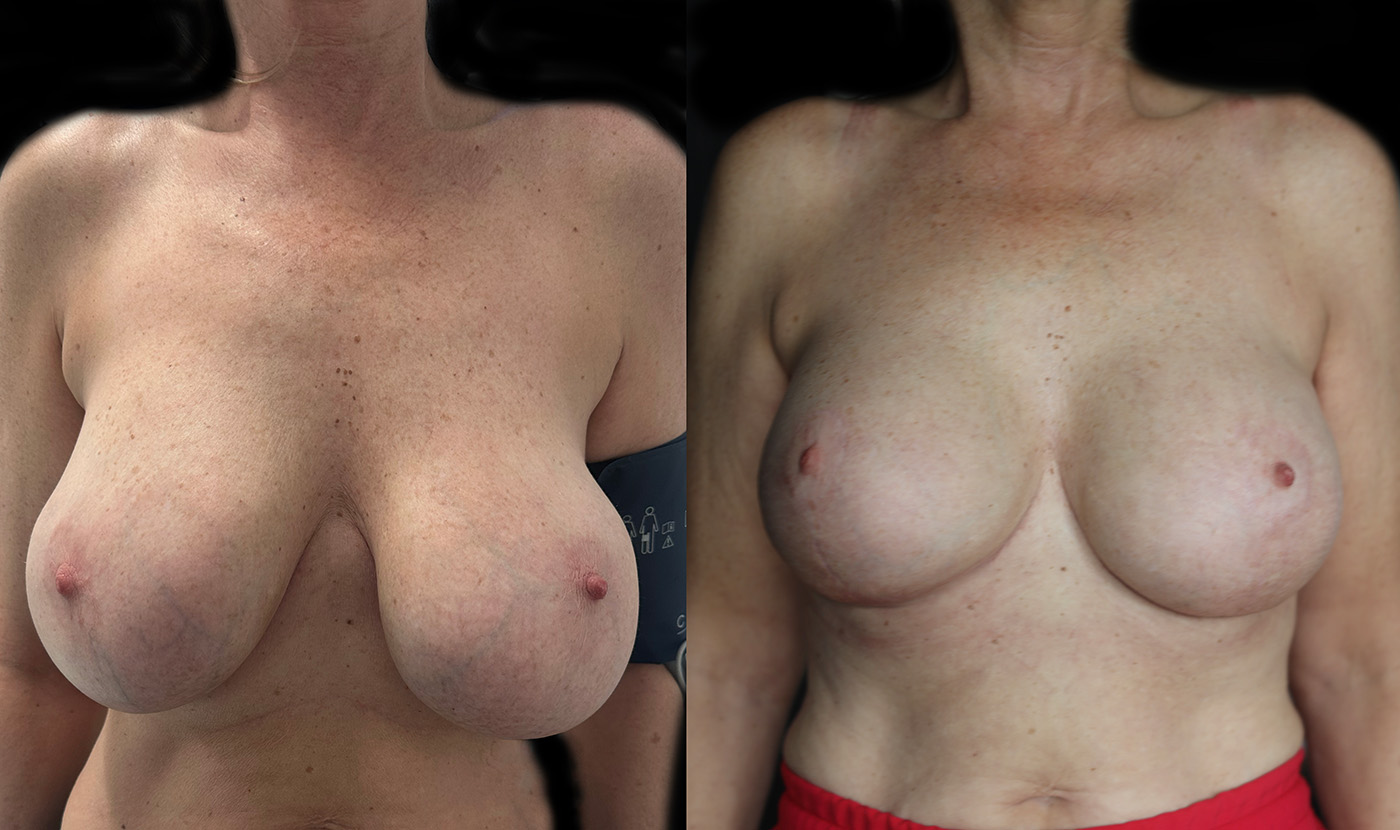
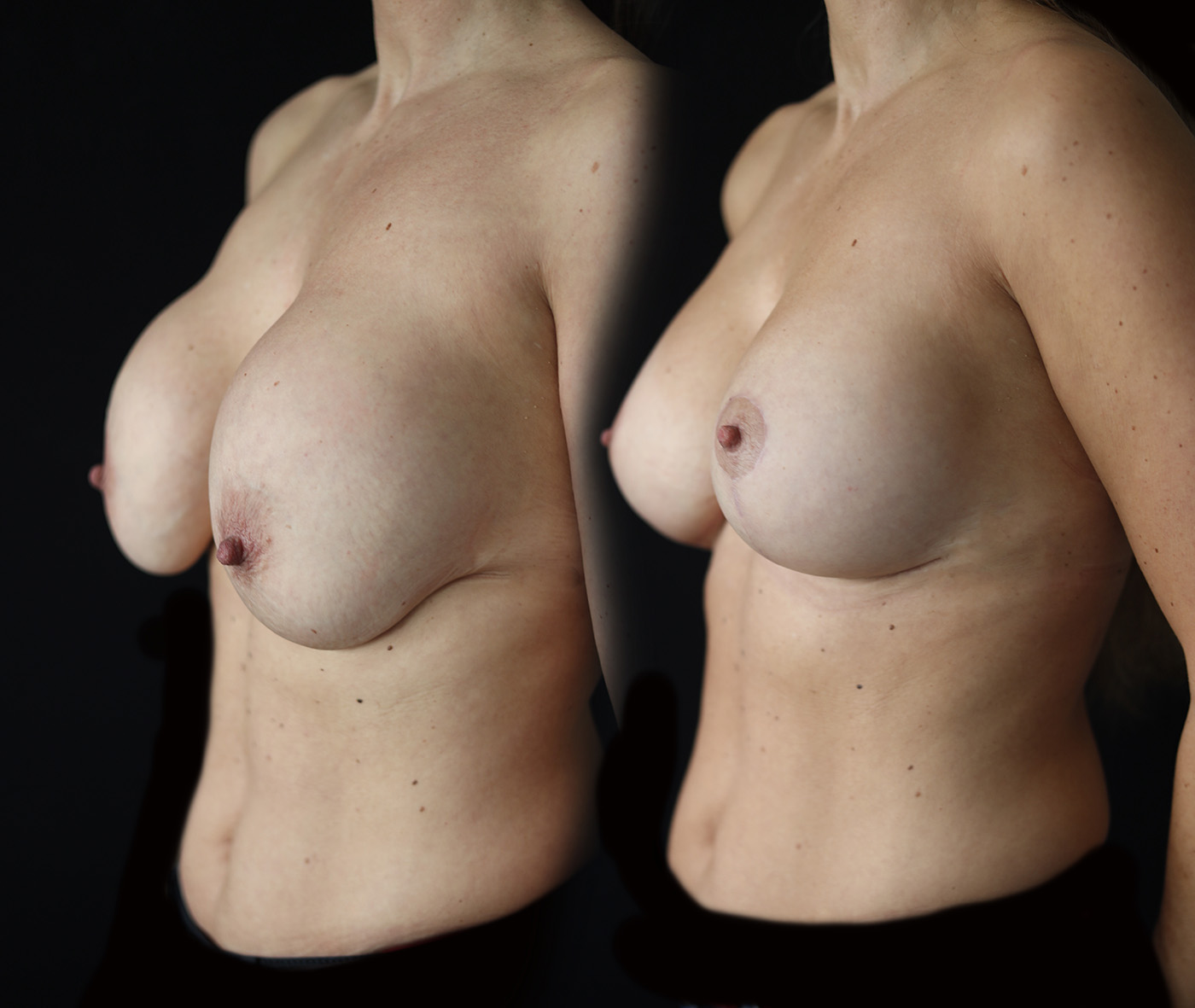
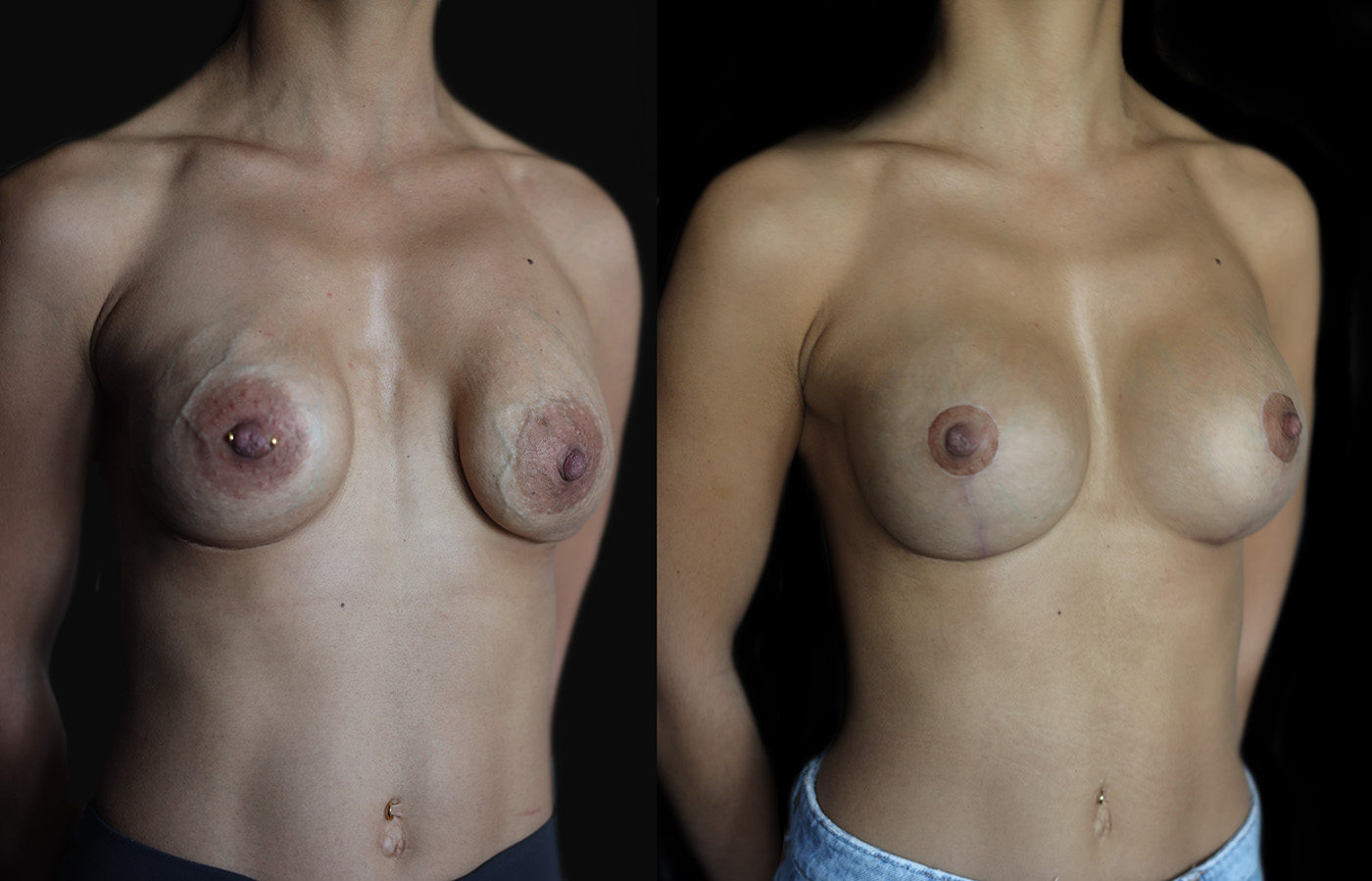
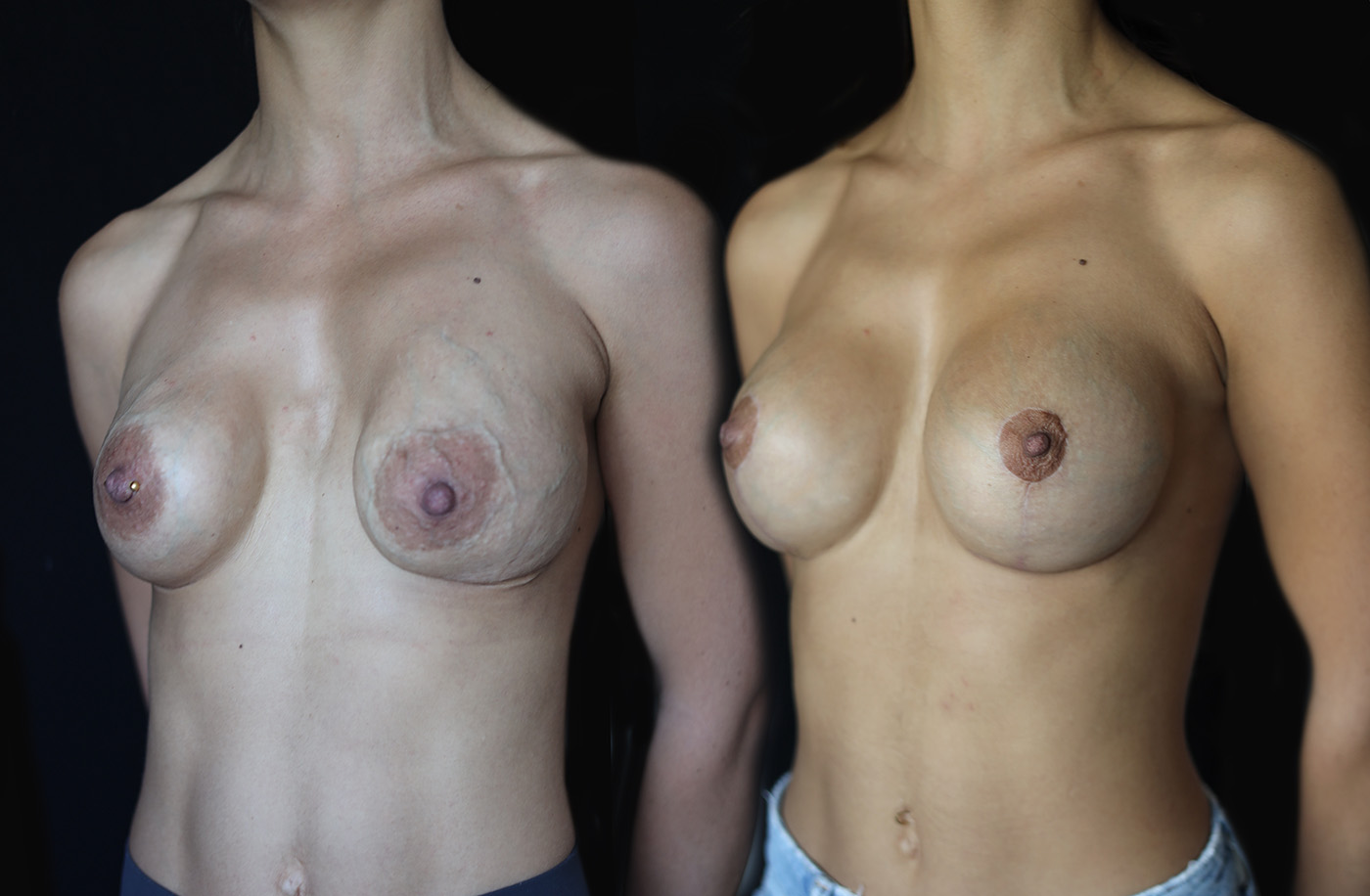
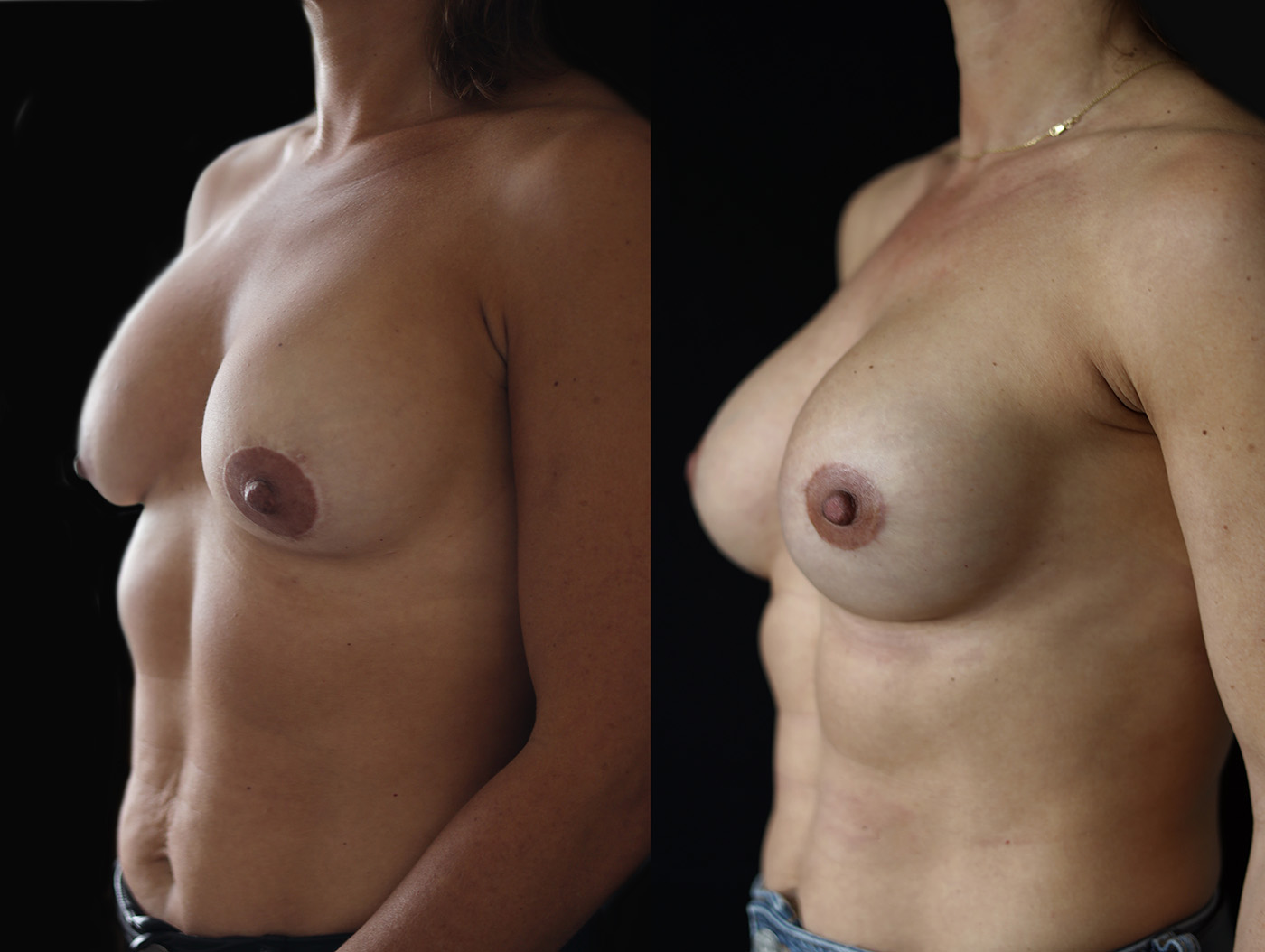
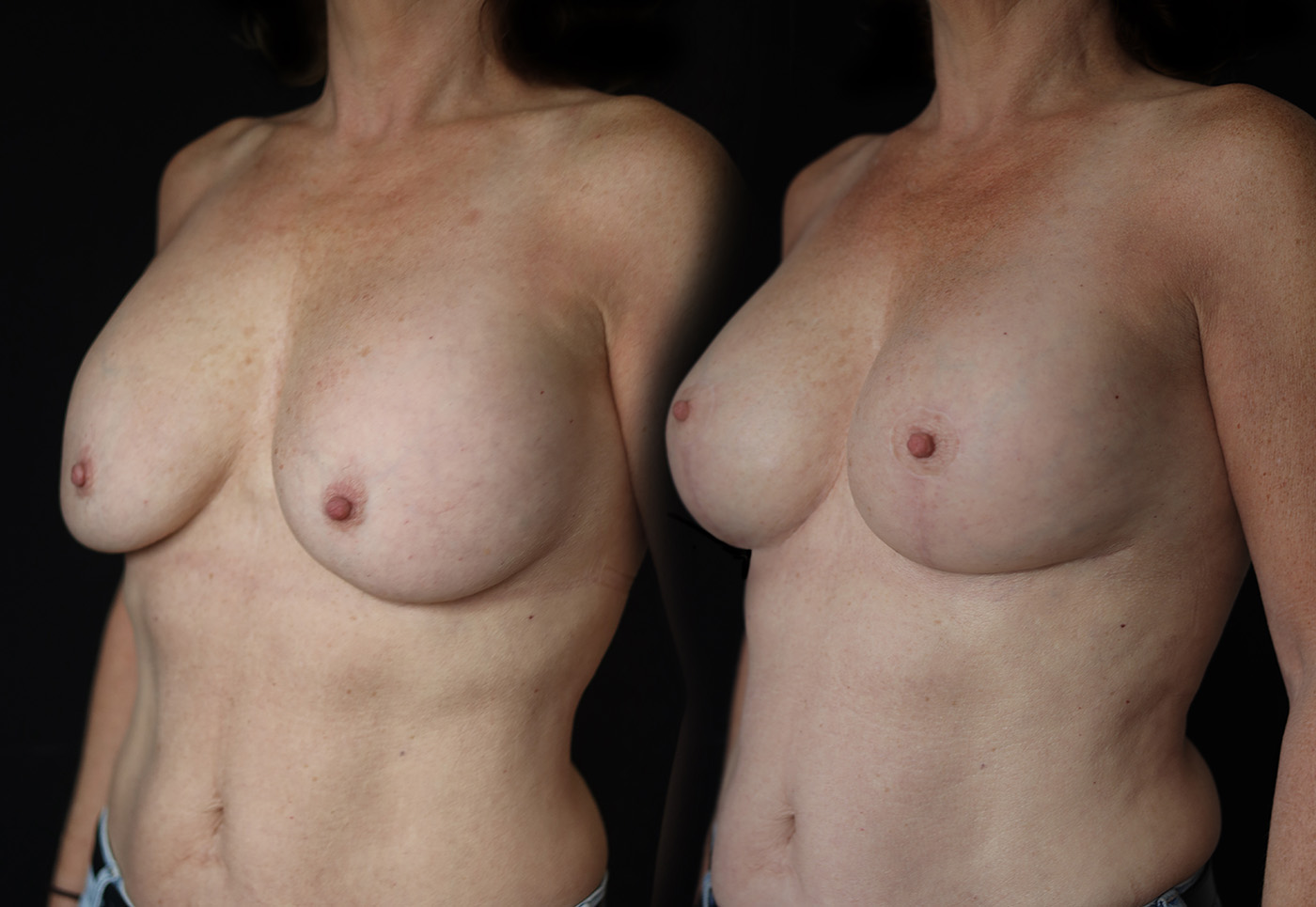
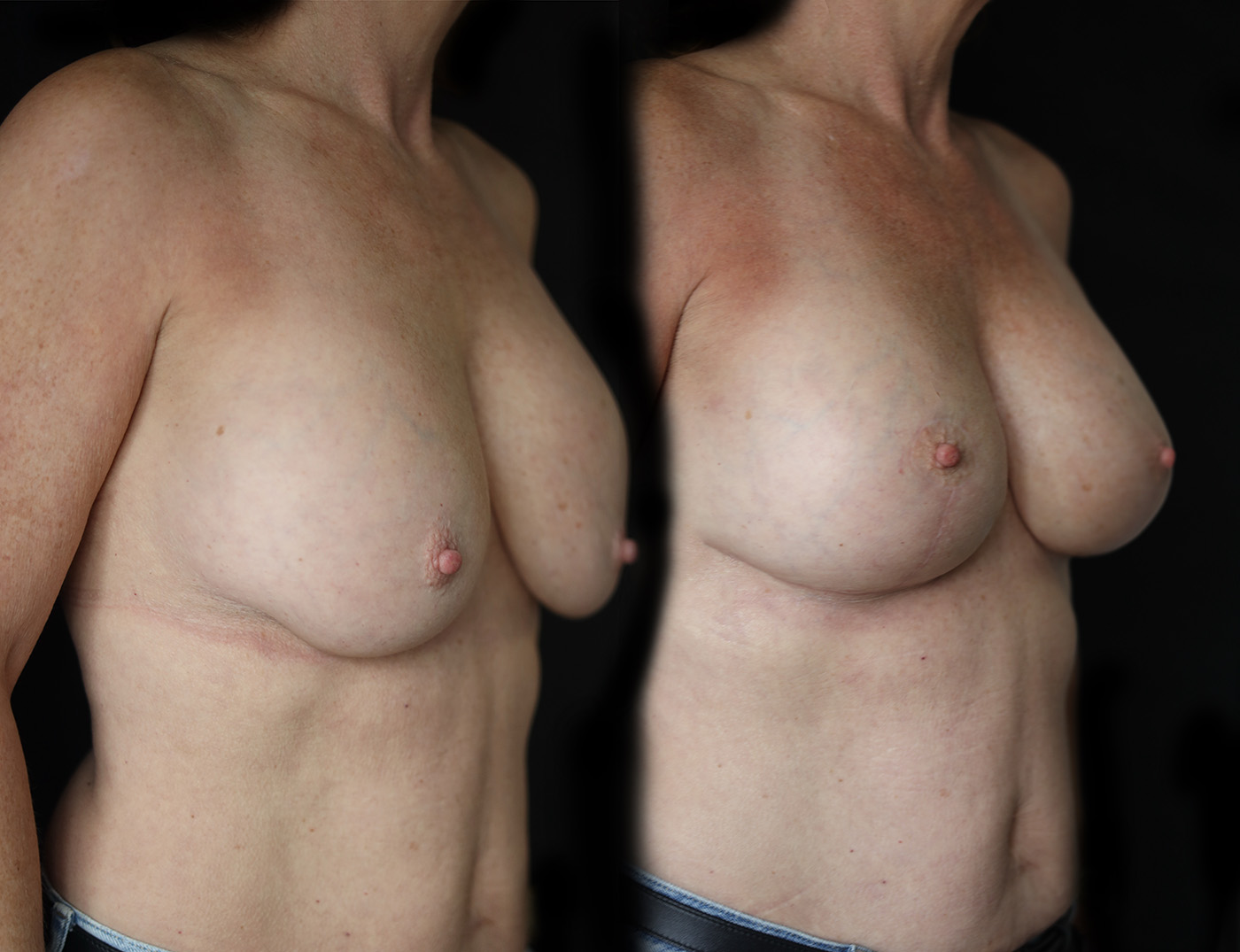
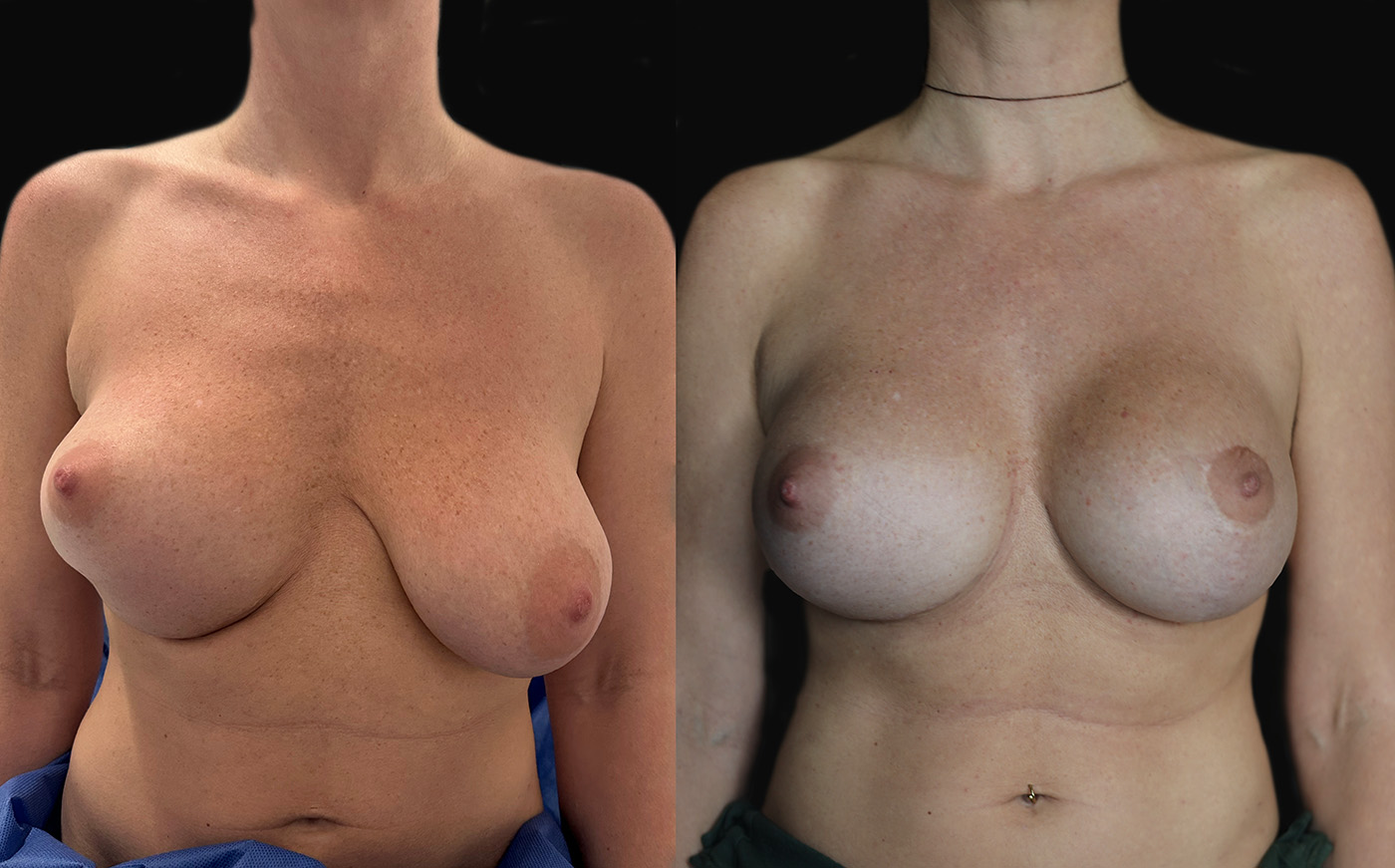
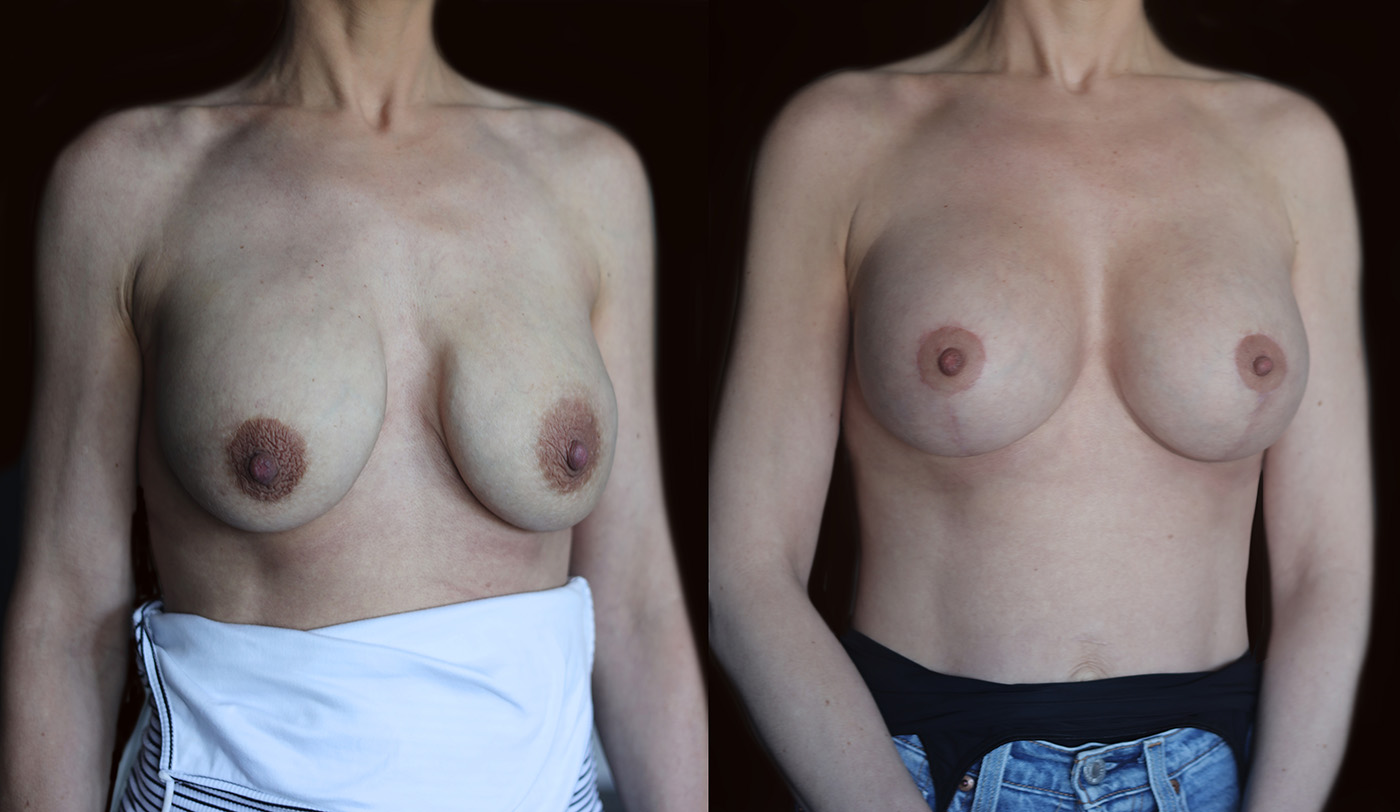
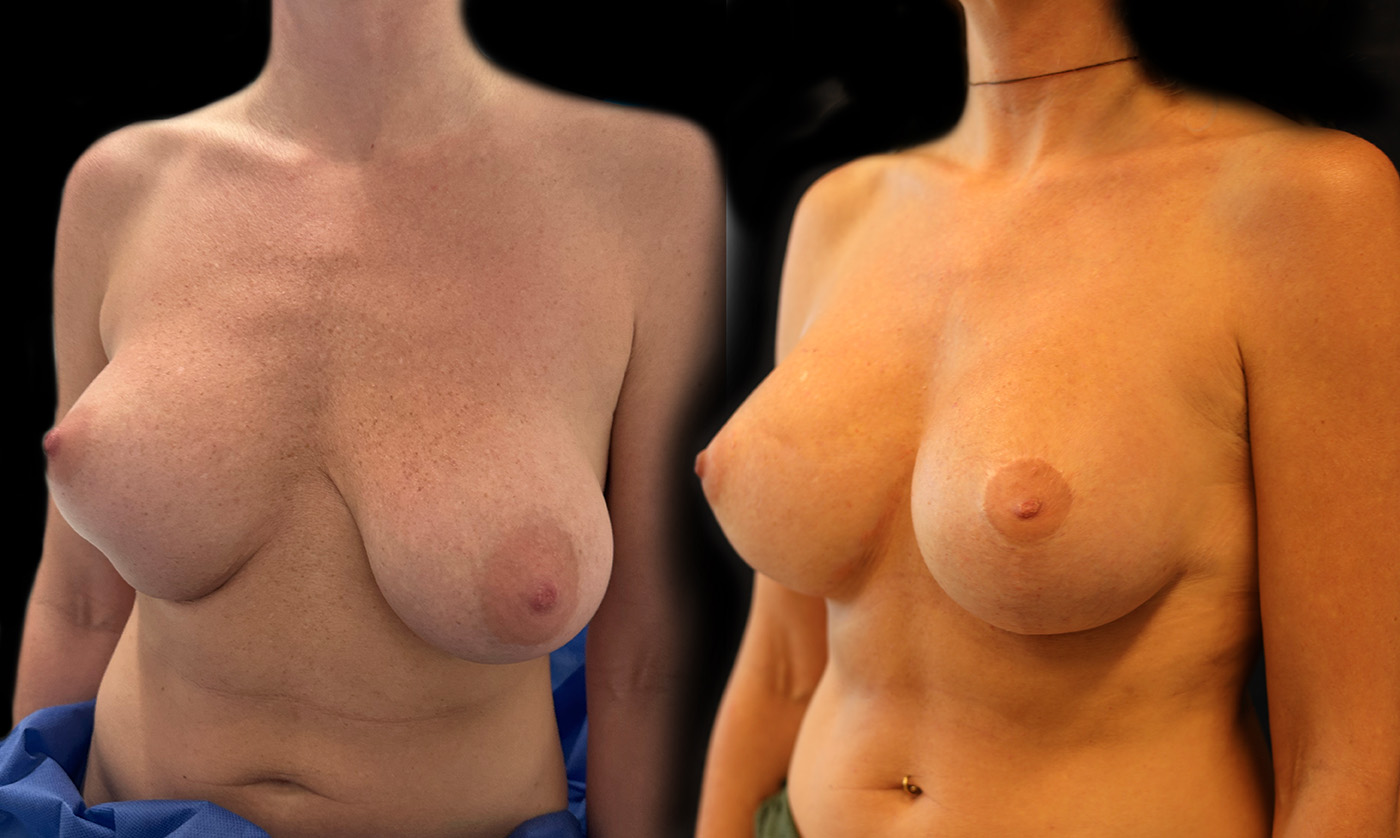
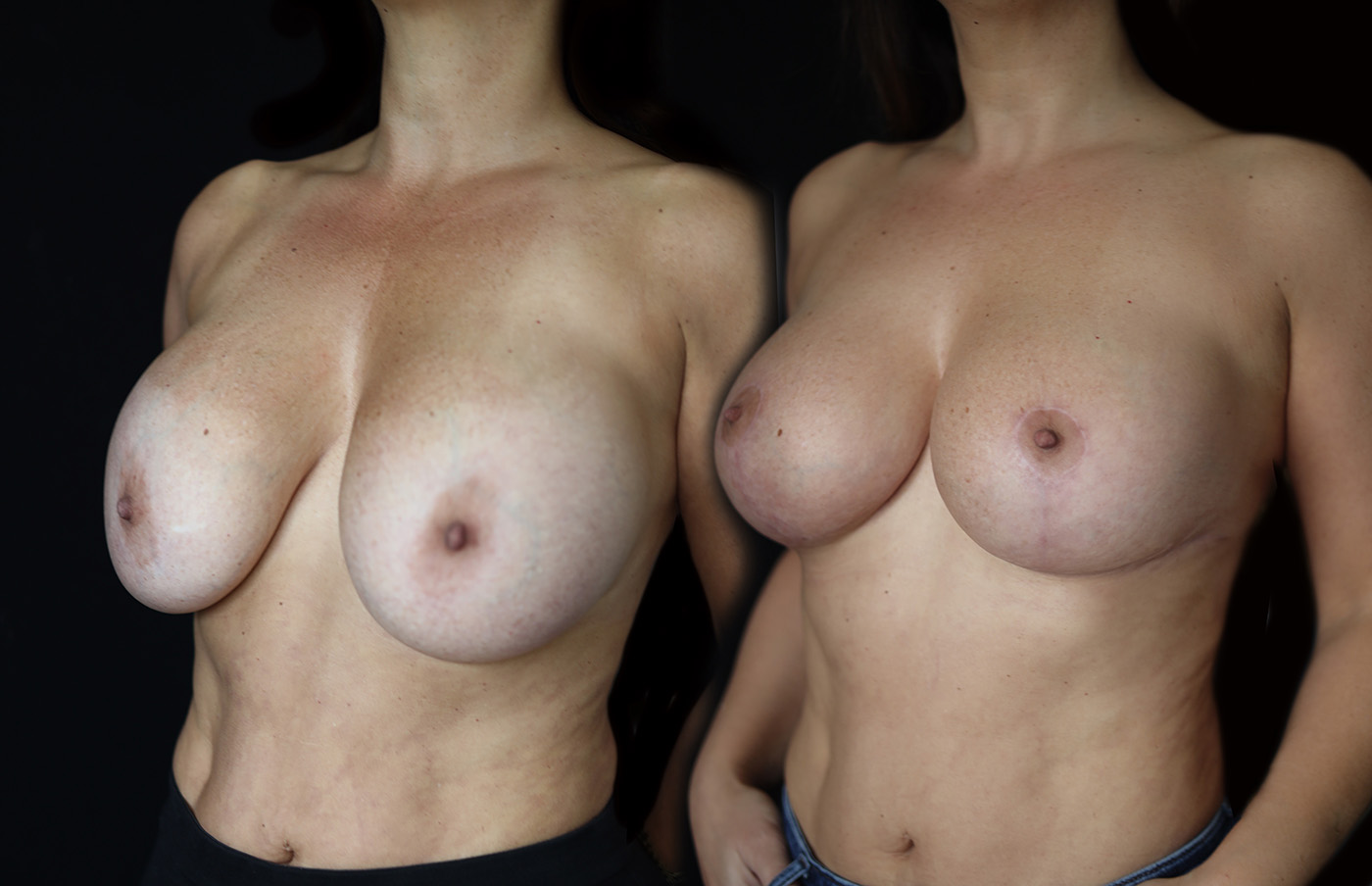
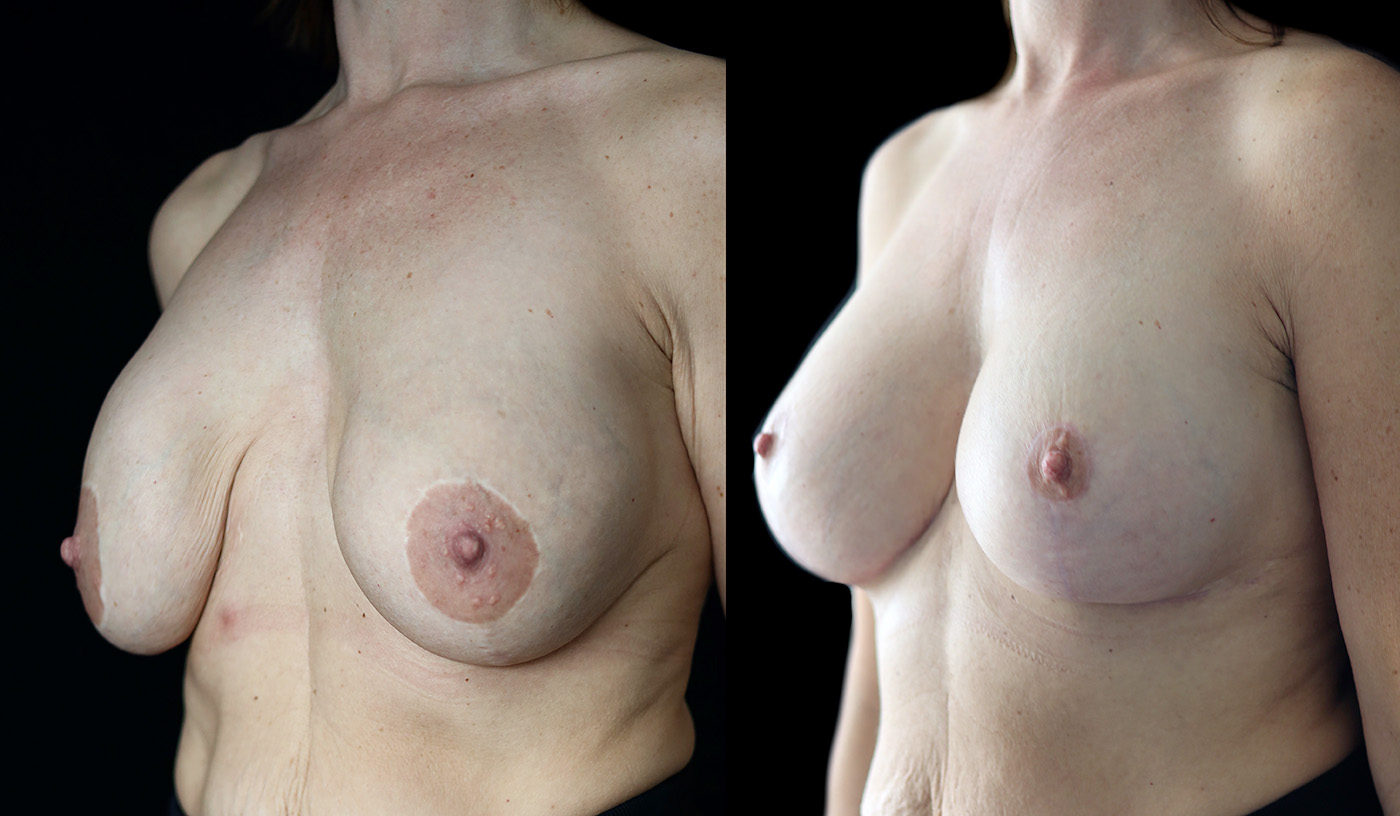
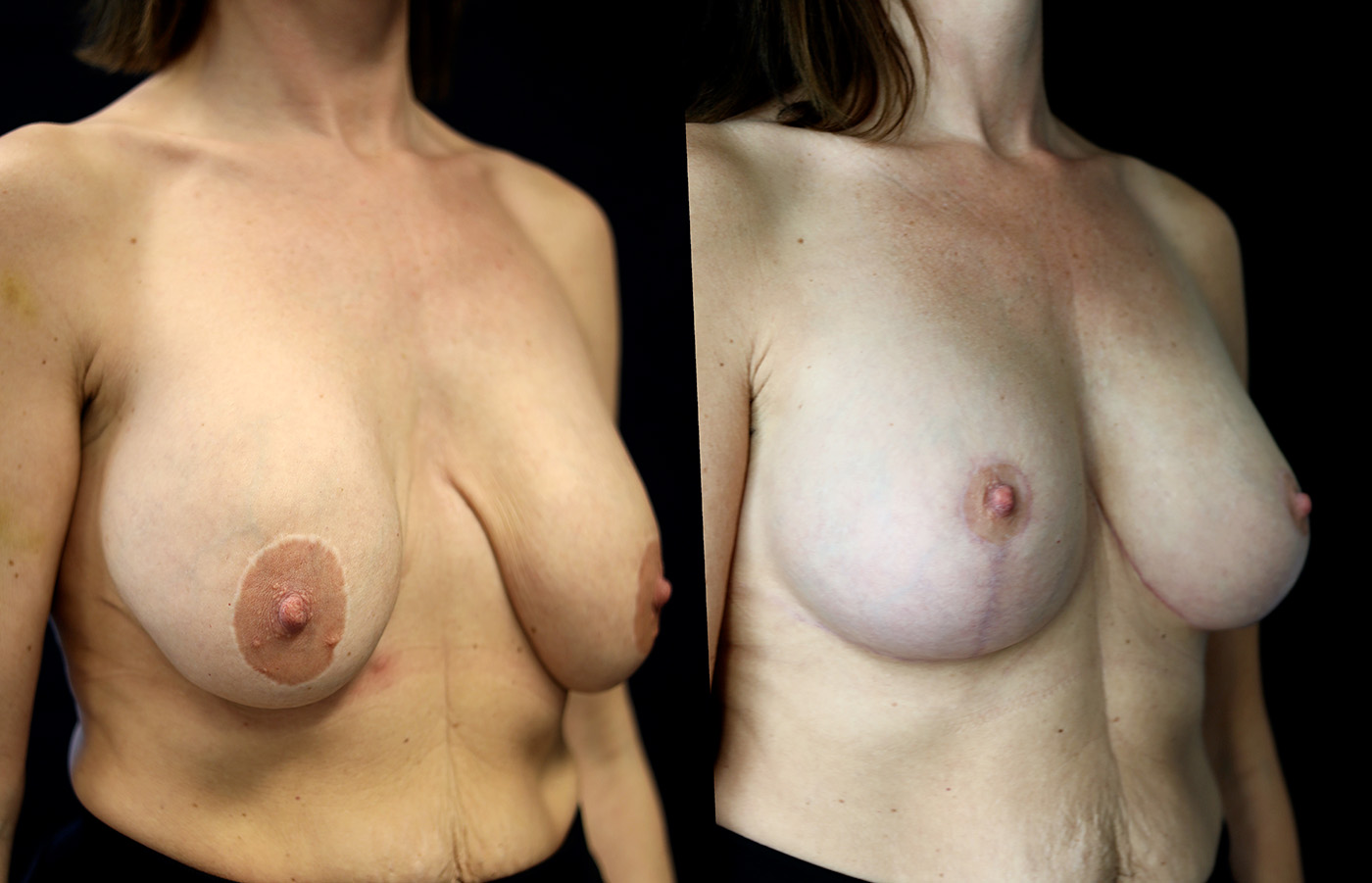
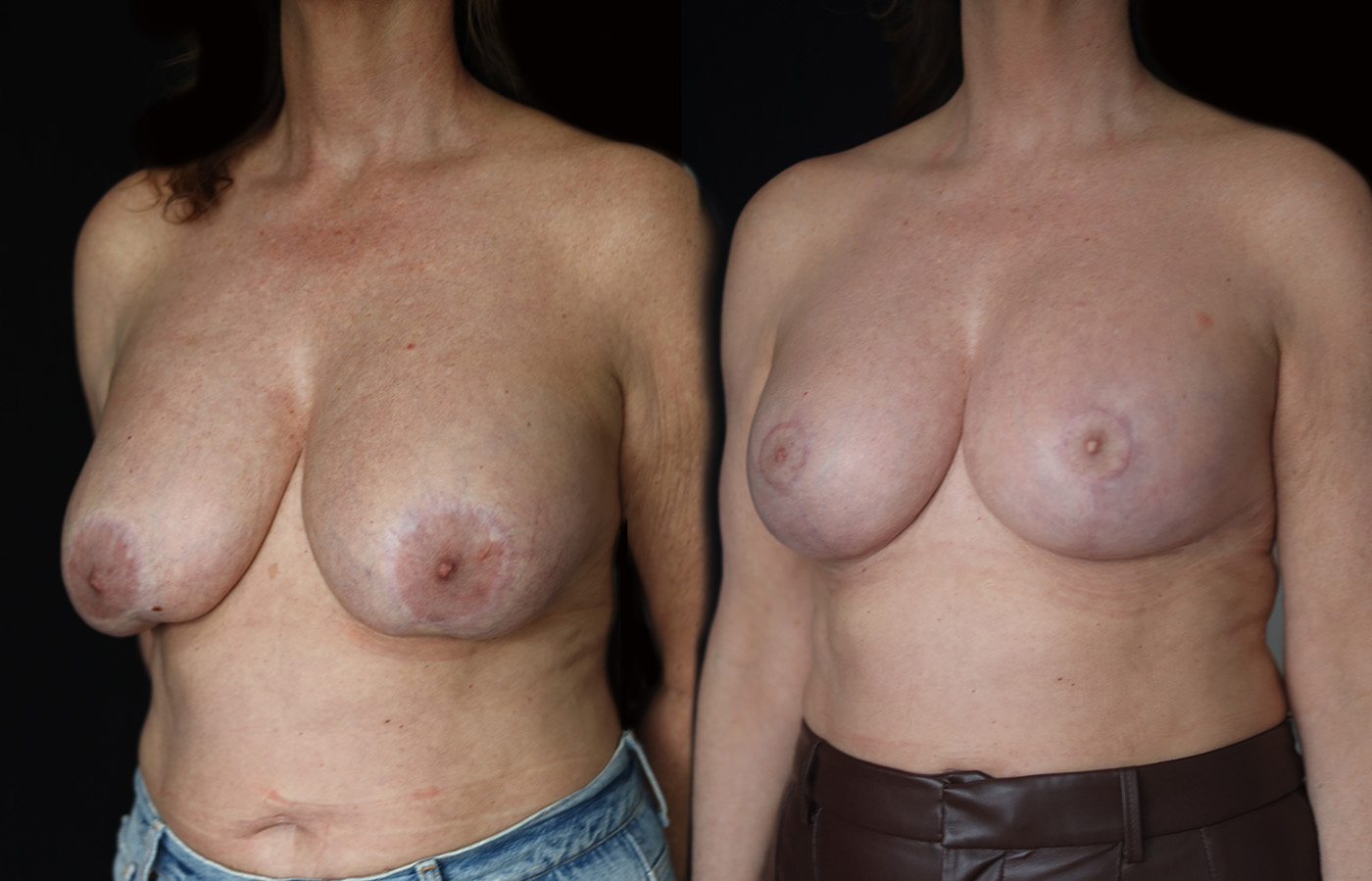
Breasts change over the years. What looked beautiful and suited you at 25 can look very different after pregnancies, breastfeeding, weight fluctuations, and ageing. In women with breast implants, we often see a combination of sagging, loss of upper pole volume, and a change in nipple position.
In that situation, an implant exchange combined with a breast lift is often the most effective and long-lasting solution.
At Gooimeer Clinics, this procedure is one of the most frequently performed corrective breast surgeries.
This procedure is particularly suitable when:
the breast has sagged over the implant
the nipple is no longer centrally positioned on the breast
the cleavage has become wider and less full
the implants are older (10–20 years or longer)
there is capsular contracture, a change in shape, or a wish for a different size
Often it is not just one issue, but a combination of factors.
Click on a topic for more information
An implant exchange without a lift corrects the implant, but not the breast itself.
If the skin and breast tissue have stretched, the breast will also sag over the new implant again.
With a lift:
the breast is lifted and reshaped
the nipple is brought back to a central position
the proportions between the breast and the implant can be restored
The implant then serves as structural support and volume—not as camouflage.
Over time, we often see that breasts not only sag, but also rotate outward. As a result, the cleavage becomes wider and less defined.
During an implant exchange with a lift, we pay close attention to:
repositioning the breast
choosing the correct implant diameter (width is often more important than cc’s)
providing support toward the centre
This way, we restore not only height, but also harmony and cleavage.
For more in-depth information, we refer you to our separate page on correcting an overly wide space between the breasts (cleavage gap).
In almost every implant exchange with a lift, we use a form of internal bra technique. Especially in corrective surgery, support is crucial to help prevent renewed sagging.
Depending on the situation, we may use:
the existing capsule around the implant
your own connective tissue
a small portion of muscle
in selected cases: a dissolvable supportive material
The chosen technique is always tailored to your anatomy and medical history.
With an implant exchange, we don’t look at volume alone, but primarily at:
shape
softness
diameter
how it relates to your chest frame
Often, choosing a different implant type or shape results in a more natural and more stable outcome than simply going “bigger or smaller.”
The surgery is performed under general anesthesia and typically takes several hours. You will usually stay one night at the clinic.
During the procedure:
the old implants are removed
the capsule is adjusted if necessary
the breast is lifted and reshaped
new implants are placed
and structural support is added
Recovery is similar to that of a breast lift:
swelling and tenderness during the first weeks
wearing a supportive bra
light activities after 1–2 weeks
gradually building up sports and heavy exercise
We only assess the final result after a few months.
An implant exchange with a lift can result in:
a higher and firmer breast
restored proportions between the breast and the implant
a more beautifully shaped cleavage
a more natural and more youthful breast appearance
Not “back to how it used to be,” but in balance with who you are today.
A breast lift almost always results in an anchor-shaped scar: around the areola, vertically downward, and along the breast fold. These scars usually fade well, but they remain permanent.
Repositioning the nipple can lead to changes in sensation. In most cases, the majority of sensation is preserved, but this cannot be guaranteed.
As with any breast surgery:
bleeding
infection
wound-healing problems
capsular contracture
A very rare but serious complication is (partial) loss of the nipple due to impaired blood supply. Risk factors include:
smoking
a previous lift
significant nipple repositioning
If applicable, this will always be discussed in detail beforehand.
An implant exchange without a lift corrects the implant, but not the breast itself.
If the skin and breast tissue have stretched, the breast will also sag over the new implant again.
With a lift:
the breast is lifted and reshaped
the nipple is brought back to a central position
the proportions between the breast and the implant can be restored
The implant then serves as structural support and volume—not as camouflage.
Over time, we often see that breasts not only sag, but also rotate outward. As a result, the cleavage becomes wider and less defined.
During an implant exchange with a lift, we pay close attention to:
repositioning the breast
choosing the correct implant diameter (width is often more important than cc’s)
providing support toward the centre
This way, we restore not only height, but also harmony and cleavage.
For more in-depth information, we refer you to our separate page on correcting an overly wide space between the breasts (cleavage gap).
In almost every implant exchange with a lift, we use a form of internal bra technique. Especially in corrective surgery, support is crucial to help prevent renewed sagging.
Depending on the situation, we may use:
the existing capsule around the implant
your own connective tissue
a small portion of muscle
in selected cases: a dissolvable supportive material
The chosen technique is always tailored to your anatomy and medical history.
With an implant exchange, we don’t look at volume alone, but primarily at:
shape
softness
diameter
how it relates to your chest frame
Often, choosing a different implant type or shape results in a more natural and more stable outcome than simply going “bigger or smaller.”
The surgery is performed under general anesthesia and typically takes several hours. You will usually stay one night at the clinic.
During the procedure:
the old implants are removed
the capsule is adjusted if necessary
the breast is lifted and reshaped
new implants are placed
and structural support is added
Recovery is similar to that of a breast lift:
swelling and tenderness during the first weeks
wearing a supportive bra
light activities after 1–2 weeks
gradually building up sports and heavy exercise
We only assess the final result after a few months.
An implant exchange with a lift can result in:
a higher and firmer breast
restored proportions between the breast and the implant
a more beautifully shaped cleavage
a more natural and more youthful breast appearance
Not “back to how it used to be,” but in balance with who you are today.
A breast lift almost always results in an anchor-shaped scar: around the areola, vertically downward, and along the breast fold. These scars usually fade well, but they remain permanent.
Repositioning the nipple can lead to changes in sensation. In most cases, the majority of sensation is preserved, but this cannot be guaranteed.
As with any breast surgery:
bleeding
infection
wound-healing problems
capsular contracture
A very rare but serious complication is (partial) loss of the nipple due to impaired blood supply. Risk factors include:
smoking
a previous lift
significant nipple repositioning
If applicable, this will always be discussed in detail beforehand.
Click on an questions to see the answer
Is a lift always necessary when changing prostheses?
No, but often. If the breast has visibly sagged, a lift almost always gives a better and more lasting result.
Can I keep the same size after a prosthesis replacement with a breast lift?
Yes, that is possible. We often deliberately choose a similar volume, but with a different shape or diameter.
How long do the new implants last?
Modern implants do not have a fixed expiry date, but are usually reassessed after 10–20 years.
Does the cleavage really improve after a prosthesis replacement with a breast lift?
In many cases, yes, provided that the anatomy allows it. Significant improvement is often possible with internal bra techniques and, if necessary, lipofilling.
Would you like to know whether an implant exchange with a breast lift is the right solution for you?In a personal consultation, we look beyond the implant itself and focus on shape, position, skin quality and long-term support. In many cases, the indication is a combination of factors: the breast tissue has descended over the implant, the nipple position has changed, upper-pole fullness has decreased, or there is a desire for a different size or implant shape.
During the consultation, you will receive:
an anatomical assessment of the breasts, nipple position, skin/support tissue quality and implant position
a clear recommendation on whether an implant exchange with a lift is appropriate, or whether a different approach would be better
guidance on implant selection (shape, diameter, projection) and the role of structural support (e.g., an internal bra technique)
a detailed explanation of scars, recovery, aftercare and realistic expectations
example results and a personalised treatment plan with transparent pricing
Then we warmly invite you for a personal consultation at Gooimeer Clinics.
Click on an article to see more information
Sign up for our newsletter to stay up to date with the latest news.
Follow us on social media to stay up to date with our practice and see the latest stories.